
Henry Ford was a visionary, and he felt that cars should be accessible to everyone, not just the wealthy. He established the Ford Motor Company in 1903. It was simple to build cars that were cheap and dependable. This philosophy led to a revolution in the automotive industry, and with it, these inventions and changes in many instances altered working and living environments.
Ford’s Enduring Legacy
Ford’s reach is, after all, global, even today. The company’s dedication to its customers is clear with the quality of products like the used Ford catalytic converters, which increase the efficiency of a car’s engine and help the environment.
Ford also set a standard for employee welfare, such as higher wages, which helped influence work conditions in industries across the globe. And this was transformative not just for the automobile, but for society at large.
Ford’s Contemporary Expertise:
- Sustainability: The Used Ford Catalytic Converter is made with recyclable content.
- Availability: Of course, Ford still builds cars for the average road trip junkie.
The dying efforts of Ford are just as impressive, and they capture the carmaker’s dream of a cleaner, more multifaceted tomorrow. Creativity assures the company will continue its forward march.
The Model T: It Changed Everything
In 1908, Ford introduced the Model T, an iconic vehicle. It was rugged, easy to drive, and, above all, priced for ordinary people. The Model T was different from any other car of its day because it was designed to be affordable for the ordinary person. By 1927, the company had sold more than 15 million, and the record stood firm for decades.
When and why the Model T mattered:
- Low cost: It costs less, and that made it possible for millions to own cars.
- Reliability: Its uncomplicated engineering led to fewer breakdowns and easier repairs.
This car not only transformed roads, but it also transformed lives. With that, families could go further, and new opportunities were accumulating fast.
The Assembly Line Revolution
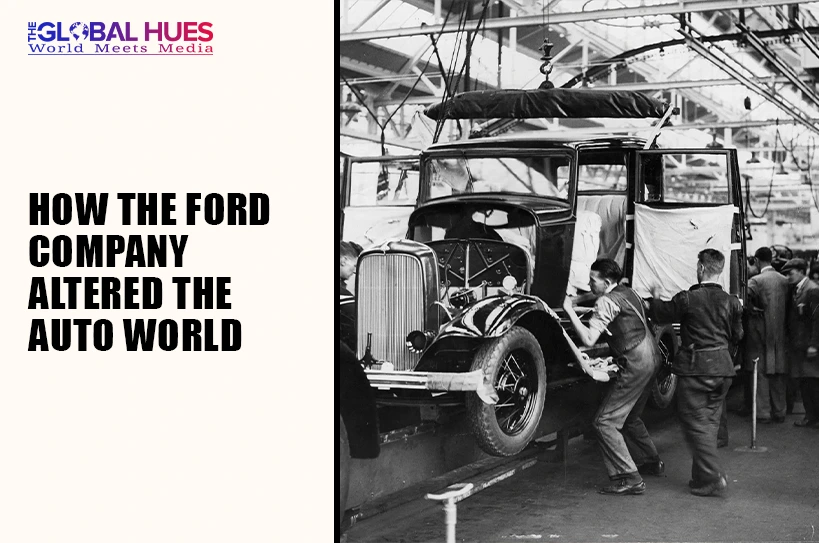
Ford wasn’t satisfied with just making cars—he also changed the way they were made. In 1913, he adopted the moving assembly line. Workers Added Parts As Cars Rolled By Rather than moving from station to station, workers remained stationary and added parts to the cars, which moved along on conveyor belts. This dramatically reduced production time and costs.
Others came after, but Ford was the way-maker. The Model T had become even more affordable with the invention of the assembly line, and driveways soon were crowded with cars left and right.
Driving the Future
Ford’s story is one of vision and labour. From the Model T to modern green parts, the company continues to lead. Henry Ford’s vision to make cars that were affordable and reliable lives on as a testament to the idea that one idea can change the world. Next time you spot a Ford, think: it’s not just a car — it’s a piece of history.
(DISCLAIMER: The information in this article does not necessarily reflect the views of The Global Hues. We make no representation or warranty of any kind, express or implied, regarding the accuracy, adequacy, validity, reliability, availability or completeness of any information in this article.)
Must Read:
- Mary Barra: Driving General Motors into the Future
- Top 10 Richest Billionaires In The World
- Autonomous Vehicles: The Road to Driverless Future
- Ratan Tata: A Life of Impact, Empathy, and Inspiration