
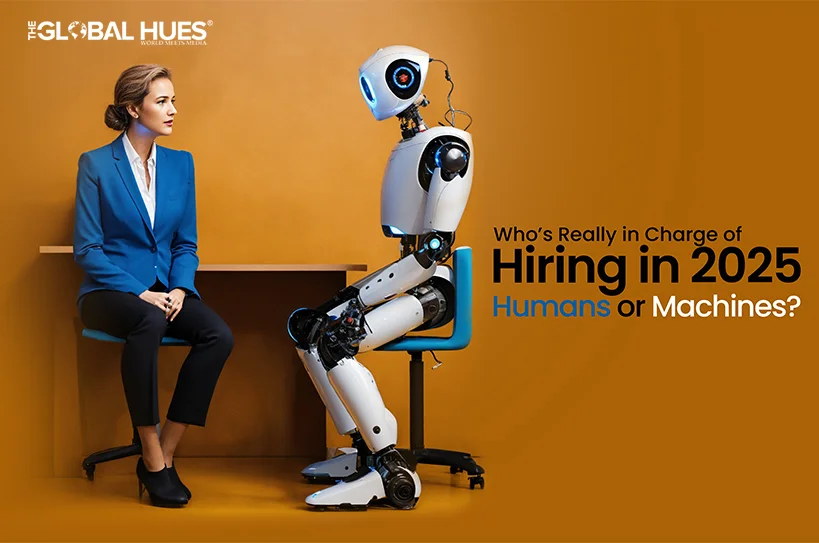
A nervous job seeker waits in a glass-walled interview room at a tech firm in Gurugram, not for a human recruiter, but for a chatbot. It’s 2025, and the hiring landscape has changed beyond recognition. Artificial Intelligence, which was once used as a backend tool for scheduling or screening, has now taken centre stage. Generative AI is now writing job descriptions, conducting interviews, and even planning employees’ upskilling journeys.
But in this new world, an important question arises– who is assessing whom? Is the company choosing and hiring the candidate, or are two algorithms sizing each other up?
The rise of AI applicants
Back in the day, hiring involved a recruiter scanning resumes, shortlisting candidates, and conducting a few rounds of interviews. Today, GenAI has stepped in at every point of that process. Job seekers are now evaluated by models that can scan resumes in seconds, detect keywords, and recommend “best-fit” profiles with machine precision.
And it’s not one-sided. Candidates, too, are catching up. They are using AI to write their resumes, draft cover letters, and even practice mock interviews with AI tools that mimic real-life HR questions.
So, it’s not just a human preparing for an interview anymore. AI is prepping on both ends, making hiring more efficient, yes, but also more complex and harder to predict.
Writing job descriptions that don’t sound like job descriptions
You must have probably seen job listings that sometimes are impossible to understand, as they are full of buzzwords like ‘go-getter’ and ‘rockstar’, which makes the role sound like a robot’s job.
Now, companies are letting GenAI take the pen. These tools analyse project goals, needs and requirements of the company and even current employees’ personality traits to make accurate listings. Instead of copy-pasting a generic role, they create listings that speak directly to the kind of person they want to hire.
Resume screening: fast but flawed?
Once the applications start pouring in, the next challenge is screening them. There are many AI tools that help recruiters go through thousands of resumes in a fraction of the time it used to take.
They look for keywords, match skills, and even pick up on tone or writing style. This leads to faster decisions and fewer missed candidates. But here’s a catch: these tools are programmed to only respond the way humans have taught them.
If past hiring data showed a preference for certain universities, genders, or age groups, the AI might learn to repeat those patterns, without realising the results are unfair.
More companies are now trying to fix this by auditing their systems and using more diverse training data. But we’re still far from perfect.
Interviews without eye contact
The biggest shift that is happening now is how interviews are being conducted. Candidates are asked to complete AI-driven tasks instead of speaking to a person right away. For instance, a marketing applicant might be asked to write a product caption using AI tools. A sales candidate might need to respond to a difficult customer in a virtual role play.
While these interviews feel fair and consistent, many candidates feel these are cold and highly impersonal. This is something that recruiters need to think about. Speed and structure are great, but not if we lose what makes interviews meaningful, a real conversation.
Helping existing employees
GenAI can also transform how companies help existing employees grow. Let’s say someone in sales isn’t hitting their targets. Instead of waiting months for feedback, the system might pinpoint exactly where they’re struggling, like closing deals. In such a case, AI can recommend short daily lessons based on their past performance. These lessons can be audio snippets or interactive questions. This approach is already in use in different parts of India, Southeast Asia and the US. It saves companies the cost of hiring from outside and shows employees that growth is possible if adequate support is provided.
Who’s really doing the hiring now?
The lines are starting to blur. Traditionally, hiring was a clear-cut process- looking for candidates, meeting them and picking the right person. Now, both sides are using technology. In many cases, an AI writes the job ad, another AI screens the resumes, and a third AI helps conduct interviews. The candidate, meanwhile, prepares every answer with the help of GenAI tools.
Keeping the Human in the Loop
So, here’s the bottom line: Gen AI is here to stay. It’s a powerful tool, but like all tools, it’s only as useful as the way we use it. The smartest companies in 2025 will be the ones that know when to automate and when to pause and bring the human touch back in. The best hiring decisions depend on empathy, cultural fit and potential, and we all know that AI can’t accurately measure these aspects.
At the end, hiring isn’t just about filling a job. It’s about finding the right people who can work well together, grow with the company, and make a real difference. And that’s something a machine still can’t fully understand, at least for now.
Must Read:
- 4 Tips to Hiring for the Holidays
- The AI CEO: Could an Algorithm Run a Company Better Than a Human?
- Digital Grit: Entrepreneurs Rewriting the Rules Let’s face it.
- How to Protect Your People and Your Principles in Business
- Where Do You Fit in The Generation Timeline