
Introduction
Jewelry styling for satin and silk outfits requires precision and restraint. Satin reflects sharp, directional light, while silk carries a soft, natural sheen and fluid drape. Your jewelry must support that luminosity instead of competing with it.
These fabrics display each production detail. High-polish gold intensifies reflection, tall prong settings boom snag risk, and outsized, notable cuts can weigh down delicate weave shape. Even the chain gauge and pendant weight affect how silk falls throughout the neckline.
In this article, you will learn how to select earrings, necklaces, rings, and metals that complement satin and silk via the right proportion, smooth settings, and balanced mild control.
Why Satin and Silk Change How You Choose Jewelry
Satin reflects sharp, directional light. It creates clear highlights and shows contrast immediately. Silk behaves differently. It carries a softer, natural luster and moves fluidly with the body, so shine appears through the drape rather than glare.
Because each fabric mirrors mild, your metal end performs a major role. High-polish gold and platinum intensify brightness under occasion lights. Diamond cut additionally shifts the impact. Brilliant cuts produce active sparkle, while step cuts or older-style cuts appear extra controlled against glossy satin.
You also need to consider construction. Raised prongs and exposed girdles can catch fine threads. Sharp gallery edges may pull silk near the neckline or sleeve. Heavy pendants can disturb the herbal fall of the fabric. Smooth, low-profile settings guard sensitive weaves and maintain clean drape.
Best Earrings for Satin and Silk Dresses

Satin and silk already mirror light, so your earrings want controlled shine and clean lines. You need portions that sit down securely and maintain edges easily close to sensitive material.
1. Stud Earrings for Clean Necklines
Studs work best with slip-dress necklines because they keep the look crisp and balanced.
- Bezel-set diamonds for a smooth rim that won’t snag silk
- Low-profile martini settings that sit close to the lobe and feel light
- Pearl studs to match silk’s soft luster without harsh sparkle
2. Drop Earrings for Fluid Fabrics
Drop earrings suit silk because they move with the drape instead of fighting it.
- Pearl drops for gentle glow and elegant movement
- Old European cut diamonds for broader flashes and less “busy” sparkle
- Articulated mounts that flex and hang straight, so they stay comfortable
Quick rules to follow:
- Avoid overly long chandelier styles if your silk feels delicate or your straps sit close to the ear line
- Choose secure lever backs or solid hinged closures for stability while you move
Choosing the Right Necklace for Silk and Satin

Your necklace must follow the neckline. Satin and silk already create visual movement, so placement and proportion matter more than layering.
1. Matching Necklace Length to Neckline
Different cuts require different drop lengths. Placement controls proportion, and proportion controls balance against reflective fabric.
- V-neck gowns pair well with structured drop designs such as lavalier necklaces that follow the plunge and draw the eye downward in one controlled line.
- Strapless satin works best with a single pendant drop that sits at the collarbone without overwhelming bare skin.
- High-neck silk often looks cleaner without a necklace, allowing earrings to carry the focus.
If you need color, gemstone pendants with deeper saturation can stabilize mild fabric. Pieces similar to vintage-style sapphire rings paintings work nicely with ivory or champagne silk due to the fact that the rich blue contrasts the soft sheen without overpowering it.
2. Chain Type and Weight
Chain construction affects how silk falls across your neckline.
- A fine cable chain drapes naturally and keeps tension minimal
- A heavier curb chain adds structure but may feel too bold for fluid silk
- Thicker chain gauge increases weight and can shift fabric placement
Rings and Bracelets That Won’t Damage Delicate Fabric
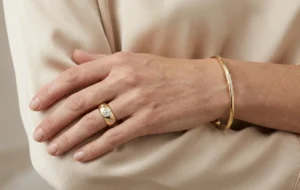
Satin and silk sit close to the skin and move with you. Your rings and bracelets should do the same. Any sharp edge or raised setting increases the risk of snagging fine threads.
1. Low-Profile Ring Settings
Low-set designs protect both the stone and the fabric.
- Bezel settings surround the girdle with metal, creating a smooth edge that reduces snag risk
- Flush settings sit level with the surface of the band, keeping the profile minimal
- Rounded galleries prevent sharp transitions under the setting
Antique-inspired pieces found in many estate jewelry collections often sit closer to the finger, which naturally lowers the chance of catching silk fibers during movement.
2. Bracelet Considerations
Bracelets require even more attention because they move constantly against sleeves.
- Choose smooth bangle interiors with polished edges
- Avoid exposed prong tennis bracelets when wearing silk sleeves
- Select diamond bracelets with refined under-gallery structure and even pavé alignment
Your goal is simple. Keep contact surfaces smooth, keep profiles low, and let the fabric move without resistance.
Metal Choice and Fabric Tone Harmony
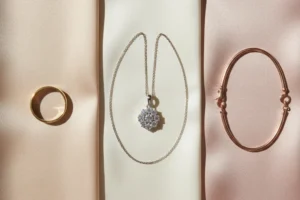
Satin and silk amplify tone. Your metal choice should support the fabric’s undertone instead of fighting it. When metal and fabric sit in the same temperature range, the result looks intentional and refined.
1. Yellow Gold with Champagne Satin
Champagne satin carries warm undertones. Yellow gold strengthens that warmth without creating harsh contrast.
- 18k yellow gold reflects light richly due to its higher gold content
- The deeper tone pairs well with ivory, rust, emerald, and muted neutrals
- High-polish finishes enhance evening lighting without overpowering soft satin
2. Platinum with Ivory Silk
Ivory silk leans cooler and cleaner. Platinum complements that clarity.
- Platinum 950 offers a bright white reflection with no yellow cast
- The cooler tone creates crisp contrast against pale silk
- It sharpens diamond brilliance without adding extra warmth
3. Rose Gold with Blush Satin
Blush satin already carries subtle pink undertones. Rose gold enhances that softness.
- Copper alloy content gives rose gold its warm hue
- The metal reads refined under candlelight or soft venue lighting
- It supports softer evening styling without heavy glare
Choose your metal based on undertone alignment. When tone and reflection work together, the fabric and jewelry feel balanced instead of competing.
Styling For Different Occasions
Satin and silk behave differently depending on the setting. The time of day, lighting conditions, and garment structure should guide your jewelry selection.
1. Bridal Silk
Bridal silk calls for softness and restraint. The fabric already carries presence, so your jewelry should enhance it quietly.
- Pearls complement silk’s natural luster and photograph beautifully
- Milgrain diamond settings add texture without aggressive sparkle
- Delicate pendants sit lightly against the collarbone and maintain proportion
Keep scale refined. Bridal silk benefits from smooth construction and balanced shine.
2. Evening Satin Gowns
Evening satin handles more contrast because artificial lighting intensifies reflection.
- Structured diamond drops frame the face without overwhelming glossy fabric
- Statement gemstone rings add focal depth, especially in deeper tones
- Controlled brilliance works better than excessive scintillation
Choose pieces with defined structure. Clean geometry reads stronger under venue lighting.
3. Daytime Silk Blouses
Day silk styling should feel lighter and practical.
- Minimalist studs keep the look polished without distraction
- Slim bangles with smooth edges prevent friction against sleeves
- Fine chain pendants maintain drape without pulling fabric
Daylight reveals everything. Keep finishes refined and settings low-profile for comfort and durability.
Final Thoughts
Jewelry styling for satin and silk clothes comes down to control. These fabrics reflect light, reveal detail, and respond to movement. Your earrings should respect that sensitivity via smooth construction, balanced proportion, and thoughtful metal choice.
Focus on low-profile settings, polished edges, and intentional shine. Match metal tone to fabric undertone. Let gemstone cut and scale support the garment instead of competing with it.
When you choose pieces with precision, satin and silk look refined, not overwhelmed. The result feels effortless because every detail works together.

BIO: Salina Grace is a GIA Certified Jeweler and designer specializing in vintage-inspired fine Jewelry rooted in Georgian, Victorian, and Art Deco traditions. |
(DISCLAIMER: The information in this article does not necessarily reflect the views of The Global Hues. We make no representation or warranty of any kind, express or implied, regarding the accuracy, adequacy, validity, reliability, availability or completeness of any information in this article.)
Must Read:
- Jewelry & Accessories Write for us
- Best Places to Buy Engagement Rings in London
- The Secret to Finding an Affordable Yet Luxurious Diamond Ring
- Different Styles of Gold Chains