
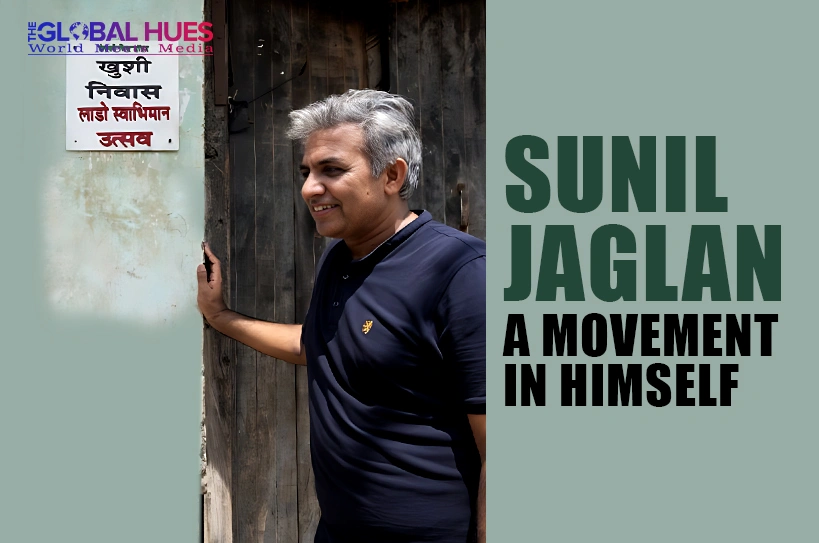
In a small village in Haryana where traditions ran deep and change felt impossible, one man quietly began rewriting the story of daughters. A man of grit, Sunil Jaglan, came with courage, questions, and a heart that refused to accept injustice as ‘normal.’
What began as a village survey opened his eyes to a disturbing truth. It revealed that girls were disappearing long before they were born. That’s when he stepped forward, and that step further turned into a movement that travelled from mud roads to the world stage. Today, people know Sunil Jaglan as not just a former sarpanch but as a national changemaker whose ideas have shaped conversations on gender equality across India.
His work as sarpanch
In 2010, Sunil was elected the Sarpanch of Bibipur village. Instead of settling for attending meetings and managing local administration, he decided to make a real impact. Within five years, he launched over 100 schemes focused on empowering women, which put Bibipur into the limelight.
One of his early breakthroughs was the Mahila Gram Sabha, formed in 2012. In a space where women were rarely invited to speak, Sunil created a platform solely for their voices.
A village survey that changed his life
Between 2010 and 2012, a survey revealed that 47 men in the village were unable to get married because of the gender imbalance. Deeply moved by what he saw, Sunil began door-to-door campaigns, street plays, and awareness drives against female foeticide, which halted multiple abortions. The impact of this movement was so powerful that he received a Rs 1 crore award from Haryana’s Chief Minister.
Ideas turned into movements
Sunil turned his simple ideas into large-scale movements. In 2015, he launched the “Selfie With Daughter” campaign, under which he asked parents to post a photo with their daughters to celebrate girlhood. Endorsed by PM Narendra Modi and former President Pranab Mukherjee, the campaign reached 80 countries.
Another bold step was the Purdah Removal Movement in 2013. Sunil first convinced his own wife to stop wearing the veil, which inspired 70 women in Bibipur to lift their veils the same day. This expanded to 100+ villages and led 42 communities to abandon this practice, with backing from the Pranab Mukherjee Foundation.
He also established India’s first women-only library, Lado Pustakalaya, equipped with WiFi, AC, and study spaces for girls. Former President Mukherjee applauded the initiative and encouraged its expansion to 100 villages.
Changing conversations in homes
In 2014, Sunil launched the Gaali Band Ghar campaign and urged families to stop using abusive language against women. Eventually, it spread to 142 villages. His Laado Nameplate initiative, where house nameplates display daughters’ names instead of family patriarchs, further strengthened the idea of pride in girlhood. The campaign became viral shortly and was relaunched in 2020 in several districts.
The taboo around menstruation
In 2019, Sunil took on another deeply stigmatised issue, Menstruation. He created a Period Chart for households and encouraged families to track menstrual cycles openly to normalise conversations. Over 1,000 women across seven states adopted it, including in conservative regions like Nuh and Jind.
Digital transformation in rural India
Under his guidance, the Bibipur Model of Empowerment – a digital, inclusive rural governance framework, was adopted by the Indian government. In 2024, he introduced India’s first AI-driven training program for Panchayats, making rural governance more efficient and future-ready.
Feathers in his cap
Sunil’s leadership and innovation earned him several prestigious awards. Sunil was the first person to be awarded with Rashtriya Gaurav Gram Sabha Puruskar in 2013. For his excellence in village-level governance, he received the Rajiv Gandhi Panchayat Award in 2014.
He also starred in the acclaimed documentary ‘Son Rise,’ which won the National Film Award for Best non-feature film, opened the 50th International Film Festival of India, and bagged the Best Documentary title at the New York Indian Film Festival.
Through Sunil’s activism, innovations, and compassion, he has shown the country that true leadership is a leadership that uplifts, empowers, and transforms generations.
Also read these Inpsiring Stories: