
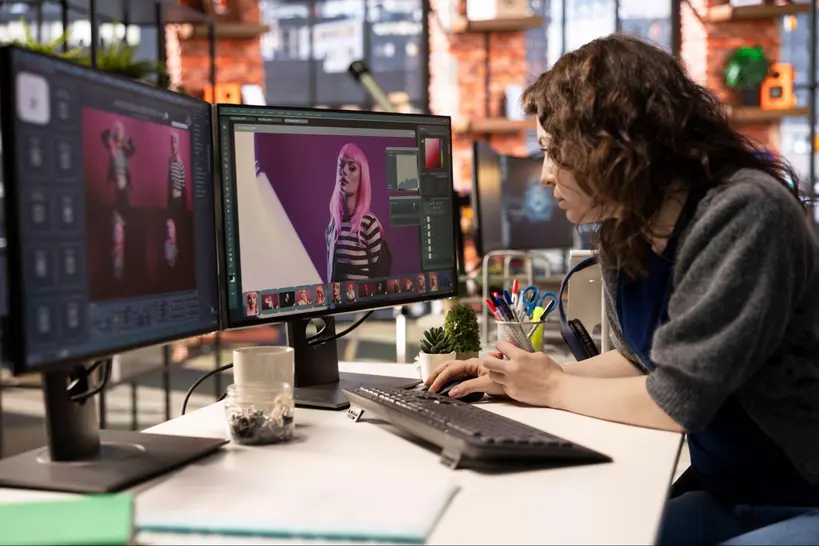
You spend an hour or two editing a photo just to realise it still isn’t “right”. Maybe the colours are off or the background looks flat, or maybe your subject isn’t popping as you envision it to. AI photo editing should make your life easier, but between complicated tools and confusing filters, it can feel like putting together a puzzle with no picture on the box.
Many students, hobbyists, and aspiring designers find it tough to make expert edits without losing time experimenting. But it shouldn’t be like this! Armed with the right information, you can utilise AI to streamline your editing method and gain self-belief to make terrific edits in much less time.
Below we share 10 tips for photo editing using AI that you can start using today to make your photos look better than ever.
1. Choose the Right Editing Software
For PC users interested in professional photo editing, Adobe Photoshop for students is an excellent option because you can access premium tools at a fraction of the cost. There are other AI-friendly photo editors out there, like GIMP, Affinity Photo, or Luminar.
Selecting your software is the first step towards levelling up your AI photo game. Choose programs that work with your current workflow, are intuitive, have the AI functions you want, and don’t hinder your process.
Find a program that allows you to focus on trial and error and honing your edits.
2. Understand AI-Powered Filters and Enhancements
AI-powered filters and enhancements can appear to be magic, however, they can quickly turn out to be overwhelming if you don’t take care. To keep away from falling down an endless enhancement rabbit hole, find out how each filter and edit works.
Play around with more conservative edits like exposure, shade changes, or skin smoothing earlier than progressing to more extreme changes. By knowing what your edits are doing, you’ll preserve manage of the enhancement process and permit the AI to work for you.
3. Optimise Image Quality Before Editing
This tip applies to each normal modification and AI modification. Before you begin, make sure you’ve got the very best first-rate authentic picture you may. AI filters can perform miracles, but they can’t repair a blurry, pixelated, or poorly uncovered photo. Start with high-decision files with as little compression as feasible, and your AI edits will appear higher than ever.
4. Leverage AI Retouching Tools for Portraits
AI picture modifying tools in reality shine when enhancing snapshots; however, it’s easy to overdo it. Tools like skin smoothing, eye enhancement, or light changes let you keep time and decorate your image; however, take into account that less is more.
Most photo editing apps have AI portrait editing capabilities built right in. This means you can polish up your photos without needing to manually edit every blemish or stray hair. Try using AI portrait editing features little by little. You want your photos to look flawless, not computer-generated.
5. Automate Repetitive Tasks With AI Actions
Batch editing multiple photos can become tedious, especially when you need to perform the same edit across various images. Many Artificial Intelligence tools allow you to record actions or process photos in batches. Using technology to streamline your workflow allows you to be more efficient while editing and spend more time being creative. Automations can range from small tasks like applying similar filters or exposure adjustments.
6. Fine-Tune Colour and Tone With AI Assistance
Tweaking the shade, brightness or comparison could make your image look absolutely one of a kind. Colour theory is complicated but you may use AI to offer guidelines or modify the entirety robotically. Don’t rely upon presets by myself, though, use your eyes to judge the quality and balance the tones.
Try nudging smaller settings first (growth saturation a touch, tweak shadows/highlights) your enhancing the appearance extra naturally this manner. As you gain insight, you’ll learn how to quickly see what works best with AI looking after the heavy lifting.
7. Experiment With AI-Powered Artistic Effects
Got the fundamentals down? Now it is time to play with a few fun results. Filters, fashion transfers, and different creative consequences permit you to make your photograph pop in ways you could not have imagined; however, do not go too crazy. Make small changes with one effect at a time, layering them together until you get the look you are going for.
8. Protect Your Original Images: AI and Non-Destructive Editing
We all understand the pleasure of trying to jump right into using AI edits. However, editing your original record can make reverting again hard in case you want to try a different method. Editing non-destructively via the usage of layers, clever gadgets, or by duplicating your document allows you to try as many edits as you need without losing the original record.
Even small habits like saving copies of your project or taking a screenshot on your laptop before editing can act as a quick save to reference your work and avoid mistakes. There’s no need to feel restrained when making edits if your original will be safe.
9. Learn Keyboard Shortcuts and Workflow Tricks
Basic keyboard shortcuts can help you paintings quicker and smoothly than anticipated. Learn to fast undo, exchange gear or brushes, or upload results without switching windows. Small time savers like layer management, file naming, and using templates you can reuse may also help you accelerate your enhancement technique. The extra shortcuts and workflow tips you research, the extra time you may spend focusing on your creativity.
10. Keep Improving Your AI Skills
As you’ve probably noticed so far, there’s constantly something new to study in AI photo modifying. New applications pop up and contemporary ones are continuously releasing updates with new features to try. Challenge yourself to play around with equipment you don’t generally use.
Try following along with tutorials or seeing how different creators paint. There’s no better way to enhance your abilities than through continuing to learn and exercise. The more you operate AI, the less complicated it becomes to edit and create lovely, expert pix.
From Good to Great: AI Editing Made Easy
AI photo editing doesn’t have to be scary. With the right tools, photo editing knowledge, image preparation, and experimentation, you can take simple edits and make them look incredible and professional.
Little adjustments and tricks in your modifying workflow will save you time and effort at the same time as enhancing. Protect your originals with backups, use keyboard shortcuts, and learn how to automate duties so you can focus on the fun part of picture editing. Keep working towards and attempting new things every chance you get.
You can learn something new from every single image you edit. Whether you learn a new editing trick or find new and faster ways to edit, you’re going to become better every time you touch up an image.
(DISCLAIMER: The information in this article does not necessarily reflect the views of The Global Hues. We make no representation or warranty of any kind, express or implied, regarding the accuracy, adequacy, validity, reliability, availability or completeness of any information in this article.)
Must Read:
- S Jaishankar: Meet Veteran Diplomat Shaping India’s Foreign Policy
- Top 10 Forex Traders in India – Updated Ranking & Insights
- Charting the IPO Journey in India: Past, Present, and Beyond
- SHIV NADAR: A PHENOMENAL BUSINESS TYCOON