Emergency fund is meant to cushion your financial stability within situations where an unexpected event may happen but is not necessarily the first or best tool at the avail. When property damage, liability or major repairs come up, many individuals will automatically reach into their pockets to withdraw funds in their savings without first checking the coverage they already have via insurance. Knowing the role of insurance in your overall financial plan can bring you closer to saving money, preventing long-term downturns, and recuperating more effectively in the face of expensive disruptions.
The Intention of Insurance Coverage
Insurance is meant to open the big and unpredictable risks in your personal savings and pass them on to a larger financial system that is meant to absorb them. The payments made in form of premiums are overtime such that when the subject suffers a serious loss, the burden is not passed solely on one household. Such organization enables people to confront severe events without exhausting resources used for various future purposes.
Bypassing your policy and relying at once on your emergency fund is, in fact, self-insuring once you have already paid the premium. This can undermine your financial cushion and decrease your capacity to deal with the crisis in the future. The first step in saving is to use insurance to make sure that in the event of an incident that falls beyond the limits of a policy or some form of expense that cannot be insured, the savings are there.
Long Term Saving Protection
Emergency funds can take years to develop, and it may be painful and tedious to re-develop them once a significant draw is made. Home repairs, lawsuits or medical-themed liabilities can be very costly to the wallet and soon eat up any cash reserves that are meant to offer stability in the event of job loss or income displacement. These huge expenses can be taken care of by insurance and one accident will not cancel years of hard saving.
In the case of homeowners, fire, water or theft claims can be costly. Using personal savings on a deductible is something you need rather than a total loss of reserves since depending on home insurance in Ontario may lead to a good deductible, but a loss of all the reserves. This is a way in which households can retain liquidity and still be able to cater to any urgent repair or replacement requirements.
A Cash Flow Recovery Management
Expenses tend to go beyond the immediate harm as a result of the incident following an unforeseen event. Living in temporary shelters, transportation, and lost wages may be stressful to monthly finances. Insurance claims and other living expense coverage will be useful in stabilizing cash flow in this period so that they do not need to use savings as a source of daily expenses.
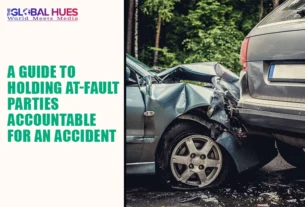
The same pressures are made by vehicle accidents. Repair fees, car rent, and liability claims can be expensive rather soon. Turning first to auto insurance in Ontario can cover these financial obligations and prevent the emergency fund from being used for costs that are already insured, keeping savings intact for other essential purposes.
Psychological and Planning Advantages
The fact that insurance will take up significant losses gives one a certain feeling of security, which makes them more comfortable with financial planning. It enables families to regard their disaster fund as a real backup fund and not as a catastrophe reserve fund. This clarity is able to decrease stress and positively change decision-making in already problematic situations.
Good financial habits are also enhanced by using insurance in good faith. It works in favor of the fact that the different functions of savings, investments, and protection are such. Within these limits, people can have a balanced financial set up which is more likely to bear both the short term shocks and long term objectives.
Using insurance as a precursor to raiding your emergency funds is a reasonable plan, which saves money, helps keep the bills paid, and is in line with good financial management. You save the resources of greater stability and future by permitting policies to cover major, covered losses. This is one of the strategies that will assist in making sure that in case of a real emergency, you will still have a solid financial basis to lean on.
(DISCLAIMER: The information in this article does not necessarily reflect the views of The Global Hues. We make no representation or warranty of any kind, express or implied, regarding the accuracy, adequacy, validity, reliability, availability or completeness of any information in this article.)
Must Read:
- Gyandhan: Offering sustainable education financing
- Indian School Finance: Longest-standing flagship investments in education
- P.C. Financial Services: Disbursing unsecured cash loans
- Tushar Kansal Explains How Power, Money and Geopolitics Are Being Rewritten