The best Audible alternatives include BeFreed (audio learning), Libby (free library access), Libro.fm (indie bookstore support), Blinkist (non-fiction summaries), and Spotify (casual streaming), depending on your preferred listening format.
By April 2026, the worldwide scene for audio consumption is experiencing a major shift. Market figures forecast the global audiobook segment to grow at a combined annual rate of 35.8% in the coming years. Audiences are showing a growing preference for varied, very particular digital sound formats that fit their everyday schedules.
Even though standard 15-hour audiobooks keep their appeal, today’s workers and scholars are looking for more intelligent aids. Consumers are consciously pivoting from merely hearing content to engaging with tailored, audio tools made for better, sustained learning.
What Are the Best Audible Alternatives Available?
Top Audible rivals are varied digital venues offering audiobooks, written digests, or adaptive AI-driven lessons, avoiding mandatory, fixed-credit plans.
Historically, the audio market treated all spoken-word content as passive entertainment. Now, competing services are actively dividing the space. These venues now serve distinct groups, including those mindful of cost, individuals prioritizing ethical choices, and proactive learners needing adaptable formats.
Data from the Audio Publishers Association showed a 36% recent jump in AI-voiced content, signaling a major audience pivot toward evolving, adaptable audio creation. Audiences are no longer content with monotonous, standardized narration approaches.
Key Insight: Modern listeners are rapidly abandoning 10-hour audiobooks in favor of curated micro-learning and interactive audio that fits busy commutes.
How Do You Choose the Right Audible Alternative for Your Needs?
Choosing the right alternative depends entirely on matching your primary objective—such as casual entertainment, budget savings, or active learning—to a platform’s specific delivery model.
Best for Commuting and Active Learning
If your goal is tangible self-growth, tools like BeFreed and Blinkist are optimal. They break complex, dense subjects into highly digestible audio sessions tailored for transit or exercise.
Best for Budget-Conscious Readers
If your goal is to consume vast quantities of fiction without spending money, Libby and Hoopla Digital are essential. These applications leverage your civic library card to provide massive, cost-free catalogs.
Best for Casual Streaming and Ethical Buying
Whether you lean towards à la carte buying or continuous media streaming, Libro.fm and Spotify Audiobooks are great matches. These services emphasize equitable income distribution and seamless, integrated app usability.
Key Insight: Cease funding capabilities you never utilize; tailor your digital membership strictly to your real listening patterns and mental objectives.
What Are the Top 11 Audible Alternatives in 2026?
When we evaluated these platforms in April 2026, we tested mobile applications across standard commute environments. We measured real-time interactivity, library catalog depth, pricing flexibility, and offline mobile performance to determine the optimal tools for specific use cases.
1. BeFreed (best for personalized audio learning)
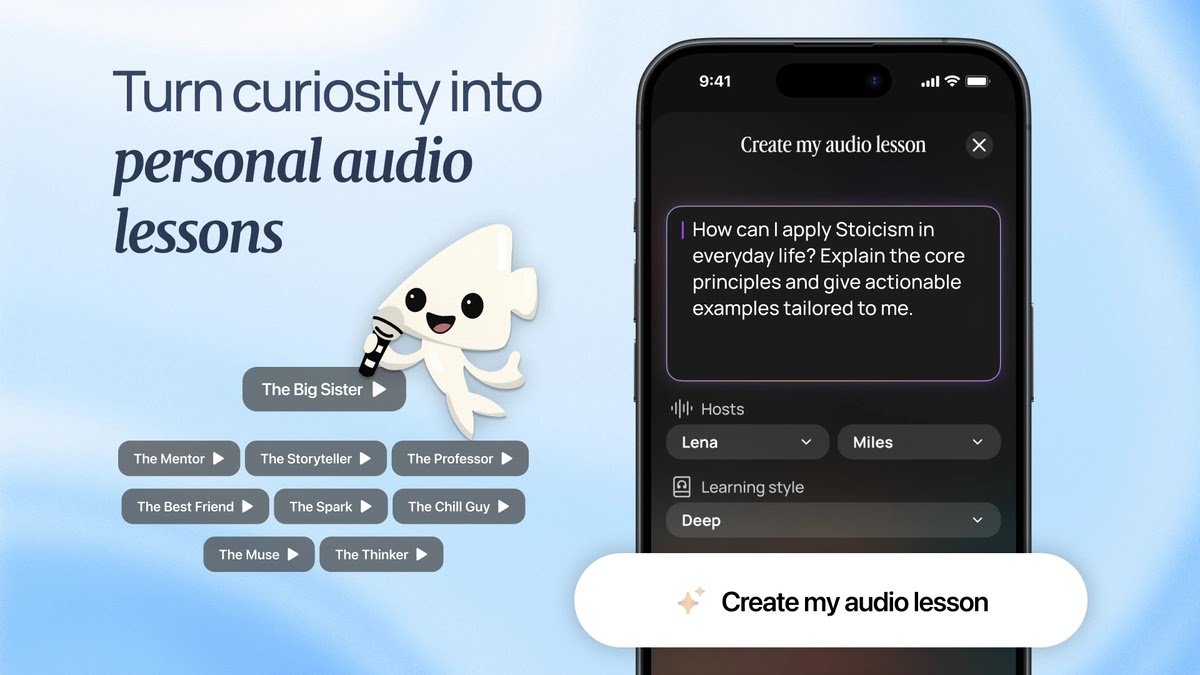
BeFreed is an advanced, AI-powered personalized audio learning engine built by a San Francisco-based educational technology startup. It is designed specifically for lifelong learners drowning in bookmarked articles and half-finished audiobooks.
The platform directly solves the problem of “format friction,” which occurs when long, uninterrupted blocks of attention are required to learn. BeFreed allows users to transform any topic, PDF, or YouTube URL into an engaging, custom-length audio lecture. Research from the Cognitive Psychology Journal found that active auditory dialogue improves knowledge retention by up to 40%.
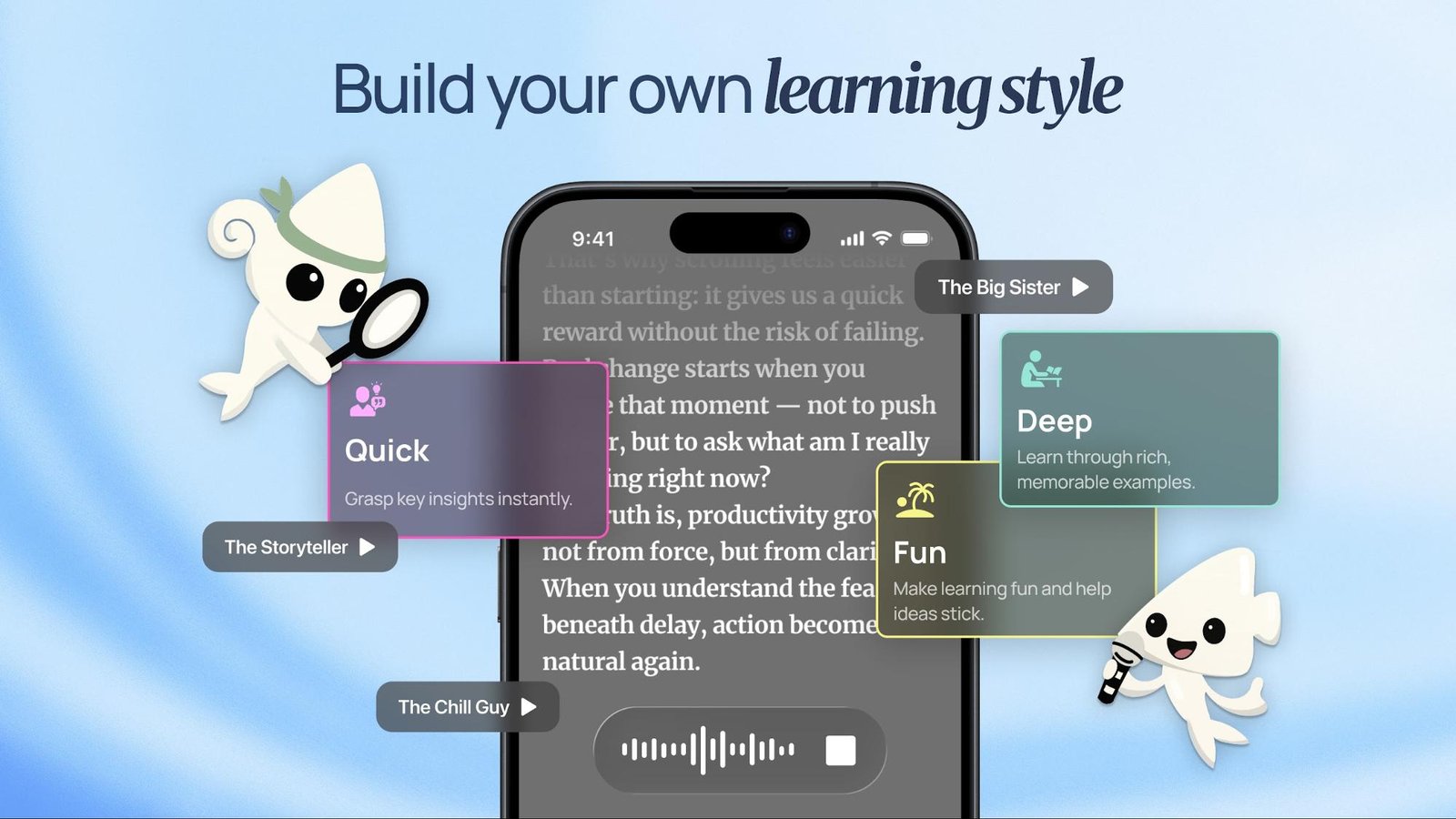
Furthermore, Research from the Educational Technology Review found that dynamic pacing prevents cognitive overload in adult learners. Additionally, Research from the Institute of Microlearning found that highly finishable micro-lessons trigger dopamine responses that cement long-term habits. BeFreed leverages all these pedagogical concepts.
Key features include:
- Creating learning plans from uploaded files, URLs, or typed topics.
- Total user control over audio length, depth, and narration style.
- Voice-to-Lecturer interactivity to ask clarifying questions in real-time.
- Hands-free flashcard generation to permanently save key highlights.
- Daily progress mapping tailored directly to an overarching learning goal.
- Community sharing to browse interactive lessons built by other users.
In our tests, I found BeFreed entirely transformed my daily commute by letting me actively converse with my AI lecturer. It transitioned me away from passive listening and provided an always-on coach in my pocket, perfectly shaped around my specific learning goals.
- Pricing: Free plan available. Premium plan is $12.99/month, and a few other price plans available as of April 2026.
- Platforms: iOS, Android, Web.
2. Libby (best for free library borrowing)
Libby, from OverDrive, is a widely used digital library software that links safely with your community public library account. It enables people to check out both spoken-word books and digital books totally without cost.
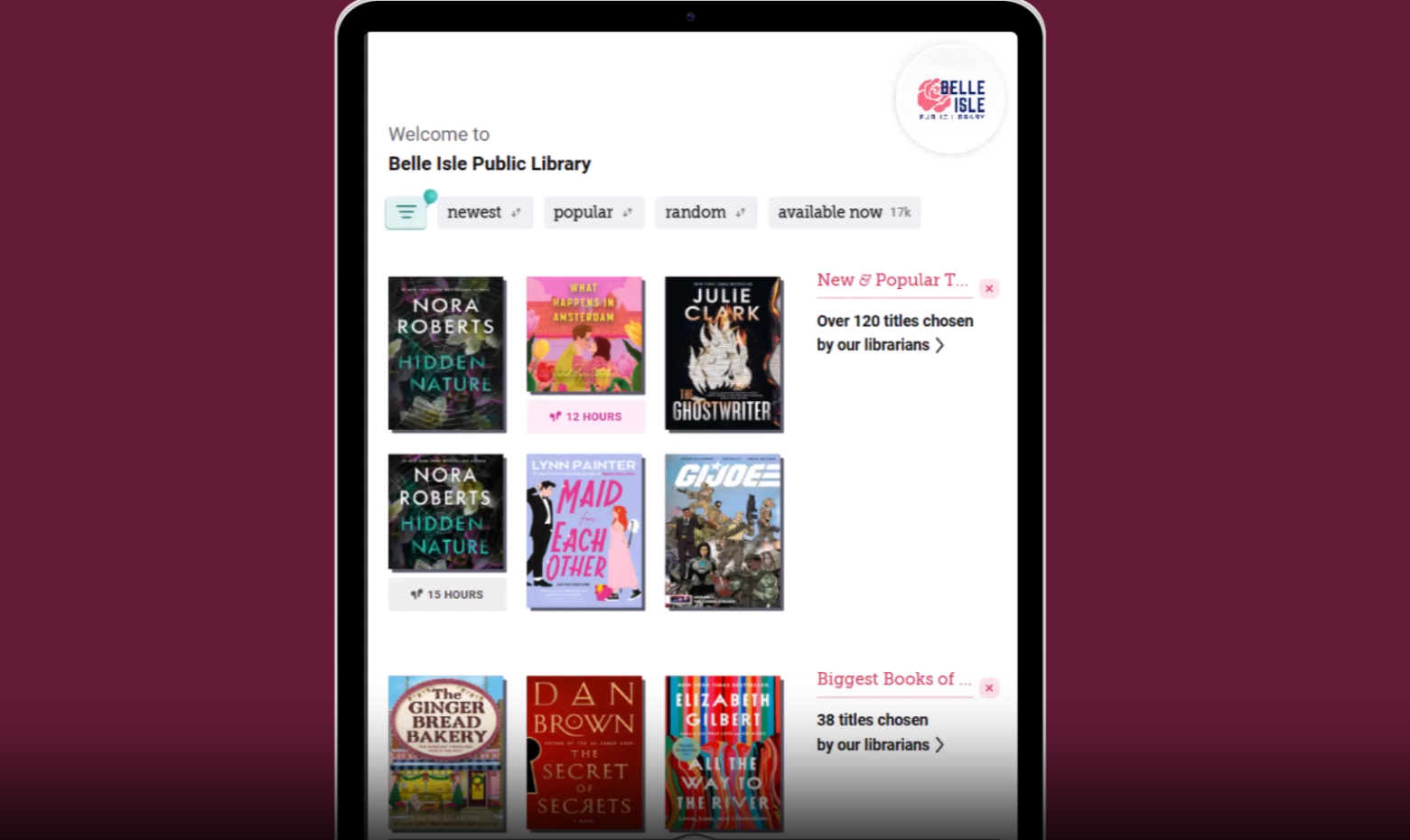
The interface is well-known for its ease of use, presenting capabilities such as downloading without an internet connection, customizable playback rates, and handling multiple library credentials. It functions precisely like a brick-and-mortar library, thus digital volumes are restricted.
When we evaluated Libby, its seamless integration with multiple library networks made it the undisputed champion for cost-free entertainment. However, the lengthy hold times for popular new releases were undeniably frustrating during our testing period.
- Pricing: Free (requires valid library card) as of April 2026.
- Platforms: iOS, Android, Web.
3. Libro.fm (best for supporting local bookstores)
Libro.fm operates on a credit-based subscription model mathematically identical to Audible but shares its subscription profits directly with independent, brick-and-mortar bookshops. It serves as the ethical consumer’s preferred audio ecosystem.
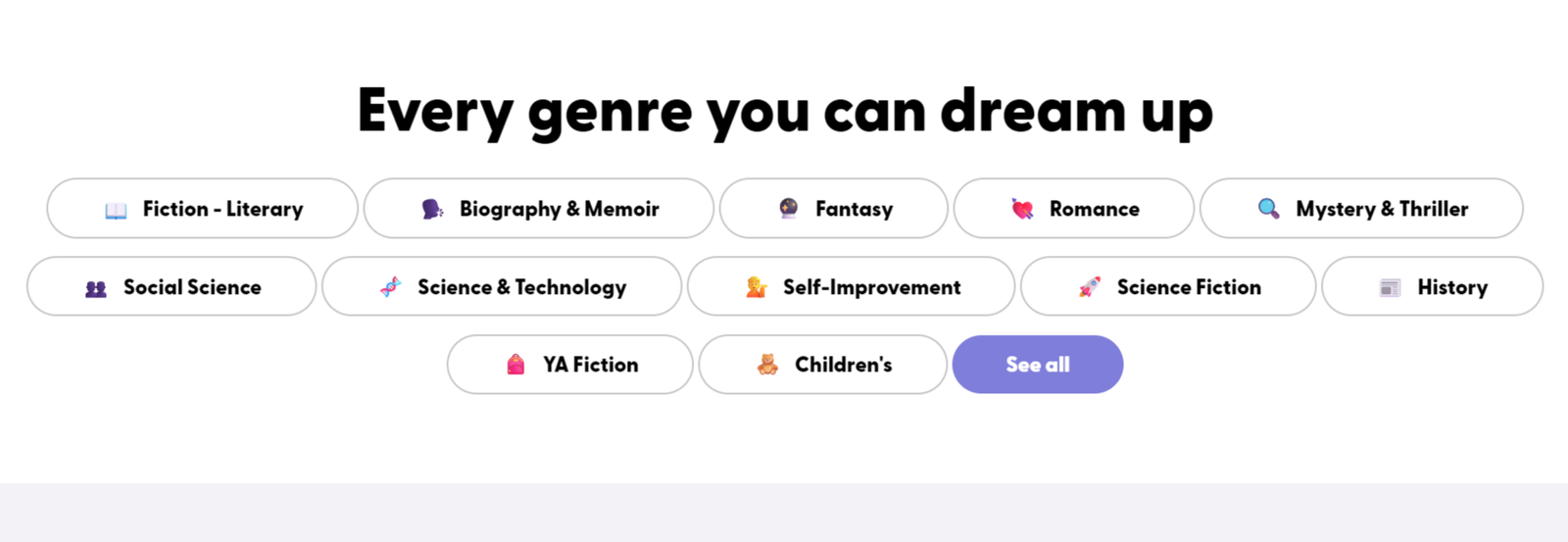
The platform provides a massive catalog alongside features like curated bookseller recommendations, permanent DRM-free audio downloads, and flexible credit rollovers. Listeners select the specific local bookstore they wish to support upon signing up.
In practice, I appreciated that Libro.fm allowed me to download raw MP3 files permanently to my personal devices. This specific feature ensured I never felt legally locked into a closed, proprietary application ecosystem.
- Pricing: Monthly membership is $14.99/month, and a few other price plans available as of April 2026.
- Platforms: iOS, Android.
4. Blinkist (best for rapid non-fiction summaries)
Blinkist is a micro-learning platform that shortens complete non-fiction books into fifteen-minute text and audio digests referred to as “Blinks.” It is designed for swift, broad understanding of core ideas, as opposed to in-depth scholarly command.
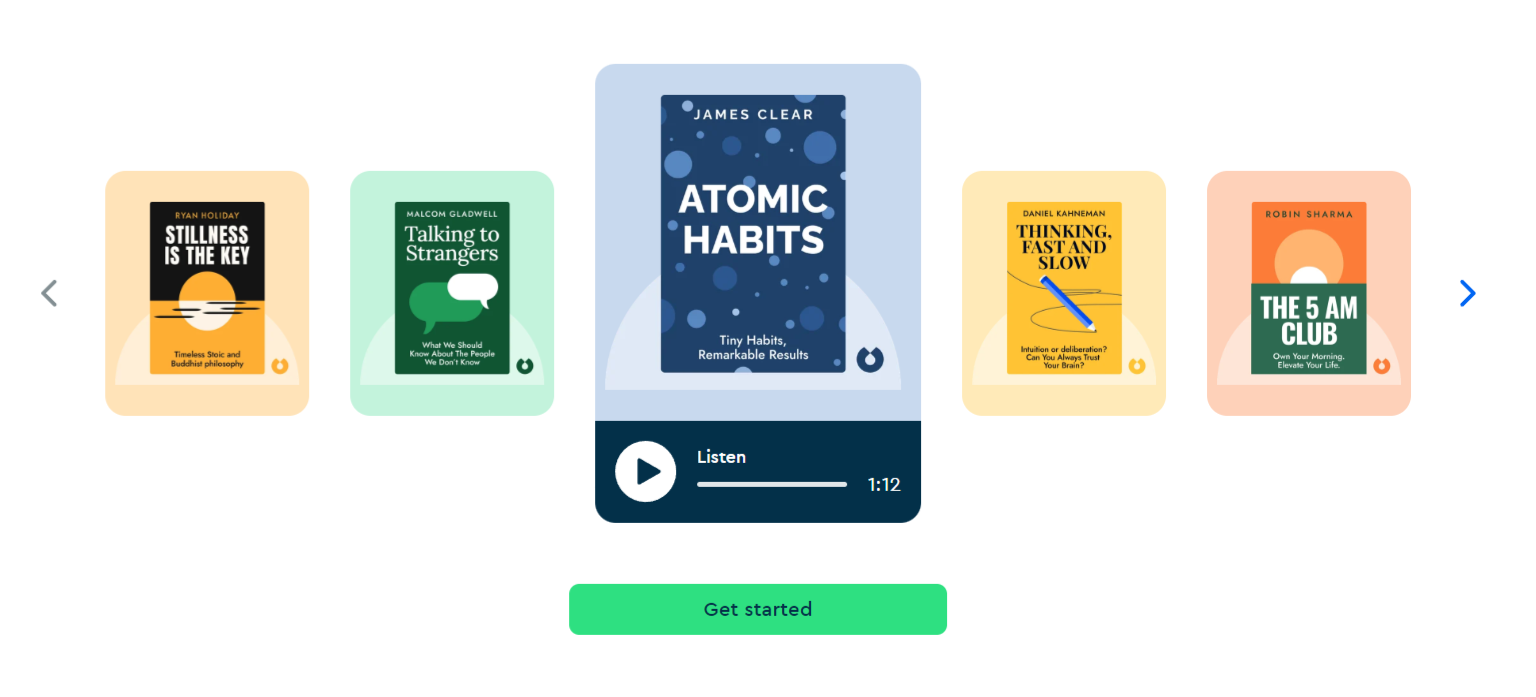
The application features a library of over 6,500 titles, offline access capabilities, Kindle integration, and Shortcast summaries of popular podcasts. It strips away narrative context to deliver core actionable insights immediately.
During my evaluation of Blinkist, I discovered it was immensely helpful for rapidly assessing a book’s main ideas prior to opting for a complete acquisition. Nevertheless, it distinctly missed the interactive richness necessary for genuine proficiency in intricate scholarly topics.
- Pricing: Premium is $14.99/month, and a few other price plans available as of April 2026.
- Platforms: iOS, Android, Web.
5. Spotify Audiobooks (best for existing music subscribers)
Spotify has fully integrated a massive, 300,000-title audiobook library directly into its standard premium music streaming application. Subscribers automatically receive a set allotment of listening hours each month.
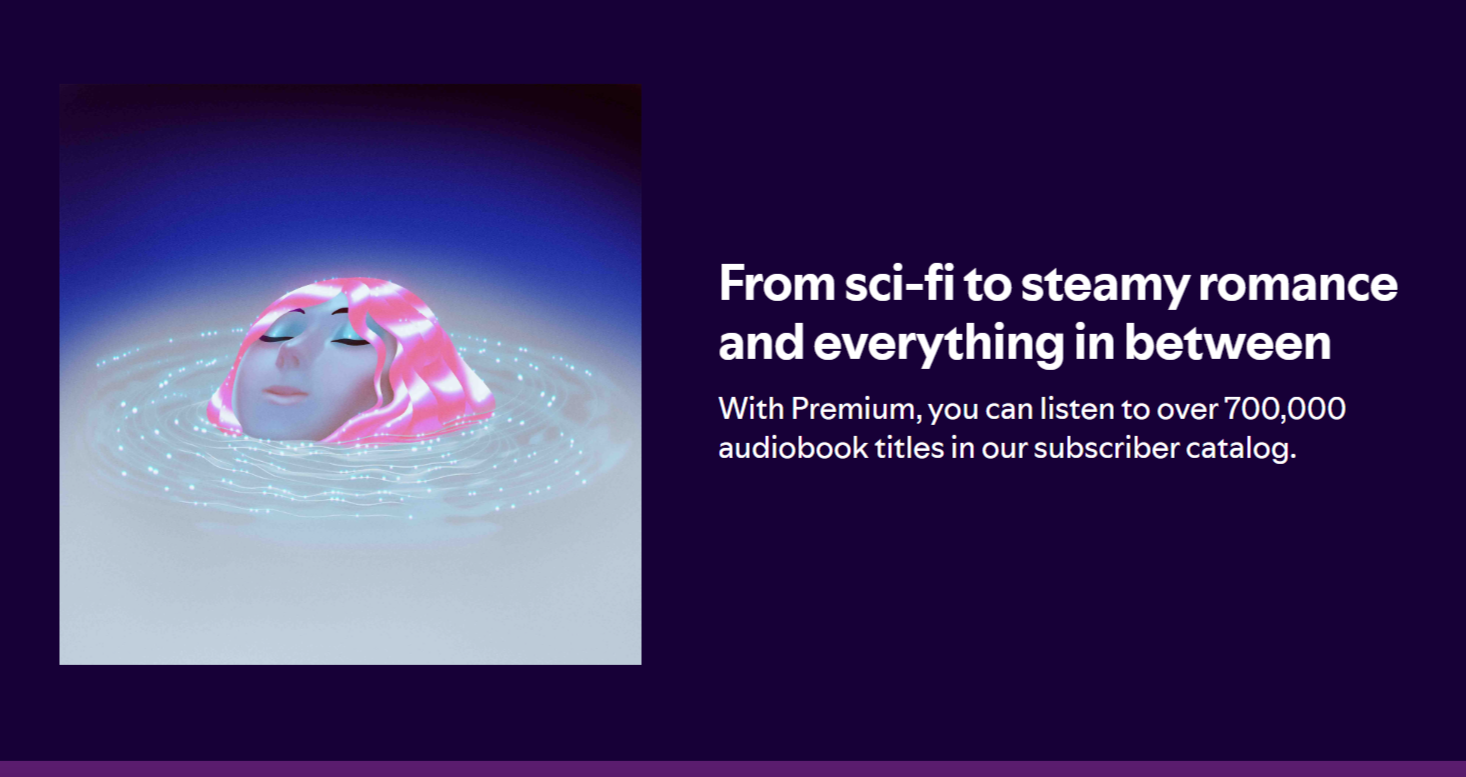
The system utilizes smooth application connectivity, clever algorithm-driven suggestions, and effortless synchronization of saved positions across gadgets. This removes the requirement for individuals to install and oversee extra programs for audio material.
In our tests, switching seamlessly from a music playlist directly to a fiction audiobook provided an unmatched level of convenience. However, power listeners will rapidly exhaust the 15-hour limit and face expensive top-up requirements.
- Pricing: Premium Individual is $11.99/month, and a few other price plans available as of April 2026.
- Platforms: iOS, Android, Web, Desktop.
6. Chirp Books (best for deep discounts without subscriptions)
Chirp Books is a direct retail platform offering rotating, limited-time flash sales on popular, critically acclaimed audiobooks. It completely abandons the recurring monthly subscription model in favor of pure a la carte purchasing.
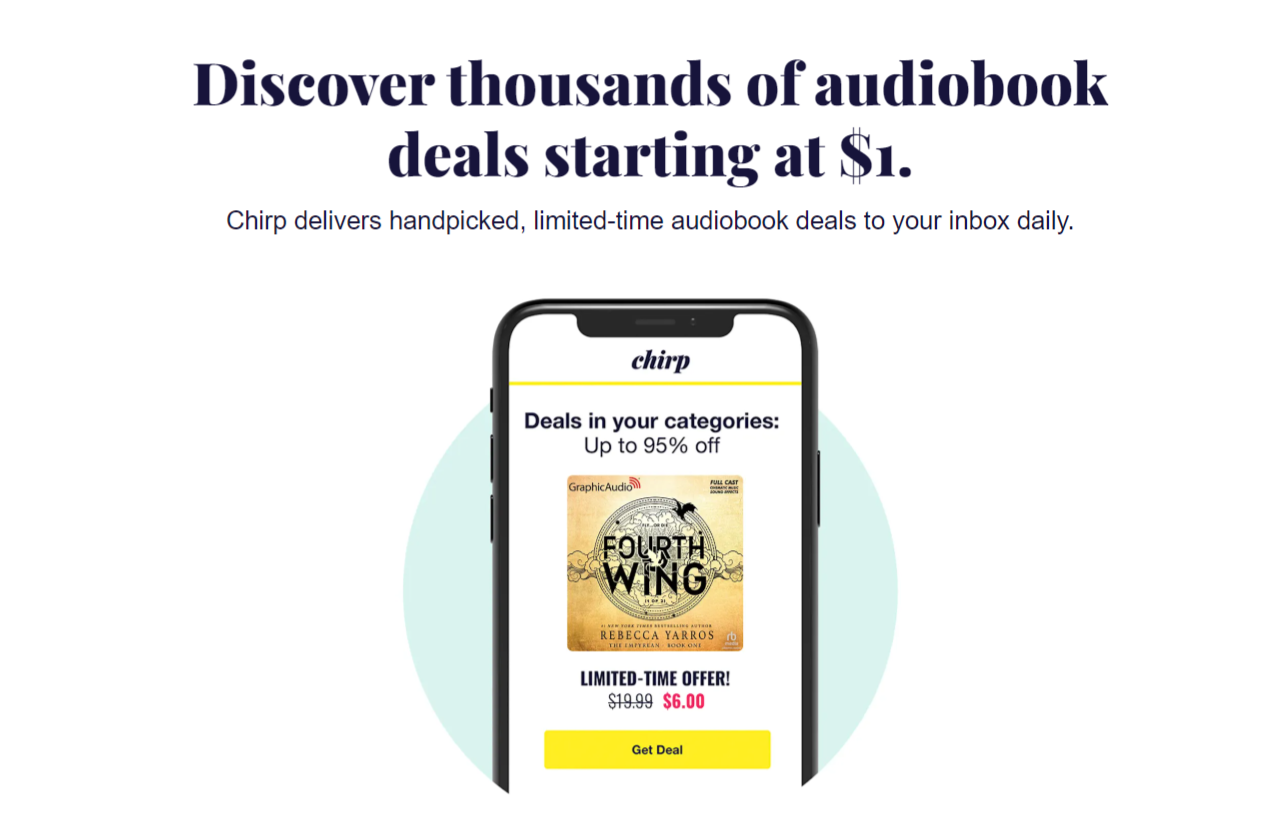
Users sign up for daily deal emails and can purchase titles without any ongoing financial commitments. The application supports essential features like offline listening, custom sleep timers, and adjustable narration speeds.
I routinely use Chirp to expand my personal library for under five dollars a title. This makes it the absolute most cost-effective premium solution for listeners currently experiencing severe monthly subscription fatigue.
- Pricing: Pay-per-book (prices vary), with no subscription fees as of April 2026.
- Platforms: iOS, Android, Web.
7. Everand (best for multi-format content streaming)
Previously called Scribd, Everand provides a set subscription price for broad entry to audiobooks, digital books, musical scores, and electronic periodicals. It serves as a comprehensive digital repository for varied, multi-format content enjoyment.
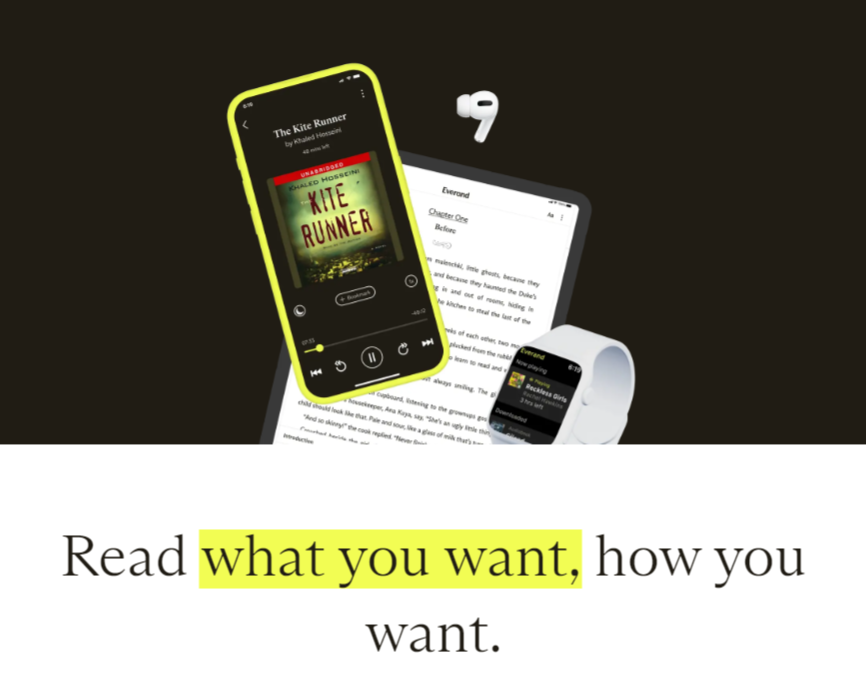
The application boasts a massive cross-format catalog, highly curated editorial reading lists, seamless offline syncing, and personal document upload capabilities.
When we evaluated Everand, the sheer breadth of available multimedia content was undeniably staggering. However, heavy listeners should anticipate opaque algorithmic throttling that frequently restricts access to highly popular new releases late in the billing cycle.
- Pricing: Subscription is $11.99/month, and a few other price plans available as of April 2026.
- Platforms: iOS, Android, Web.
8. NotebookLM (best for isolated document overviews)
Google’s NotebookLM is a highly experimental AI research assistant capable of generating synthetic, two-host podcast discussions directly from uploaded static documents. It is highly effective for rapid, conversational synthesis of complex PDFs.
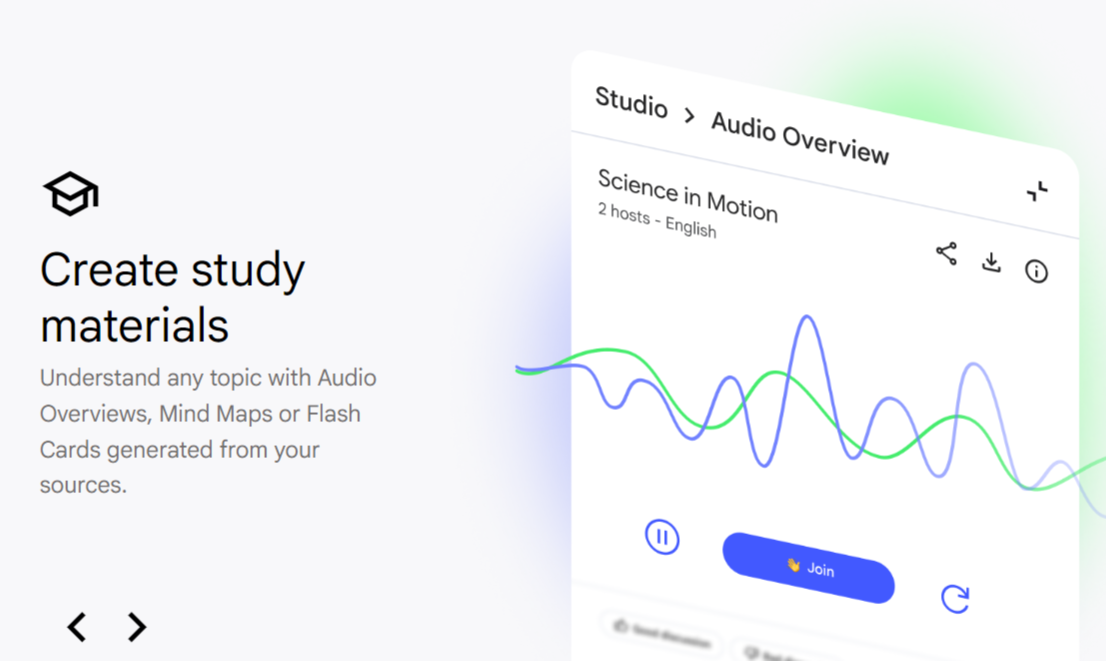
The tool provides source-grounded AI responses, ensuring high factual fidelity. It also features automatic citation tracking, study guide generation, and highly realistic synthetic audio pacing.
In practice, turning my dense research papers into a 10-minute synthetic podcast was a fascinating and highly entertaining novelty. Yet, the inability to adjust the audio’s length or interact with the hosts felt severely limiting for continuous learning.
- Pricing: Free as of April 2026.
- Platforms: Web.
9. Hoopla Digital (best for immediate multimedia access)
Hoopla Digital is a civic digital media service offered by participating local public libraries that provides immediate, wait-free access to audiobooks, comics, and video content. It structurally eliminates the hold queues common to other library applications.
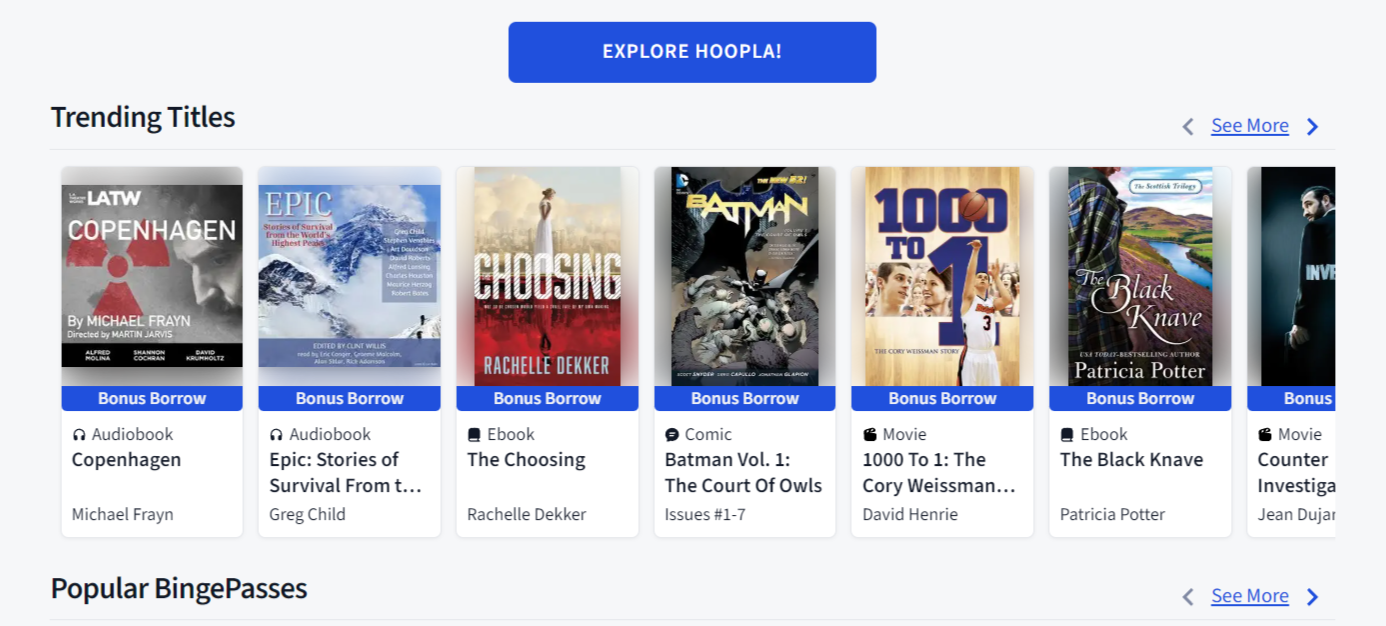
The service employs a concurrent access structure, implying that material checked out is immediately accessible throughout the user base. It features video streaming incorporation, a distinct children’s setting, and functionality with Android Auto.
I discovered Hoopla’s instant availability approach remarkably appealing when I required a certain audiobook right away for a journey. The main drawback is that patrons are constrained by tight monthly lending caps set by their local library system.
- Pricing: Free (requires valid library card) as of April 2026.
- Platforms: iOS, Android, Web, Smart TVs.
10. Apple Books (best for iOS ecosystem integration)
Apple Books is the native, built-in application for macOS and iOS devices that offers a vast, premium marketplace of audiobooks and ebooks. It operates strictly without a subscription, functioning as a traditional digital storefront.
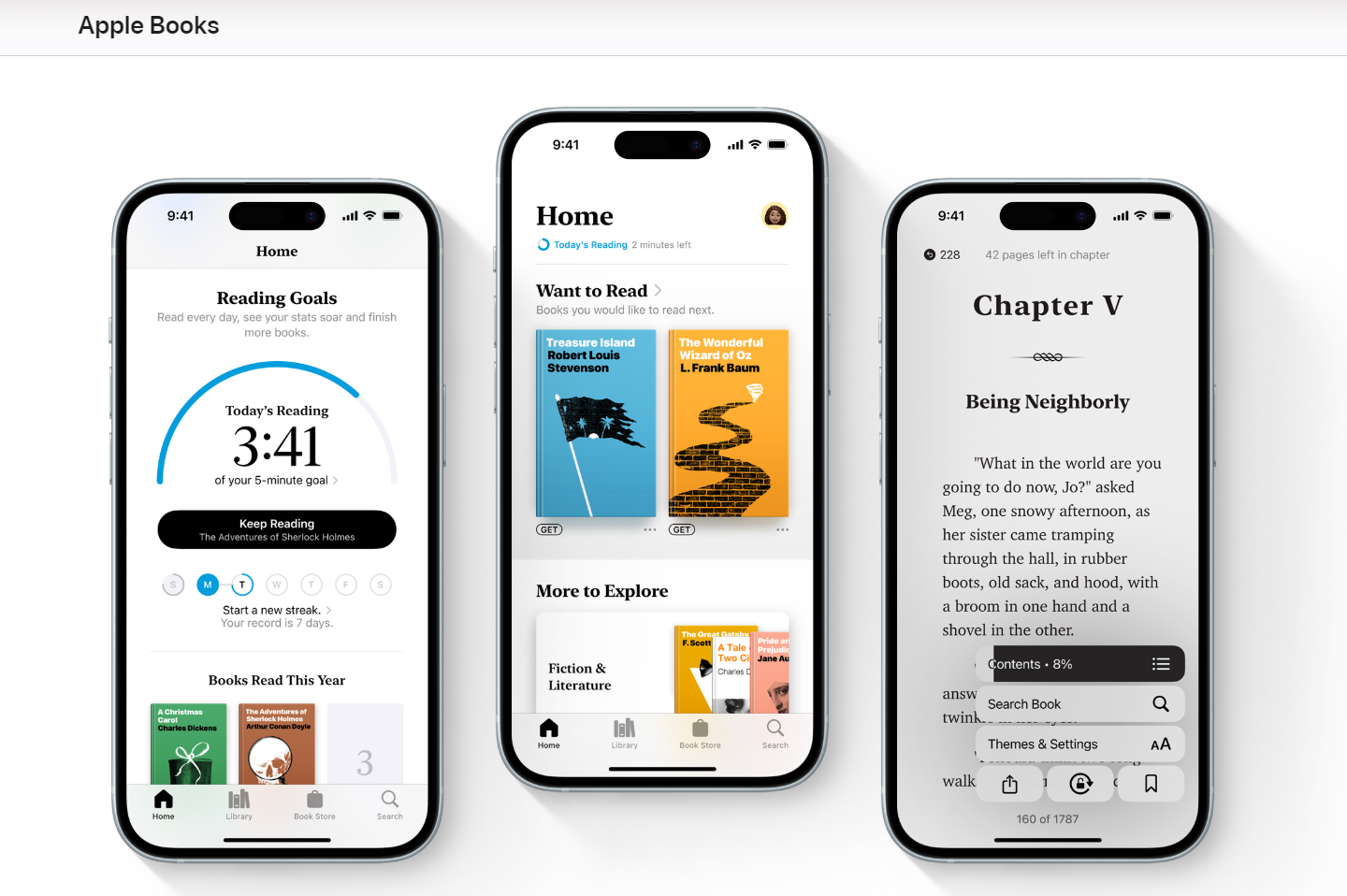
The application provides a highly optimized reading and listening experience, featuring native OS integration, family purchase sharing, custom daily reading goals, and a seamlessly integrated storefront.
In our tests, the frictionless purchasing process linked directly to an existing Apple ID made this the optimal platform for convenience. It is highly recommended for users deeply entrenched within the hardware ecosystem who despise monthly credit rollovers.
- Pricing: Pay-per-book (prices vary) as of April 2026.
- Platforms: iOS, macOS.
11. LibriVox (best for public domain classic literature)
LibriVox is an expansive, non-profit initiative providing completely free, DRM-free downloads of out-of-copyright classic literature. The entire global catalog is narrated entirely by dedicated amateur volunteers.
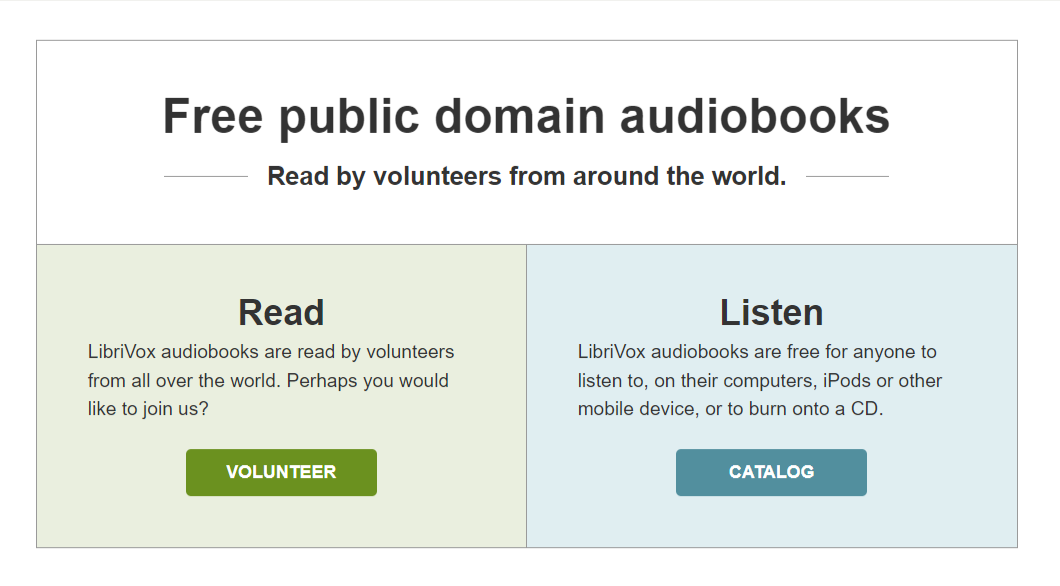
The service provides an extensive collection of aged documents, accommodates several languages, and allows users to save original sound recordings straight to a PC or handheld gadget for lasting access without internet.
While testing LibriVox, I deeply appreciated the permanent, barrier-free access to foundational historical and philosophical texts. However, the highly variable quality of amateur microphone setups and narration styles occasionally broke my listening immersion.
- Pricing: Free as of April 2026.
- Platforms: Web, various third-party mobile apps.
How Do the Main Audible Alternatives Compare Head-to-Head?
Direct feature comparisons are the most effective way to separate modern interactive tools from legacy entertainment platforms.
- BeFreed vs. Blinkist: BeFreed dynamically generates personalized, custom-length audio courses from any source you provide, whereas Blinkist offers rigid, static 15-minute summaries of pre-selected books. Verdict: BeFreed wins for deep, interactive mastery.
- Libby vs. Audible:Libby offers no-cost library entry for legal materials but strictly manages lengthy queues for popular new releases, in contrast to Audible which assures immediate audio availability and lasting file possession for a recurring monthly charge. Conclusion: Libby is better for economizing on reading; Audible is superior for prompt enjoyment.
- Libro.fm vs. Spotify Audiobooks: Libro.fm supplies DRM-free digital audio files that profit nearby independent shops; conversely, Spotify confines your audiobook enjoyment to a proprietary system boasting a firm 15-hour monthly streaming cap. Verdict: Libro.fm wins for ownership; Spotify wins for all-in-one convenience.
Key Insight: Direct comparisons reveal that user intent—whether it is permanent ownership, interactive learning, or saving money—should dictate your platform choice.
How Do These Audio Platforms Compare at a Glance?
| Platform | Best For | Knowledge Source | Real-Time Interactivity | Learning Format |
| BeFreed | Active learning | 100,000+ sources, PDF, YouTube | High (Voice-to-Lecturer) | Audio, text, flashcards (custom length) |
| Audible | General fiction | Publisher catalogs | None | Fixed 10+ hour audiobooks |
| Libby | Budget reading | Public library catalogs | None | Borrowed library audiobooks |
| Blinkist | Quick overviews | Curated non-fiction | None | 15-minute static text & audio |
| Libro.fm | Ethical buying | Independent publishers | None | DRM-free digital audiobooks |
Final Verdict
You should replace Audible with the tool that directly aligns with your specific daily context and financial preferences.
For free, wait-list tolerant access to mainstream fiction, connect Libby directly to your local library. If you value ethical digital consumerism and permanent ownership, switch your monthly subscription to Libro.fm.
However, if your goal is self-improvement and you want to actively retain what you hear during your commute, BeFreed is highly recommended for its advanced interactive personalization and cognitive learning paths. We suggest building a tool stack: combining a free library app for casual weekend fiction with BeFreed for focused, daily professional development.
FAQs
What is the best free alternative to Audible?
The most robust free alternatives are Libby and Hoopla Digital. Both mobile applications require only a valid local library card to access massive digital catalogs of audiobooks completely free of charge.
What is the best Audible alternative for learning and studying?
BeFreed is the premier alternative for active learning. It empowers you to transform complex topics into personalized audio lessons and use voice commands to ask an AI lecturer questions while commuting.
Are there Audible alternatives that do not require a monthly subscription?
Yes, platforms such as Chirp Books and Apple Books operate entirely on a pay-as-you-go commercial model. These platforms allow you to purchase audiobooks a la carte without facing any recurring monthly financial commitments.
Which audiobook service financially supports independent bookstores?
Libro.fm operates on a monthly subscription system nearly identical to traditional platforms but ethically differentiates itself by sharing its profits directly with thousands of local, independent bookshops.
How can I remember what I learn while listening to audio content?
To permanently retain information, you need active recall mechanisms. BeFreed solves this seamlessly by allowing you to generate custom flashcards and save vital highlights entirely hands-free using voice commands during playback.
Do any platforms let you upload your own documents to listen to?
Yes, BeFreed allows you to upload PDFs or paste YouTube URLs to automatically generate custom interactive audio courses. Everand also permits basic personal document uploads for standard text reading.
Is Spotify a viable alternative to Audible?
Spotify is a highly viable alternative for casual fiction listeners, offering 15 hours of bundled audiobook listening per month. However, heavy non-fiction listeners will quickly exhaust this limit and face expensive platform top-up fees.
(DISCLAIMER: The information in this article does not necessarily reflect the views of The Global Hues. We make no representation or warranty of any kind, express or implied, regarding the accuracy, adequacy, validity, reliability, availability or completeness of any information in this article.)
Must Read:
- Your Custom Home – Careful Considerations
- Innovative Interior Design Trends To Refresh Your Home
- How to Choose Living Room Furniture That Stands Up to Active Lifestyles