
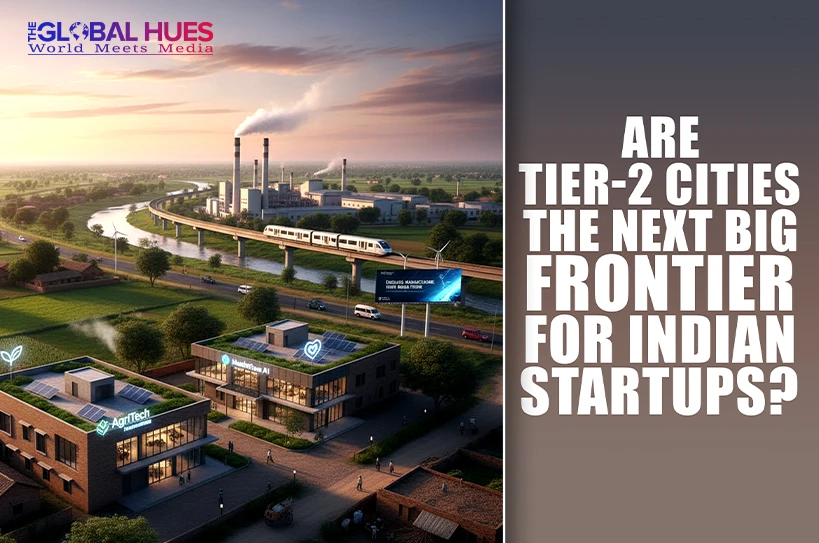
Over 45% of India’s recognised startups now originate from Tier-2 and Tier-3 cities. We all know that the Indian startup ecosystem is going through a meaningful shift. While metropolitan cities like Bengaluru, Delhi and Mumbai once dominated the ecosystem, the rise of tier-2 and even tier-3 cities is rewriting the script. Startups are realising the potential of these markets and relying heavily on profitability. Here’s why these smaller cities are emerging as vibrant hubs of innovation and entrepreneurship, and what that means for the future of business in India.
-
Better quality of life
One of the most compelling reasons startups are turning to tier-2 cities is the significantly lower overhead. Office rentals, salaries and general living costs are lower in these cities if compared with metros. According to one study, operating in places like Jaipur or Indore can cost 30-40% less than in Bengaluru or Delhi-NCR.
Beyond cost, there’s also the quality-of-life factor. Less traffic, shorter commutes, and better work-life balance make these cities more attractive for founders, employees and families alike.
-
Reverse migration
Tier-2 cities are no longer talent black-holes. Engineering colleges, regional universities and management institutes are producing skilled graduates who prefer staying local rather than moving to faraway metros. According to a recent report, more than 50% of the startups recognised by the Department for Promotion of Industry and Internal Trade (DPIIT) are based in tier-2 and tier-3 cities, which shows progression in these markets.
Post-pandemic, the trend of reverse migration (professionals moving back to smaller cities) and the possibility of remote/hybrid work have made talent retention easier in such locations.
Consider a scenario wherein you are an engineer in Jaipur or Coimbatore, with a good lifestyle and reduced costs, yet you are working remotely on a SaaS product used globally. The equation is changing.
-
Government push
Governments and state authorities are beginning to realise that innovation cannot be confined only to metros. Smaller cities are also witnessing incubators, innovation hubs, and policies coming in. A recent report showed that around 40% of active business incubators and accelerators are located outside tier-1 cities. The ecosystem is changing. Funding, infrastructure and mentorship are landing outside the big metros, which gives further opportunities to local founders for penetration and expansion.
-
Regional demand
Metro markets are now saturated. Tier-2 and Tier-3 cities, however, have untapped potential. From retail and e-commerce to logistics, brands are realising that small towns are no longer ‘small’. Many e-commerce platforms are now targeting tier-2 and tier-3 users and offering localised catalogues and logistics. Similarly, a city like Jaipur, which was widely known for its culture and heritage, is now positioning itself as a strong hub for D2C brands and ed-tech.
Challenges that need fixing
The shift to tier-2 isn’t perfect. Certain challenges need fixing.
- Funding: Investors and venture capitalists have traditionally focused on metro cities only. While this is gradually changing, funding rounds in smaller towns & cities often remain smaller and face friction as compared to metro areas.
- Mentorship: Founders in smaller cities may need more exposure, peer communities and mentorship networks to understand the market scenarios better. This is much less mature in small cities than in metro ecosystems.
- Infrastructure & Connectivity: One can easily find transport links, international airports and high-speed connectivity in top metros, but tier-2&3 markets still lag behind in such areas.
- Talent attraction & retention: While local talent exists, attracting senior leadership and specialists may still be harder than in major metros.
The good news is that private players, government and brands are realising the potential of these markets and directing their efforts to fix these deficits.
How promising is the future?
Looking ahead, tier-2 cities are poised to play a critical role in India’s startup narrative. There are some frontiers to watch. The Indian startup ecosystem is poised to become far more decentralised and dynamic. Each city will begin to specialise based on its strengths, like manufacturing-driven regions could evolve into deep-tech or hardware innovation clusters, while cities close to farmlands might emerge as powerful agritech hubs. This sector-based regional differentiation ensures that innovation in India is spread across the map.
The coming years will also see a reverse brain-gain, which means that as metro cities are becoming too expensive in almost all aspects, young professionals will start moving to smaller cities, attracted by a better lifestyle, affordability, and expanding opportunities.
Soon, we can expect to see regional unicorns emerging from cities that were once considered off the radar. This transformation will not only unlock new growth corridors but also reshape the innovation geography of the country.
Tier-2 cities
1. Amritsar
2. Bhopal
3. Bhubaneswar
4. Chandigarh
5. Faridabad
6. Ghaziabad
7. Jamshedpur
8. Jaipur
9. Kochi
10. Lucknow
11. Nagpur
12. Patna
13. Raipur
14. Surat
15. Visakhapatnam
16. Agra
17. Ajmer
18. Kanpur
19. Mysuru
20. Srinagar
Tier-3 cities
1. Etawah
2. Roorkee
3. Rajahmundry (Rajamundry)
4. Bhatinda
5. Hajipur
6. Rohtak
7. Hosur
8. Junagadh
9. Udaipur
10. Salem
11. Jhansi
12. Madurai
13. Vijayawada
14. Meerut
15. Mathura
16. Bikaner
17. Cuttack
18. Nashik
Must Read: