
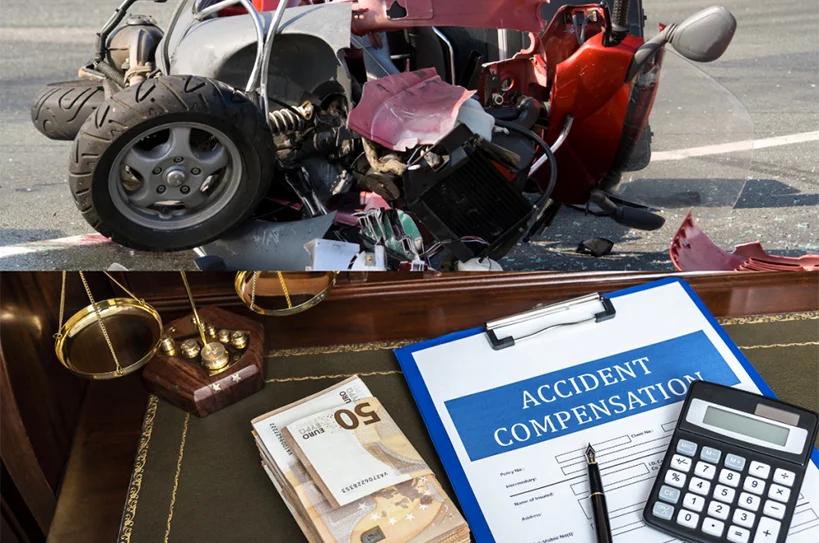
Motorcycle accidents are often more fatal than other motor accidents due to the rider’s exposure and the inherently unstable nature of motorcycles that can lead to head and spine injuries, fractures, and trauma, usually caused by speeding and poor control.
The rate of fatal motorcycle accidents has only been on the rise. Motorcycle accidents are more deadly. Over 56% of motorcycle accidents involving drivers or passengers result in death. Motorcycle accidents are also more likely to cause fatal injuries.
Common motorcycle accident injuries include road rash, neck injuries, spinal injuries, broken or fractured bones, burns, traumatic brain injuries (TBI), and head, arm, hand, and muscle injuries.
If you are injured, you can file a claim and recover compensation for your losses. Here is how:
Seek Immediate Medical Treatment
As soon as you’re involved in a motorcycle crash, your first priority should be getting medical care right away. This is not just for the sake of your health; it also ensures there isn’t a medical gap in your record after the accident, which could affect your overall claim.
Even if you feel fine, please still seek medical attention, since adrenaline-influenced pain masks are common in many people after an accident, so you can start documenting your medical records properly within the 3 days after the accident, as required by the law.
Report the Accident to Law Enforcement
Another crucial step is to contact your local law enforcement and let them know about your accident, especially if there are injuries or property damages involved. Do it immediately.
The police report is essential for gathering crucial evidence, such as the presence of any witnesses at the scene and their contact information, the officer’s assessment of fault, and other observations made by the officer, all of which can serve as strong evidence for your claim.
Be Careful About What You Say
Always be cautious about everything you utter after the accident. Even the slightest of innocent remarks, like apologizing to other drivers at the scene or admitting to anything at all, can be used against you later and hurt your claim.
Gather and Document the Evidence
Take photos and videos of the injuries and the accident scene, medical records, accident reconstructionist specialist reports, witness statements, surveillance footage if there is any, and a clear record of your lost wages and all kinds of damages.
Exchange Contact and Insurance Information
Track every driver who was involved in your motorcycle accident, and get their address, driver’s license, phone number, vehicle information, and insurance details. Remember, this is a legal requirement in all states, so other drivers are obliged to disclose these things to you.
Consult with a Motorcycle Accident Lawyer
We discussed how you should be careful before you say anything that can hold you liable, and here’s where having strong legal representation by your side matters.
The lawyer can help you navigate through the legal process and advise you before every move you make together.
File the Insurance Claim
Contact your insurance and notify them about the accident, provide them with all the evidence that is needed to strengthen your claim, and just let your lawyer handle the rest.
The Importance of Proving Liability
Strong documented evidence and legal representation on your side can help you prove that the other party was at fault. An experienced lawyer can prove the other driver breached their duty of care by gathering proper evidence and ensuring you receive fair compensation.
Negotiate with the Insurer
Whether you’re getting a quick compensation from your insurer (quite an effortless process) or from the at-fault driver (lengthy and complex), your lawyer can negotiate if the offer is low and build a strong case for the compensation you deserve.
Key Takeaways
- Even if you feel fine, seek immediate medical attention to keep proper medical records.
- Report the accident to the local police right away; that can be crucial evidence later.
- Gather all the necessary evidence and keep track of your damages to strengthen your compensation claim.
- Exchange contact and insurance information with all the drivers involved in the accident.
- Get a lawyer to help you avoid saying anything that could be used against you.
- Notify your insurer about the accident and negotiate with either your insurer or the at-fault driver, depending on the circumstances, with your lawyer’s help.
- Your lawyer can build a strong case to get you the fair compensation.
(DISCLAIMER: The information in this article does not necessarily reflect the views of The Global Hues. We make no representation or warranty of any kind, express or implied, regarding the accuracy, adequacy, validity, reliability, availability or completeness of any information in this article.)
Must Read:
- Exploring Best Investment Options For Indians
- Income Tax Return (ITR) for Salaried Individuals: Complete Guide
- Is ₹50 Lakh Term Insurance Enough for Your Family?
- What Are Common Misunderstandings About Insurance Contracts?