
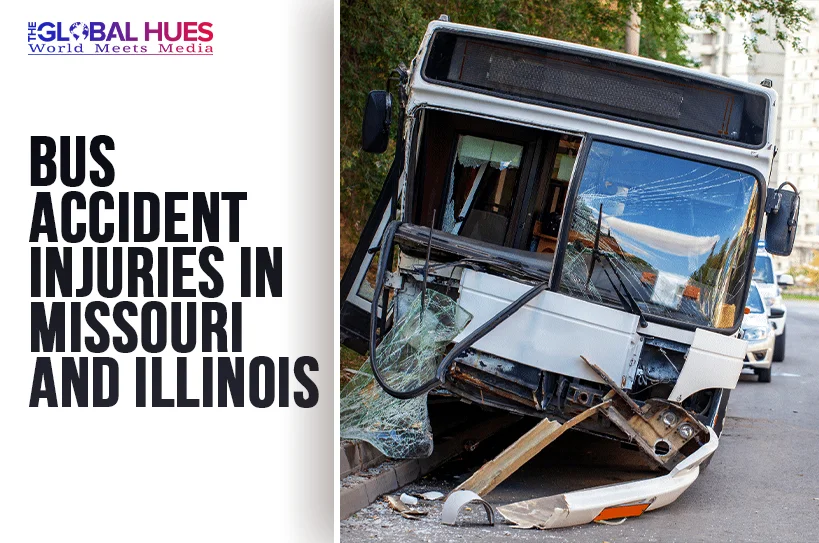
Bus accidents produce serious injuries for passengers, pedestrians, and occupants of other vehicles for reasons that are both physical and legal. Physically, the size and weight differential between a transit or charter bus and the people and vehicles it encounters means that crashes produce severe force concentrations that smaller vehicles partially absorb through their own structural deformation. Legally, bus operators are subject to a heightened standard of care as common carriers, a doctrine that imposes greater accountability on commercial passenger carriers than ordinary vehicle operators face.
For injured people in the St. Louis region, bus accidents involving MetroLink and Metro Bus operations raise specific government entity claim requirements that do not apply to private bus crashes. Understanding those requirements, and the broader multi-defendant liability structures that bus accidents often involve, is the starting point for pursuing what these cases warrant.
The Common Carrier Standard and What It Demands
Missouri and Illinois both apply the common carrier doctrine to bus operators, holding them to the highest degree of care consistent with the practical operation of their enterprise. This standard is more demanding than the reasonable care standard applicable to ordinary drivers and reflects the passenger’s complete dependence on the carrier’s competence and the carrier’s voluntary acceptance of the responsibility to transport them safely.
In practice, the common carrier standard means that bus driver errors that might constitute only ordinary negligence for a private motorist can constitute a breach of the heightened duty simply because the carrier’s obligation demanded greater care. A bus driver who misjudged a stopping distance, failed to check mirrors before a lane change, or was distracted for a moment bears the common carrier’s accountability for conduct that produces passenger injuries, not merely the ordinary driver’s accountability.
Metro Transit Claims and Missouri’s Government Notice Requirement
Bi-State Development, which operates the Metro Transit system serving the St. Louis region, is a government entity whose operations fall under Missouri’s governmental immunity framework. Claims against Metro Transit require a notice of claim to be filed before a lawsuit can be initiated, and the timing and content requirements for that notice are specific and strictly enforced. The Missouri State Courts’ procedural guidance addresses the notice requirements applicable to claims against government entities in Missouri. Failing to serve the required notice within the applicable period permanently bars the claim regardless of its underlying merit.
For claimants in Illinois who are injured by a government-operated bus, similar pre-suit notice requirements under the Illinois Governmental Tort Immunity Act apply. Identifying whether the bus that caused the injury was operated by a government entity and serving any required notice before the deadline is the most urgent procedural step after a serious bus crash in either state.
The Multi-Defendant Structure of Private and Charter Bus Cases
When the bus involved in a crash is operated by a private charter company, a school district contractor, a long-distance carrier, or an employer providing transportation for employees, the liability structure extends beyond the driver to include:
- The bus company or operator: For negligent hiring and training, maintenance failures, unrealistic scheduling that pressures drivers, and failure to enforce safety standards
- The vehicle manufacturer: When a mechanical defect, brake failure, or structural inadequacy contributed to the crash or to the severity of passenger injuries
- Third-party maintenance contractors: When outsourced maintenance failed to identify or correct a defect that contributed to the crash
- The entity that contracted for the transportation: In charter and employer-provided transportation cases, the organization that hired the bus company may share liability when it selected a carrier with inadequate safety credentials or failed to verify the carrier’s qualifications
Working with experienced attorneys who handle bus accident injury claims in Missouri and Illinois gives injured passengers and third parties access to the legal tools needed to identify every responsible party, satisfy government notice requirements before they expire, and build the complete liability and damages case that serious bus accident injuries require.
(DISCLAIMER: The information in this article does not necessarily reflect the views of The Global Hues. We make no representation or warranty of any kind, express or implied, regarding the accuracy, adequacy, validity, reliability, availability or completeness of any information in this article.)
Must Read:
- S Jaishankar: Meet Veteran Diplomat Shaping India’s Foreign Policy
- Top 10 Forex Traders in India – Updated Ranking & Insights
- The Media Beacon
- SHIV NADAR: A PHENOMENAL BUSINESS TYCOON