
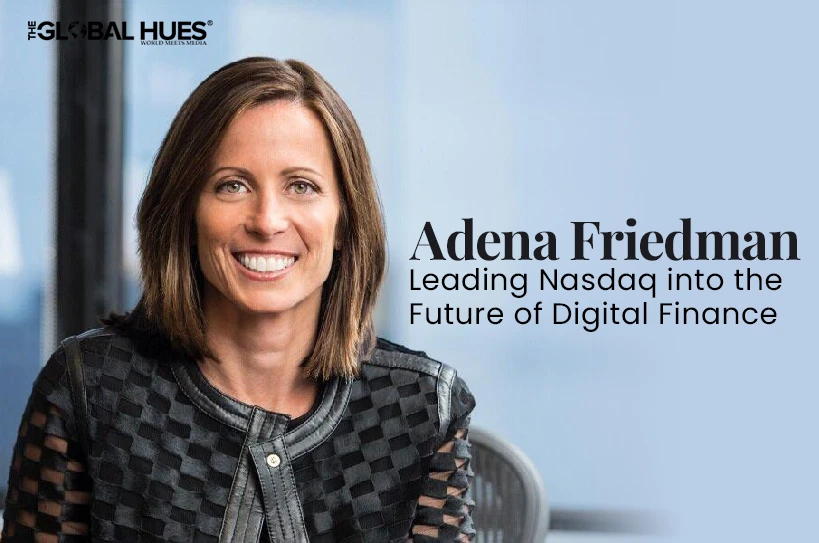
Adena Friedman was appointed Chair and CEO of Nasdaq, Inc. in December 2022 and served as its President and CEO from January 2017 to January 2023. As the first woman to head a global exchange, she has transformed Nasdaq to a technology solutions provider doing business in all six continents.
Friedman is known for propelling Nasdaq’s growth from a stock exchange into a fintech giant, now also operating in high-demand fields such as data analytic and regulatory technology. Her strategic focus is on innovations, including increasing the corporate diversity headcount, long-term corporate investment plans, and enhancing market leadership.
Nasdaq under her leadership has adopted many firsts like the board diversity requirement rule and expanded its financial technology business through acquisition of Adenza in 2023.
Early Life and Education
Adena Friedman was born to parents in Baltimore, Maryland in 1969. She grew up attending Williams College where she procured a Bachelor of Arts in Political Science and later went on to Vanderbilt University’s Owen Graduate School of Management to get her MBA.
Friedman’s strategic thinking skills along with her understanding of business and finance were multi-faceted due to her upbringing and schooling. These complex systems that governed finances alongside innovation at Nasdaq were apparently etched in her education’s blueprint.
Apart from the Vanderbilt University’s Board of Trust, she is also a part of the FCLTGlobal board, which showcases her dedication towards improving the world of investment by encouraging long-term focus on investments. As Friedman has worked alongside people from a myriad of backgrounds, it has refined her ability to empathize and understand smarter diverse markets and cultures.
Professional Beginnings
In 1993, Friedman joined Nasdaq as an unpaid intern and quickly advanced within the company. At various points in her career, she was responsible for data products, Nasdaq’s Chief Financial Officer, and head of corporate strategy (24). During her tenure, she also managed important INET, OMX, Philadelphia Stock Exchange, and Boston Stock Exchange acquisitions.
Friedman was CFO and Managing Director at Carlyle Group from 2011 to 2014, where she is credited with helping the firm through its IPO process. After returning to Nasdaq in 2014 as President and COO, she guided the company through its next growth phases until her eventual appointment as CEO. Her earlier roles involving a wide range of financial operations and complicated business relationships helped her ease into the position of CEO.
Leadership Roles at Nasdaq
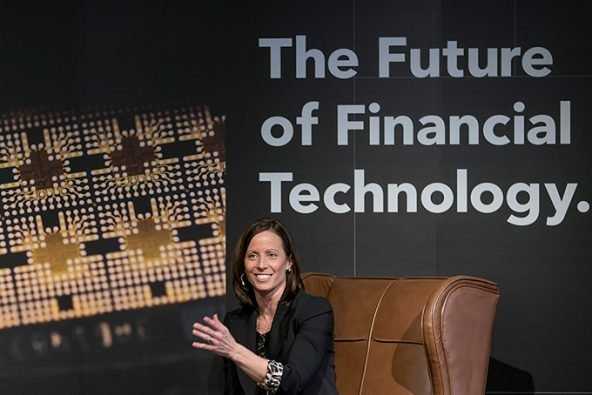
Under Friedman’s leadership, Nasdaq greatly increased its presence in digital finance. Friedman has expanded Nasdaq’s capabilities by acquiring companies such as Adenza and implementing market-centric solutions on a global scale. She has also advanced ESG practices by lobbying for increased corporate sustainability and diversity. Moreover, Friedman has furthered the goal of democratizing investment by modernizing the capital markets.
Nasdaq’s relevance in the market is enabled by the dynamic combination of technological advancement with long-term strategic foresight embedded in Friedman’s vision. Nasdaq has been highly responsive to emerging trends in the market as a result of Friedman’s focus on fostering a collaborative and creative organizational culture.
Strategic Initiatives Under Friedman
As CEO since 2017, Friedman has directed Nasdaq’s digital finance innovations toward expanding its offerings relative to traditional exchange services. She spearheaded placing Nasdaq as a technology-driven organization by expanding its fintech capabilities. To bolster risk management and regulatory reporting offerings, Nasdaq acquired Adenza for $10.5 billion in 2023.
Moreover, Friedman has placed diversity into ESG focused corporate governance policies pertaining to board composition for listed firms. Friedman’s strategic collaborations have created innovative solutions while still ensuring Nasdaq remains the “trusted fabric of the financial system”. Her deep understanding of complicated market structures has strengthened the rest of Nasdaq’s competitiveness in the fintech arena.
Challenges and Leadership
Friedman has faced significant problems over her years of experience, such as changing the operations of Nasdaq during the COVID-19 pandemic. She made sure that business operations continued by remotely reorganizing key employees into teams that were split between the office and home.
Furthermore, Friedman faced fierce rivalry from other exchanges in the market while transforming Nasdaq into a fintech giant. Her balancing of strategic growth with operational efficiencies was the reason why she was listed as one of the world’s most powerful women by Forbes and Fortune. She operationally focuses on curiosity, cooperation, and employee development. Through business policies, Friedman has transformed the market with her responsible practices.
Recent Developments
In Friedman’s reign, Nasdaq expanded its fintech portfolio while addressing ESG gaps. Introduction of executive board diversity for listed firms is aligned with her inclusivity focus on governance. The purchase of Adenza in 2023 further advanced the shift of Nasdaq from a stock exchange to a technology solutions provider.
Outside Nasdaq, Friedman is heavily involved in the Federal Reserve Bank of New York and serves on the Business Roundtable Technology Committee. Beyond her operational jurisdiction, Friedman is often recognized as a pioneer for adopting innovative approaches that are now commonplace in other firms.
Recognition and Influence
Friedman has been the recipient of several awards for presiding over technological and financial leadership. She was listed in Forbes’ “World’s 100 Most Powerful Women” on five occasions and was named one of American Banker’s Most Powerful Women in Finance for the year 2024.
Her advocacy for modernizing capitalism goes as far as including TED talks and articles on global economic systems prediction. Her legacy marks the continuation of development and invention in the field of fintech.
Conclusion
Adena Friedman’s leadership at Nasdaq serves as an epitome of strategic foresight and innovativeness. Under her service, the company has been transformed from the leading global fintech service provider to a corporate ESG champion and diversity employer.
It is undeniable how much of an impact Friedman has had, the marks of her impact are already constant in finding the value of every dollar. Selecting her as a case study underlines the need of purposeful leadership for the emerging markets of financial services. Her evolution of Nasdaq will endure the winds of time, and her legacy will be felt across domains for ages to come.
Read More Success Stories:
- Howard Schultz: Brewing Starbucks into a Billion-Dollar Empire
- Shantanu Narayen: Adobe’s Creative Visionary Transforming Digital Media
- Top 10 E-Readers: Make Your Reading Sessions Enjoyable