
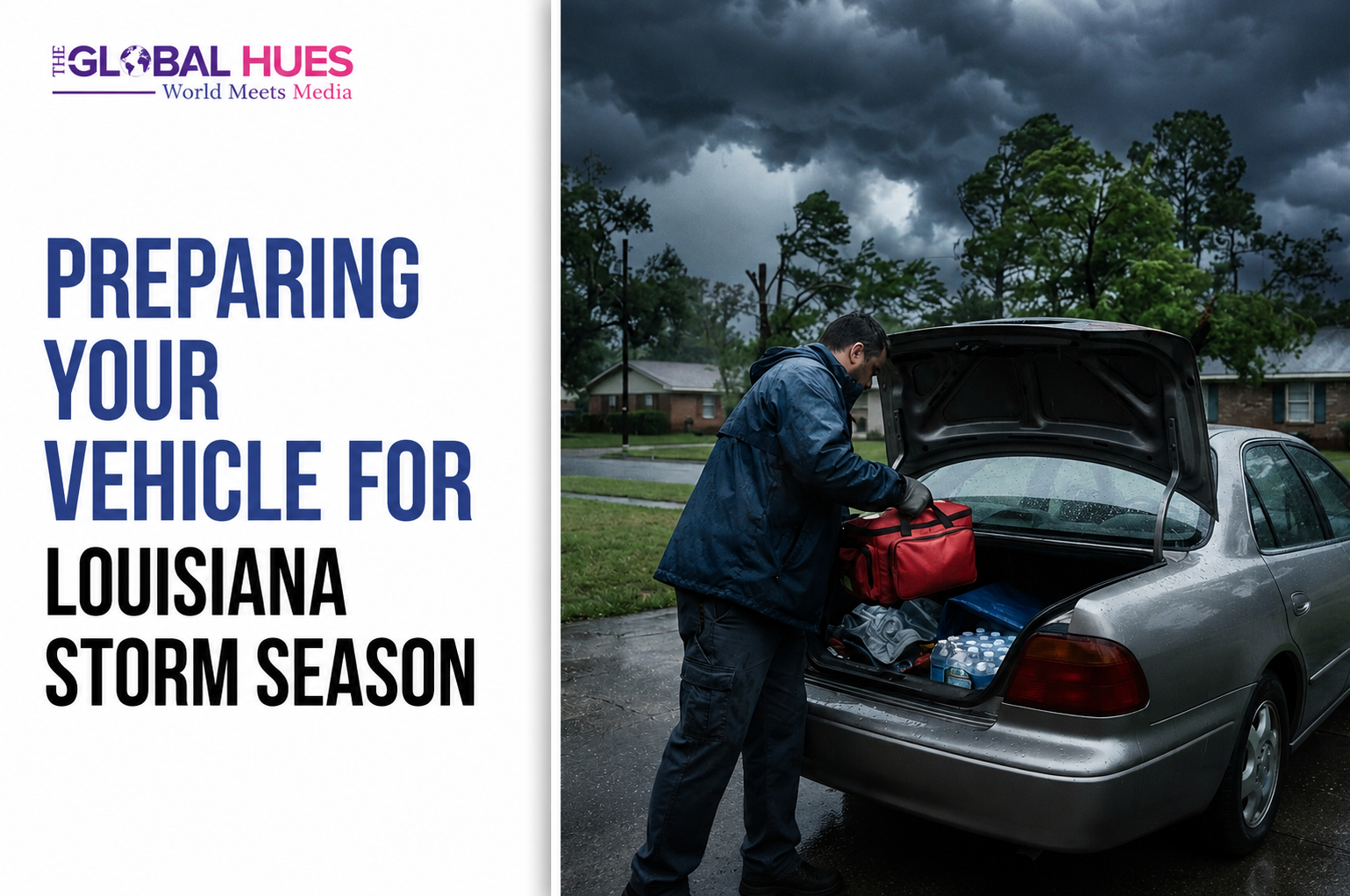
Ask anyone who’s lived in Rapides Parish long enough and they’ll tell you the same thing, hurricane season here starts June 1, ends in late November, and Alexandria being nowhere near the coast doesn’t mean much once a storm actually gets going. We’re well inland, sure. But the storms that hit near Lake Charles or Lafayette don’t just stop there. The rain, the wind, sometimes a tornado or two, all of it keeps rolling up I-49 into central Louisiana, often two or three days after the storm’s already old news on TV. A car sitting under a carport, or parked somewhere low near the Red River, can end up wrecked just as easily as one sitting in a driveway near the Gulf.
The funny thing is, most people spend all their storm prep energy on the house. Roof, windows, generator maybe. The car just sits there in the driveway and nobody thinks about it until there’s a tree branch through the windshield.
Why Central Louisiana’s Risk Sneaks Up on People
We don’t get storm surge here, obviously. But basically everything else that comes with a hurricane, we get it. A lot of the worst flooding actually happens after a storm has already weakened, that’s when the heaviest rain tends to fall, well after it’s made landfall somewhere else. Rapides Parish has flooded from rain alone, no surge involved, more than once in just the last several years. And this part of the state throws tornadoes too, spun off from tropical systems, the kind that show up with basically no warning and can take out a car in seconds flat. Add all the pine trees around here, and yeah, falling limbs during a windstorm aren’t some rare freak accident, that’s just a normal Tuesday during storm season for a lot of insurance claims.
NOAA’s saying this season’s tracking above average for named storms. So honestly, this is as good a year as any to actually pull out your policy and see what it says, instead of just hoping it’s fine.
What Your Insurance Actually Covers (Probably Not What You Think)
Louisiana requires drivers to carry at least 15/30/25 liability, that’s $15,000 per person and $30,000 per accident for injuries, plus $25,000 for property damage. Important stuff, but it’s there to cover the other guy if you cause a wreck. It does nothing for your own car. Zero. If a limb crushes your hood, or your car’s sitting in three feet of water after a flash flood, liability coverage alone won’t pay a cent toward fixing it.
Comprehensive is the piece people forget about, and it’s the only part of a regular policy that actually covers wind, hail, flooding, falling debris, that kind of thing. It’s optional too, unless a lender’s making you carry it. And here’s the thing: a lot of people who’ve paid off their car just drop comprehensively at renewal to save a little money each month. Which is fine, until it’s not, because that’s also the exact coverage that protects against everything central Louisiana deals with every single summer and fall.
Might be worth actually shopping around this time instead of assuming your current policy’s the best deal out there. Comprehensive pricing varies a lot more between insurers than people expect, sometimes more than you’d guess, so looking into affordable auto insurance Alexandria drivers can realistically get, before the season really kicks off, beats scrambling for it after your car’s already damaged.
Once a Storm Gets a Name, It’s Already Too Late
Here’s what catches people off guard every single year, you can’t just call up your insurer and add comprehensive, or bump up your coverage, once a storm’s got a name attached and a track pointed toward Louisiana. Most companies freeze changes the moment a hurricane or tropical storm watch goes up for the state. Sometimes even before that. So if you’ve been telling yourself “I’ll add it before the season gets bad”, June is that window. Not the Tuesday before it makes landfall. By then the door’s already shut.
Getting the Actual Car Ready
Insurance is the money side of it. But a little effort now can keep you out of the claims process entirely.
Move the car if you’ve got somewhere to put it. Garage, covered structure, whatever beats an open driveway. If flooding’s a real risk where you live, look for higher ground, a parking garage downtown, a friend’s place up on a rise, anything beats leaving it somewhere that’s already flooded before.
Take a look at the trees around your parking spot. Pines around here don’t need a direct hit to drop a limb, steady wind alone will do it. If there’s dead wood or branches hanging over where you usually park, get that trimmed now, not after a watch is already up.
Keep gas in the tank once a watch’s active. Stations lose power right along with the rest of the grid, and a full tank matters a lot if you need to leave or just need to charge your phone off the car.
Snap some photos of your car now, while nothing’s wrong. Sounds unnecessary until you’re filing a claim and trying to prove what condition it was in beforehand, a handful of clear photos taken ahead of time makes that whole process faster and a lot harder for anyone to dispute.
And tie down or move whatever’s loose nearby, trash cans, patio furniture, yard tools. All of that becomes a projectile in high wind if it’s sitting near your car.
None of this is complicated. It just has to happen before the forecast turns scary, because once a watch’s issued, your options basically disappear.
If Cost Is the Reason You’ve Been Skipping Comprehensive
Look, if your credit isn’t great, comprehensive can feel like the easy thing to cut, credit-based pricing tends to push premiums up for exactly the people who can least afford a surprise bill in the first place. That’s a real problem, not something to brush off. But skipping it because of cost usually just swaps a smaller monthly payment for a much bigger one later, one you’re paying entirely out of your own pocket after a flood or hailstorm. Before you cut it, it’s worth checking out something like this guide to car insurance for bad credit drivers. It gets into ways to keep full coverage without the huge price tag, higher deductibles, bundling, usage-based programs, stuff like that.
If Your Car Does Get Hit
If a storm does damage the car, don’t start it up if it’s been sitting in standing water. That one mistake alone can turn something fixable into a total loss. Take pictures of everything before you touch or move it, then call your insurer as soon as it’s actually safe to do so. Keep track of who you talked to and when, write it down somewhere, because storm season backs up every insurer’s claims department, and stuff gets lost when call centers are slammed.
The Louisiana Department of Insurance runs a hurricane resource center every season, with info specific to Louisiana policies, claim deadlines, and how to file a complaint. Worth bookmarking if your insurer’s slow to get back to you or you’re just not sure what your policy actually covers.
Bottom Line
Being inland helps a little. It’s not a free pass. Wind, rain, tornadoes spun off a storm that made landfall two hundred miles away, all of it still reaches Rapides Parish, and a car without comprehensive coverage is exposed to every bit of it. Go check your policy this week. Park smart once something’s in the forecast. And don’t wait until a storm’s already got a name to find out what your insurance was actually going to cover all along.
Related Article:
- From Inspection to Insurance: Your 30-Day Timeline After Buying a Used Car
- Why You Should Consider Insurance Before Tapping Your Emergency Fund
- Legal Actions to Prioritize Right After an Auto Accident