
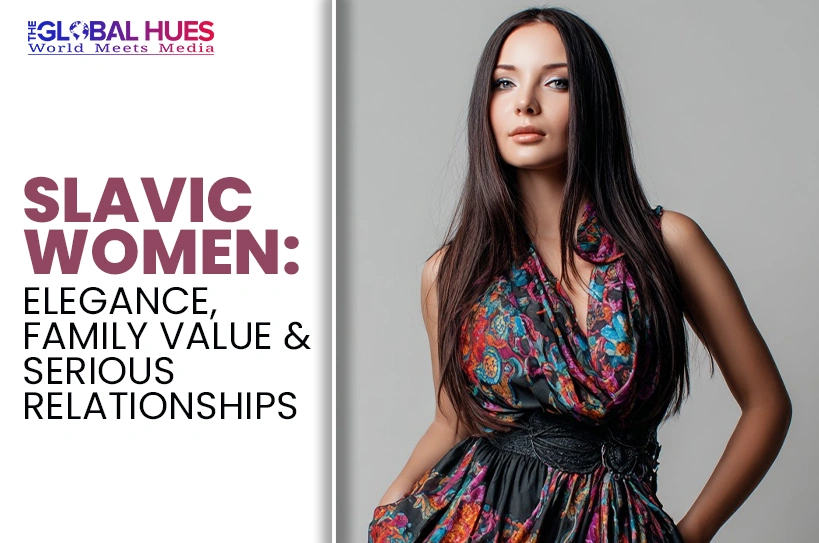
Walk into a café in Kyiv on a Tuesday morning and you’ll see women in heels, fitted coats, lipstick already on. Nobody’s filming them. No event later that day. They just dressed like that. I’ve thought about this for years — why does the reputation stick? Elegance, family-first thinking, the whole “she takes love seriously” thing. Some of it’s fair. Some of it’s lazy stereotyping. Most of it sits somewhere in between, and that’s the part worth talking about.
Where the Reputation Comes From
The global image didn’t appear overnight. Through most of the 20th century, the Soviet bloc was sealed off from Western eyes — so when the curtain dropped in 1991, an entire culture suddenly walked into the spotlight. Magazines, beauty contests, films. A Ukrainian gymnast was on the cover of Vogue. A Russian model was opening Paris Fashion Week.
Then came the early internet. Pen pal sites, then matchmaking platforms, then full-blown international dating services. Men in the US and UK started meeting women from Odessa, Minsk, and Lviv. The numbers kept climbing through the 2000s, and today platforms built specifically for connecting Western men with Slavic women for brides are still busy. So the reputation has roots in real exchange — not just folklore.
There’s also the post-Soviet economic story. Women stayed in school longer, often outpaced men in higher education, and built careers while keeping family at the front of their lives. That mix — ambition plus domestic skill — caught attention abroad. The reputation built itself over thirty years of contact, not from a marketing campaign.
The Elegance Factor — Style as Daily Habit
Style in Eastern Europe isn’t a weekend thing. It’s woven into the day. Mothers dress their daughters carefully. Grandmothers comment on shoes. The line between “going out” and “going to the corner shop” is blurry because looking presentable is just the baseline.
Dressed Up for the Bakery Run
A friend of mine from London visited Kharkiv years ago. He said the thing that hit him hardest wasn’t the architecture — it was watching women walk to the supermarket in heels and full makeup at 9am on a Wednesday. Honestly, this still surprises foreigners more than anything else. There’s no special occasion. The occasion is Tuesday.
Posture, Grace, and Ballet in Schools
Schools across Russia, Ukraine, Belarus often include rhythmic gymnastics or dance as part of physical education. Posture drills were standard. Sit up straight. Don’t cross your legs like that. Walk with your shoulders back. These habits stick. You see it in how women carry themselves at 45, at 60, at 80.
Regional Differences
Not every Slavic country looks the same — far from it. Russian style tends toward bold, glamorous, a bit dramatic. Ukrainian women lean into femininity with embroidered details and folk references. Polish style is sharper, more European, often minimalist. Belarusian looks tend to be quieter. Lumping all of these together misses the point. But the common thread? Effort. Real effort.
Family Values Rooted in Generations
Family isn’t an idea you talk about. It’s the schedule of your week. Sunday lunch at your parents’ place. Babushka picks up the kids from school because daycare costs too much and besides — that’s what babushka does. Three generations in one apartment isn’t unusual; it’s expected in many cities.
Big family holidays anchor the year:
- New Year’s Eve — bigger than Christmas, the whole family gathers
- Orthodox Easter with the blessed cakes and painted eggs
- Victory Day on May 9th, parades and family meals
- Birthdays treated almost like national holidays, with tables that take three days to prepare
- Name days — yes, still celebrated, especially in older households
When a Slavic woman talks about her family, she means everyone. Cousins, second cousins, the neighbor who’s been around since she was three. Loyalty stretches wide and stays wide.
Why They Take Relationships Seriously
There’s a phrase you hear sometimes in Eastern Europe: “Why date someone you wouldn’t marry?” It sounds blunt to Western ears. Maybe it is. But it points to something real — the cultural expectation that dating leads somewhere. Spending months with a person who has no intention of building a life is seen as wasted time on both sides.
This doesn’t mean every first date ends with wedding talk. It means the question is in the air earlier than it would be in, say, Berlin or Brooklyn. By the third or fourth date, someone’s parents have probably been mentioned. By the sixth, there’s likely been a conversation about kids — not as a demand, just as a check.
The “no games” thing is real too. If she’s interested, you’ll know. If she’s not, you’ll really know. Compare that to the Tinder-style fog where someone could be talking to you and four other people for six weeks without showing their hand. Eastern European dating cuts through that noise.
Gen Z is shifting things, though. Younger women in Warsaw, Kyiv, Sofia are more open to casual phases, longer single periods, even staying child-free. The rules are loosening — but they haven’t disappeared. The instinct to treat love as a serious thing is still there.
Education and Ambition Behind the Looks
The “she’s just pretty” cliché falls apart the second you check the numbers. Female literacy across Slavic countries sits at or near 100%. Women hold a higher share of university degrees than men across most of Eastern Europe. They’re surgeons, engineers, IT leads, business owners. Ukraine has one of the highest rates of women in tech anywhere in Europe.
Most Slavic women you’d meet through international platforms — or at a conference — work full-time. They’re not waiting around to be saved. They’re juggling a career, a family, often elderly parents too. The grace and the spreadsheet skills come from the same person.
That’s worth saying out loud because the foreign-bride stereotype paints women as helpless or transactional. Reality? Most of them are doing more before lunch than the rest of us manage in a day.
The Role of Religion and Tradition
Faith shapes daily life more in Eastern Europe than in most of Western Europe. Orthodox Christianity dominates in Russia, Ukraine, Belarus, Serbia. Catholicism rules in Poland and parts of western Ukraine. Even people who don’t go to church every Sunday observe the big rituals — christenings, Easter, weddings done the traditional way.
These rituals tie families together. A baptism gathers four generations. An Easter table feeds twenty. Weddings can last three days and involve dances older than the country itself.
Gender roles tied to religion are real, though changing. Older generations expect the woman to cook, manage the home, take the lead on children. Younger couples often split things more evenly, but the cultural memory’s still there. It explains some of the “homemaker” reputation — and why it persists even when modern women are also pulling 50-hour work weeks.
Stereotypes vs. What’s Actually True
This is where things get spicy.
Myth one: gold-diggers. The idea that Slavic women only want money is tired. Sure, financial stability matters — it matters everywhere. But spend ten minutes with someone from Lviv or Krakow and you’ll figure out fast that what she’s looking for is reliability, kindness, a man who acts like a man. Money alone won’t keep her interested.
Myth two: submissive housewives. Nope. I’ve never met a Slavic woman who could be called submissive. Direct, yes. Strong-willed, absolutely. She’ll cook you dinner and then tell you exactly where you went wrong at work today.
Myth three: they all want a foreign passport. Some do. Most don’t. Many women on international dating sites are looking for a partner who shares their values — and if the local dating pool feels thin or unreliable, they look outside. That’s not a visa scheme. That’s adapting.
Myth four: they age fast. Honestly, this is one of the lazier ones, repeated by people who haven’t met a 50-year-old Ukrainian woman. The skincare regimes alone would put most Western women to shame.
What’s actually true: family-first, sharp-tongued, generous, loyal once committed, low tolerance for laziness, high standards for personal appearance — both yours and theirs.
What Foreign Men Notice First
I’ve talked to British and American men over the years who’ve dated or married Slavic women. The same things come up again and again.
Common observations:
- The food. She’ll cook properly, and she’ll be confused if you don’t eat properly.
- Directness in conversation. No hints. No “guess what I’m thinking.”
- Loyalty after commitment. Once she’s in, she’s in.
- Standards for how a man presents himself. A wrinkled shirt won’t fly.
- Strong views on raising kids. She’ll have opinions, and they’ll be informed.
- Warmth that surprises people — once you’re inside the circle, you’re family.
One guy from Manchester told me his Ukrainian wife wouldn’t let him leave the house in a shirt that wasn’t ironed. After ten years he said his wardrobe had been quietly upgraded without him noticing. That tracks with what most men describe.
There’s also the social side. She’ll want to meet your friends. She’ll have opinions about them. She might not like all of them, and she’ll tell you which ones and why. Some men find that intense. Others find it refreshing after years of Western dating where nobody says what they actually think.
Slavic Women in 2026 — What’s Changing
The picture’s shifting fast. Younger women in major cities are postponing marriage, traveling more, building careers across borders. Instagram has flattened style trends — a girl in Kraków today dresses a lot like a girl in Milan or Madrid. Some of the old femininity codes are softening.
The war in Ukraine changed something too. Millions of women had to take charge of households, businesses, refugee logistics, all on their own. Independence got a hard upgrade. A lot of them aren’t the same people they were in 2021, and they’ll tell you so.
Cross-border relationships are more common than ever. Remote work means a Ukrainian designer can live in Lisbon. A Polish project manager might be based in London but spend half the year in Warsaw. The old binary of “stays home” vs. “leaves home” doesn’t really apply anymore.
What stays? The family pull. The seriousness about love. The way she dresses to take the rubbish out. Some things shift with each generation. Other things — the deep ones — sit pretty stubbornly in place. And maybe that’s the actual answer to why the reputation keeps holding up. Not a marketing story. Just how a lot of women, across a lot of countries, were raised to live…
(DISCLAIMER: The information in this article does not necessarily reflect the views of The Global Hues. We make no representation or warranty of any kind, express or implied, regarding the accuracy, adequacy, validity, reliability, availability or completeness of any information in this article.)
Must Read:
- Your Custom Home – Careful Considerations
- Innovative Interior Design Trends To Refresh Your Home
- How to Choose Living Room Furniture That Stands Up to Active Lifestyles