
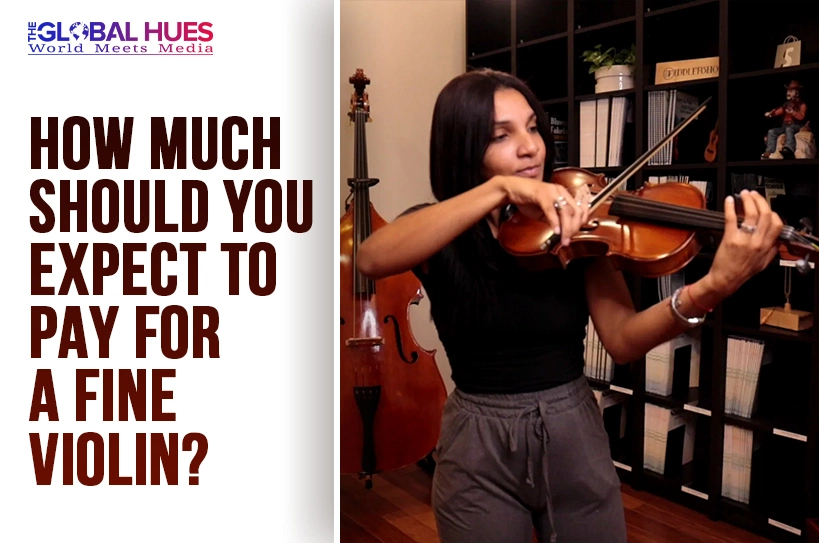
If there’s one instrument that we can say never goes out of style, it’s the violin. You can hear it in classical music. It’s there on movie soundtracks, and surprisingly, even modern songs have it.
However, once you start scouting or shopping for one, you’ll realize that prices are just all over the place.
There are violins that are way too cheap (like a pair of sneakers), while there are also models that cost more than a house. Why is that? The main factor boils down to age, the materials used, and who made it. There’s a “fine violin” and it’s very different from a beginner violin.
Understanding Violin Price Tiers
1. Student / Beginner Violins
These student or beginner violins are the most affordable options. You’ll see violins priced under $500 to $1,000, and they’re tpically made for anyone just starting out.
Some great cheap violins include the Tower Strings Entertainer EasyTune, Fiddlerman Apprentice, and Fiddlerman OB1.
2. Intermediate Violins
For intermediate violins, these usually fall between the rough mid-hundreds to a few thousand dollars. You’ll notice these intermediate violins have better build and sound? It’s way clearer and stronger than the beginner models – and that’s basically what the price upgrade is all about.
3. Fine / Professional Violins
For fine or pro violins, we’re talking about thousands to tens of thousands of dollars here. These models are often handcrafted by a luthier. They pay attention to the wood, varnish, and details that impact the violin’s feel and sound.
4. Rare / Collectible Instruments
Rare violins are the top tier. Prices start in the thousands and may reach up to millions. Some are old models made by popular makers like Stradivari. If you’re eyeing such a level, this means you’re not just buying an instrument; you’re buying history.
What Makes a Violin “Fine”?
A violin is considered “fine” if it has a rich and full tone. It must also be carefully made, from carving to the finish itself. When it comes to the materials, it should be made of high-quality wood for improved durability and sound.
Aside from that, the setup, like the bridge and strings, needs to be adjusted properly. The violin should also feel smooth when playing it.
Typical Price Ranges Explained
1. Entry-Level / Budget: $100–$800
Entry-level violins are great for learning and typically include everything you need to begin (case, bow, rosin).
2. Intermediate: $800–$3,000
Intermediate violins are those with better tone and build. You’ll notice a big improvement in tone and projection.
3. Fine Student/Amateur: $3,000–$10,000
For amateur models, these are the ones that are close to professional quality. There are handmade options, while there are also high-end factory choices.
4. Professional / Fine: $10,000–$100,000+
If you’re looking for violins made by master luthiers, professional violins is the perfect choice. It has a strong tone, clarity, and control – perfect for advanced players.
5. Antique & Collectible: $100,000–Millions
For antique and collectibles, these are the historic violins priced at a very high value, but they often come with a unique sound. It’s more of an investment.
Additional Costs Beyond the Violin Body
Aside from the instrument itself, there are also additional costs you need to consider.
First is the bow. Cheap to fine bows typically cost from $50 to $10,000+. Next is the case, which you need for protection.
Strings are also worth considering, since different strings mean different sounds. Then, there’s maintenance or regular adjustments, bow rehair, and small fixes.
How to Evaluate Value Before You Buy
- Always try the instrument before buying if you can.
- Ask a teacher or an experienced player’s opinion.
- Compare several options in the same price range to see which one has great value.
- Check the shop’s return or exchange policy.
Should You Start With a Cheap Violin?
Getting a cheaper violin can be a smart move. However, here are just some of the advantages and disadvantages to consider.
Pros:
- Doesn’t require a huge upfront cost
- Easier to replace and upgrade, favorable for students and growing players
Cons
- Very limited quality of sound
- Learning can be a bit harder
As you improve, you can always upgrade to a better instrument that fits your skill level.
Conclusion
So, how much is a fine violin? The answer is it depends on two things: your goals and levels. You can begin your journey by using affordable options, while serious or more advanced players may go for thousands. The only key here is to get an instrument that feels and sounds good to you.
(DISCLAIMER: The information in this article does not necessarily reflect the views of The Global Hues. We make no representation or warranty of any kind, express or implied, regarding the accuracy, adequacy, validity, reliability, availability or completeness of any information in this article.)
Must Read:
- S Jaishankar: Meet Veteran Diplomat Shaping India’s Foreign Policy
- Top 10 Forex Traders in India – Updated Ranking & Insights
- The Media Beacon
- SHIV NADAR: A PHENOMENAL BUSINESS TYCOON