
I’ve seen it too many times. A homeowner calls us after noticing their bedroom door won’t close anymore. They figured it was just the house “settling.” By the time they pick up the phone, what started as a hairline crack in the drywall has turned into a gap you could stick your finger through. And now, instead of a $3,000 fix, they’re staring down a $25,000 repair bill.
That scenario plays out more often than you’d think. And it’s completely avoidable.
Foundation Damage Doesn’t Wait for You
Here’s what most people don’t realize about their foundation: it doesn’t hit a problem and stop. The damage compounds, like credit card debt you’re ignoring. That tiny crack in the corner of your living room wall? It’s not decorative. It’s your house telling you something is moving underneath.
I break it down for homeowners like this:
- Catch it early — some cosmetic cracks, a sticky door. We’re talking $2,000 to $5,000 to stabilize.
- Wait a year or two — now the floors are sloping, windows won’t open right, and the brick outside has a visible gap. You’re looking at $5,000 to $15,000.
- Ignore it for three to five years — plumbing starts breaking because the pipes shifted with the slab. Water damage on top of structural damage. $15,000 to $40,000.
- The “I’ll deal with it eventually” crowd — extensive underpinning, partial rebuilds, emergency shoring. $30,000 to $75,000.
Nobody plans to spend $40,000 on their foundation. But plenty of people end up there because they waited.
What It Does to Your Home’s Value
When I’m doing inspections for people who are selling their homes, this is the conversation nobody wants to have. Foundation issues don’t just cost money to fix — they tank your asking price.
I’ve watched homes in Tulsa sell for $40,000 to $60,000 under what comparable houses went for, simply because the buyer’s inspector flagged foundation movement. And that’s if the buyer even sticks around. Most don’t. Their lender won’t finance a house with known structural problems, so the deal falls apart.
On the other hand — and I tell sellers this all the time — if you’ve had the work done professionally and you’ve got a transferable warranty to show for it, most buyers actually feel better about the house. They see a problem that was caught and handled.
Your Insurance Probably Won’t Cover It
This one always catches people off guard. You’d think homeowners insurance would step in for something this expensive, right? In most cases, it doesn’t. Standard policies exclude what they call “earth movement” — which covers the gradual soil shifting that causes almost all foundation damage.
If a pipe bursts under your slab and washes out the soil? That might be covered. But the slow, seasonal expansion and contraction of Oklahoma’s clay soil that’s been pushing your foundation around for the last decade? That’s on you.
It’s a tough pill to swallow, but it’s exactly why catching problems early matters so much. There’s no safety net here.
Why Oklahoma and Texas Get Hit So Hard
If you live anywhere with expansive clay soil — and that covers most of Oklahoma, Texas, Louisiana, and parts of Alabama — your foundation is dealing with forces that houses in, say, Colorado or Minnesota simply don’t face.
Our clay soil swells when it gets wet and shrinks when it dries out. We’re talking about volume changes of 10% or more between seasons. Imagine the ground under your house expanding and contracting like a sponge, twice a year, for twenty years. That’s what your slab is dealing with.
Professional slab foundation repair works by driving steel piers down through the unstable clay until they hit bedrock or stable soil that doesn’t move with the seasons. Then we lift the slab back to level and lock it there. Most residential jobs take two or three days, and honestly, a lot of homeowners tell us they expected it to be way more disruptive than it actually was.
How to Spot Problems Before They Get Expensive
You don’t need to be a structural engineer to catch early warning signs. Walk around your house a couple times a year and pay attention to a few things:
- Are any doors or windows suddenly harder to open or close?
- Do you see new cracks in the drywall, especially around door frames?
- Is the floor sloping in any room?
- Are there gaps between the wall and the ceiling or floor?
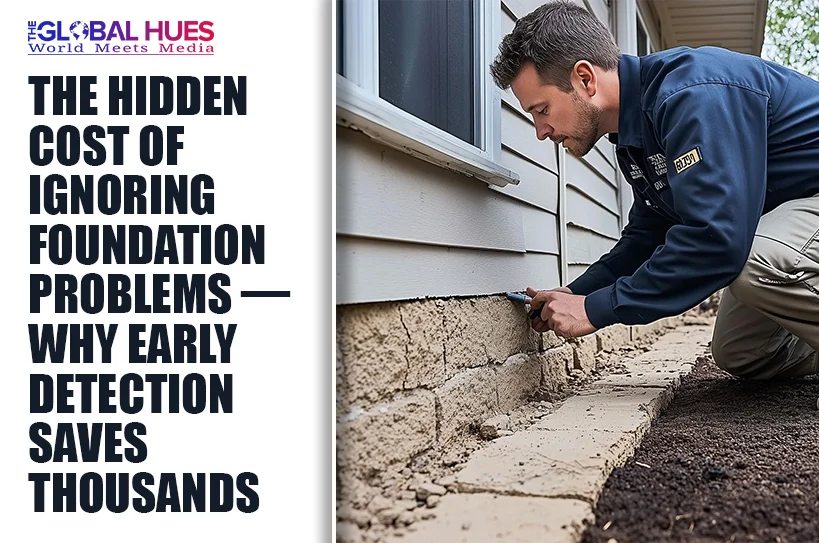
- On the outside — any cracks in the brick or concrete, or gaps where the foundation meets the siding?
If you’re noticing any of those, it’s worth getting a professional to take a look. At Level Home Foundation Repair, we do complimentary inspections — no sales pressure, just an honest assessment of what’s going on. Half the time I tell people they don’t need anything done yet, just keep an eye on it. But when they do need work, catching it early makes all the difference.
The Simple Math
- Fixing it early is always cheaper than fixing it later.
- Getting repairs documented protects your resale value.
- Insurance won’t bail you out for gradual settlement.
- The problem never fixes itself.
I’ve been doing this work in Tulsa for years now, and the conversations I dread most are with homeowners who say, “I noticed something a few years ago but figured it would be fine.” It rarely is.
Pay attention to what your house is telling you. It’s one of the smartest financial decisions you’ll make as a homeowner.
(DISCLAIMER: The information in this article does not necessarily reflect the views of The Global Hues. We make no representation or warranty of any kind, express or implied, regarding the accuracy, adequacy, validity, reliability, availability or completeness of any information in this article.)
Must Read:
- Your Custom Home – Careful Considerations
- Innovative Interior Design Trends To Refresh Your Home
- How to Choose Living Room Furniture That Stands Up to Active Lifestyles