

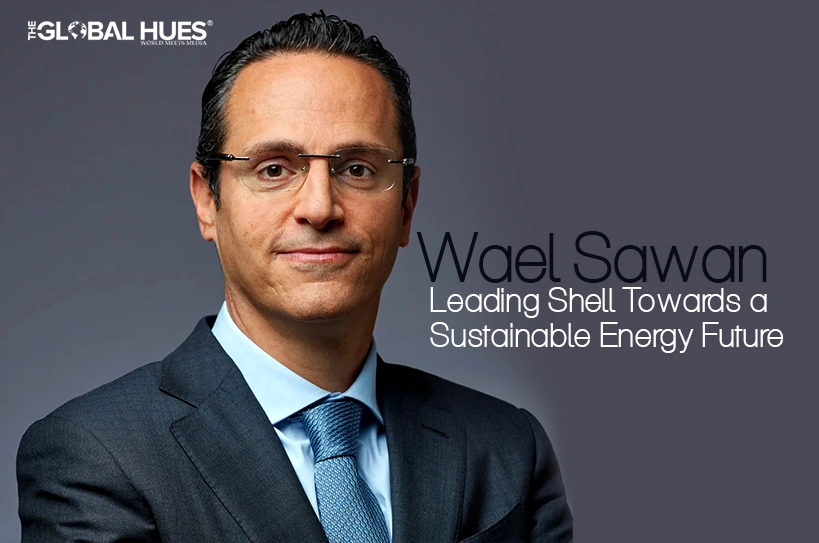
On January 1, 2023, Shell welcomed its new CEO Wael Sawan, who now has the reins of the company at a crucial time in the history of the global energy sector. He made clear from the outset that his priority was to navigate this giant of the oil and gas industry to a sustainable energy future.
After spending more than twenty years at Shell, Sawan has acquired extensive operational insight into the company’s markets. His appointment suggests Shell’s commitment to uphold energy market leadership while shifting focus to clean and low carbon alternatives.
Sawan’s first year had the focus of aligning Shell’s strategy for the long-term with its environmental and financial goals in a dynamically shifting energy world.
Early Life and Education
Sawan, a Lebanese-born, came into the world in 1974 after which he spent most of his life in Dubai. His childhood facilitated his understanding of multiculturalism and global business. His formal education began at McGill University where he received a Master’s degree in Chemical Engineering, an area which gave him the foundational skills in energy systems.
Thereafter he enrolled at Harvard Business School, earning an MBA which prepared him for Sawan’s advanced business leadership responsibilities. Sawan’s blend of engineering, business training, and corporate leadership was honed during his extensive career.
Joining Shell and Early Career
Wael Sawan’s career at Shell began in 1997, when he started as an engineer at Petroleum Development in Oman. He developed his skills in the energy industry’s technical and operational work with nearby upstream projects in the Middle East.
Sawan also focused on project management and oilfield development. It was his client focus that enabled him to shift into commercial and leadership positions early on; he had developed a reputation as someone who enabled cross-functional teamwork. This phase helped him sharpen his skills on production assets and operational efficiency.
Leadership Roles within Shell
Sawan undertook various strategic leadership positions over time that leveraged his influence globally within Shell. As a Vice President for Commercial, New Business, and LNG for Qatar, he helped grow Shell’s presence in the liquefied natural gas market. Subsequently, he became Managing Director and Chairman of the Qatar Shell companies, enhancing his leadership profile in the Middle East.
Later, he became Executive Vice President of Shell’s Deep Water business, overseeing difficult offshore operations in the Gulf of Mexico and Brazil. ADIPEC noted that these leadership positions provided Sawan with invaluable experiences on multi-dimensional, high impact work in diverse regions.
Appointment as CEO
Sawan officially took over the role of Shell’s CEO from Ben van Beurden on January 1, 2023. His appointment was during a timeframe that had simultaneous growing climate action pressures and worsening energy security issues.
In his inaugural year, Sawan pursued a streamlining operations strategy, improving capital expenditure, and overall restructuring performance. Sawan also reaffirmed the corporate policy on value redistribution to shareholders while maintaining capital expenditure return policies. His strategic focus has been realigning the energy portfolio with growth Shell planned for.
Strategic Vision and Energy Transition
Sawan advocated for integrating renewables with existing energy infrastructures to sustain affordability and dependability. He also actively prioritizes Shell’s investment in low-carbon and hydrogen projects while balancing the world’s energy needs. Shell has set objectives for long-term growth that focus on enhanced energy efficiency, decreased carbon intensity, and advanced energy technology innovation.
In the Shell Sustainability Report 2022, Sawan mentions the imperative of ‘responsible transition’ which focuses on the gap in infrastructure, energy equality, equity, reliance, and global reach. It is made clear from the strategy that the objective is to achieve the shift without disrupting the energy supply chains servicing the world.
Challenges and Controversies
Shell has come under fire for what is perceived as a lack of investment in renewable energies as the company realigns its priorities under Sawan’s leadership. Investors and climate advocates alike seem troubled by Shell’s decision to reduce the renewables budget in favor of high-margin oil and gas projects.
In defense of Shell’s strategy, Sawan insists that Shell’s focus must always reflect market conditions and create value over time. Sawan tries to balance decarbonization objectives with corporate performance. Sawan continues to manage relentless internal and external demand while insisting that the company invest where the impacts will be most sustainable.
Financial Performance and Shareholder Relations
Sawan continues to emphasize profitable growth through operational discipline and strategic cost-cutting. In 2023, Shell performed business reviews to streamline workflows and improve returns.
The company reported higher earnings and sustained strong shareholder payouts. Sawan continues to stress the importance of capital efficiency and optimized investment execution across all business units. His financial approach focuses on providing clear long-term guidance and predictable outcomes.
During engagements with investors, Sawan underscored Shell’s focus on robust dividend payouts while flexibly responding to changes in global energy demand. Shareholder relations have come under closer scrutiny, especially maintaining trust and transparency amid a complicated transformation.
Personal Life and Leadership Philosophy
Wael Sawan is a dual citizen of Lebanon and Canada, and resides with his wife and three sons. Apart from his professional pursuits, Sawan additionally advocates for responsible leadership and a results-oriented ethos. He believes in accountability where teams are empowered to take ownership and innovative culture.
Sawan seeks to declutter processes and enhance operational efficiency which accelerates decision-making. He strives to foster a culture characterized by a strong desire to achieve ambitious goals tempered by realistic expectations, which cultivate long-term benefits for the organization and society. This approach illustrates Sawan’s inclusive and results-focused leadership style rooted in contemporary energy sector realities.
Conclusion
Sawan’s tenure at Shell marks a defining period in the company as it grapples with sustainability and energy security simultaneously. He is transforming Shell’s paradigm of profitability to environmental responsibility through guided performance-driven change and strategic initiatives. Sawan’s disciplined yet innovative approach creates an effective vision for the future of Shell’s energy business.
Must Read:
- Howard Schultz: Brewing Starbucks into a Billion-Dollar Empire
- Shantanu Narayen: Adobe’s Creative Visionary Transforming Digital Media
- Top 10 E-Readers: Make Your Reading Sessions Enjoyable


