
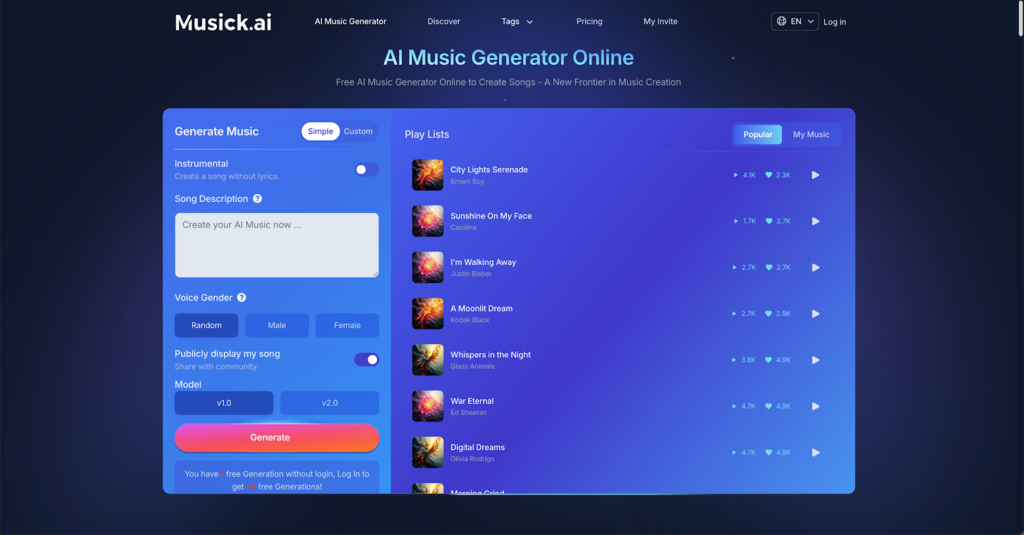
Life moves through quiet mornings, hectic afternoons, and reflective nights, and each moment feels different when the right music is playing in the background. Musick AI turns these everyday moods into made‑to‑measure songs that follow feelings instead of fixed playlists. With its browser‑based AI Music Generator from Musick AI, anyone can turn a passing mood into a personal soundtrack in minutes.
I. Understanding Mood‑Based Music Journaling
What Is a Mood‑Matched Audio Diary?
A mood‑matched audio diary is a habit of logging the day not with sentences, but with short tracks that capture how it felt. Instead of writing “long day, but hopeful,” a user can generate a calm pop instrumental with a soft build and light percussion to hold that feeling in sound.
By returning to these tracks, patterns start to emerge: which genres bring focus, which moods recur on certain days, and which musical textures help with calm, motivation, or sleep.
Why Musick AI Fits This Use Case
Musick AI is built around descriptive prompts such as “acoustic pop about the holidays” rather than technical production steps. This makes it suitable for users who want to focus on emotions and themes rather than mixing or sound design.
Users can set mood‑related parameters like genre and overall feeling, then let the system generate full tracks that are emotionally rich and ready to reuse across journaling, study sessions, or creative projects.
II. How to Turn a Day into a Custom Track
Step 1: Pick Instrumental or Full Song
On the main “Generate Music” section, users can choose “Instrumental” to create a song without lyrics when focus or background sound is the goal. This works well for journaling moments where attention should stay on reading, studying, or reflecting.
When a day calls for something more expressive, lyrics can be generated based on genre and topic so that the track literally “speaks” the mood back to the listener.
Step 2: Describe Mood, Genre, and Theme
The core of Musick AI is a text box where users describe the style of music and topic they want. Instead of naming specific artists, the site suggests using genres and vibes such as “uplifting pop,” “moody jazz,” or “dark electronic.”
Adding emotional and situational detail—like tempo, energy level, and occasion—helps the system understand the diary entry: for example, “slow piano ballad for late‑night reflection after a tough day” or “energetic EDM with bright synths for a productive morning.”
Step 3: Choose Vocal Preferences (Optional)
When vocals are needed, users can select a vocalist’s gender preference for the track. This detail can make it easier to associate certain kinds of voices with recurring feelings, such as lower‑key male vocals for introspection or brighter female vocals for hopeful moods.
Although this selection is handled as a preference and results may vary, it adds another layer of emotional color to the audio diary.
III. Using Genres and Moods as Emotional Tags
Mapping Feelings to Musical Styles
Musick AI offers a broad set of genres including EDM, R&B, Jazz, Pop, Rap, Metal, Rock and roll, Hiphop, Blues, Reggae, K‑pop, Classical, Disco, and Country. Treating genre as a “tag” for each entry helps keep a consistent structure for mood tracking.
For example, one listener might use soft Jazz for calm reflection, Pop for lighthearted days, and EDM for high‑energy focus blocks, creating a clear emotional map that can be revisited later.
Working with Mood Templates in “My AI Music”
The “My AI Music” area highlights that Musick AI provides many mood templates for faster selection. These templates serve as starting points for feelings like tension, joy, nostalgia, or excitement.
Combining templates with personal prompts lets users quickly save daily “check‑ins” without needing to design music from scratch every time.
IV. Practical Use Cases: From Morning Routines to Night Reflections
Morning: Setting Intentions Through Sound
For mornings, users can generate upbeat Pop or EDM tracks with bright synths and rhythmic percussion to create a sense of momentum. Adding a short text prompt such as “optimistic start to a busy workday” turns the track into a sonic intention for the next few hours.
These tracks can later be reused as looping background music for planning, journaling, or commute listening, building a consistent audio identity for “productive mornings.”
Afternoon: Focus and Study Sessions
Instrumental options are especially useful for work or study blocks, where lyrics might be distracting. Descriptions like “steady, mid‑tempo lo‑fi inspired beat with gentle drums and soft keys for concentration” help the AI Music Maker create tracks that support focus without overpowering it.
For students and educators, the site explicitly positions its generator as suitable for learning environments, including use cases like high school musical projects and classroom activities.
Night: Emotional Processing and Relaxation
Evenings often call for slower, more contemplative tracks. Musick AI can generate emotionally rich songs that align with reflective moods, using genres like Jazz, Classical, or gentle Pop.
The service also highlights use in therapy‑related contexts, where selected favorites can be added to a personal repository for supporting emotional well‑being and easing unhappiness.
V. Building a Reusable Audio Mood Library
Organizing Tracks by Mood and Scenario
Once tracks are generated, they can be saved into a personal collection in Musick AI, allowing quick access to previous “entries.” Organizing them by mood (“Calm,” “Driven,” “Bittersweet”), time of day, or recurring situations makes it easy to queue the right music when similar moments arise.
This library can gradually replace generic playlists with a catalog that is tailored to a user’s own emotional patterns and daily rhythms.
From Audio Diary to Creative Resource
Beyond private listening, these generated songs can often be used across content creation, including YouTube, social media, filmmaking, game development, podcasts, and education, with attention to the site’s notes about copyright and use rights.
In this way, the audio diary doubles as a resource pool: a quiet track originally made for late‑night reflection might later become the perfect background for a vlog or presentation.
VI. Exploring Extra Tools for Deeper Storytelling
AI Song Lyrics Generator, Beat Producer, and Rap Generator
In addition to full track generation, Musick AI lists several dedicated tools: an AI Song Lyrics Generator, an AI Beat producer, and an AI Rap Generator. These tools let users fine‑tune specific components when a day’s mood calls for more detail.
For instance, a tough day might be expressed through custom lyrics that describe the situation, paired with a beat designed in the AI Beat producer to match tension, release, or determination.
Cover, Extender, and Remixer Options
The site also references an AI music extender, cover generator, and remixer. These can turn short diary snippets into longer pieces, reinterpret existing tracks to fit new moods, or create alternate versions for different listening settings.
By extending or remixing a favorite diary track, users can follow how a single emotion changes shape over weeks, reflecting growth, closure, or renewed energy.
VII. Conclusion
By treating each day as a feeling that deserves its own melody, a listener can shape a long‑term audio diary that is both personal and practical. With tools like AI Music Maker and AI Song Maker built into Musick AI, mood‑matched music becomes less about technical skill and more about describing emotions clearly so that sound can carry them. As habits form around this process, a library of custom tracks grows into a reliable companion for focus, comfort, motivation, and self‑reflection—one song at a time.
(DISCLAIMER: The information in this article does not necessarily reflect the views of The Global Hues. We make no representation or warranty of any kind, express or implied, regarding the accuracy, adequacy, validity, reliability, availability or completeness of any information in this article.)
Must Read:
-
Sound Mind: How Personalized Music Is Changing the Way We Cope
- Your Custom Home – Careful Considerations
- Innovative Interior Design Trends To Refresh Your Home
- How to Choose Living Room Furniture That Stands Up to Active Lifestyles