
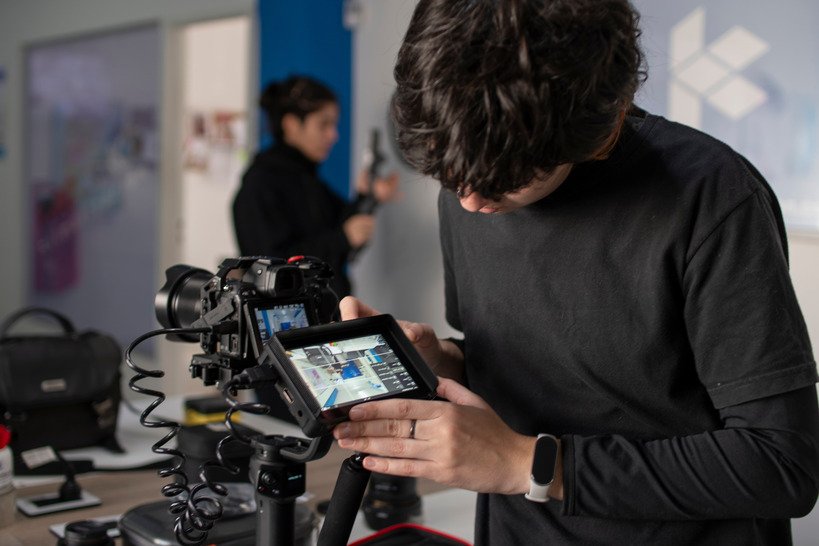
Businesses worldwide face countless issues daily. Most of them are quite minor with easy solutions, while others grow into more significant problems. When this happens, it can be challenging to find the right answers quickly.
What many business leaders don’t know is that these issues could be prevented by something simple and often overlooked: audiovisual technology. AV technology involves several tools that help address everyday workplace issues in practical, effective ways.
Here are the common business problems you can solve with modern audiovisual technology.
Poor Communication
Miscommunication is often the catalyst for many a business problem. It could slow down projects and, sometimes, strain professional relationships. Emails and chat messages are notorious for missing tone, context, or urgency. Important details may also slip away when teams focus too much on written updates.
Audiovisual technology becomes a helpful channel to get information across accurately. For instance, video conferencing allows you to use visual aids, especially when meeting with remote teams. These systems encourage better communication that reduces follow-up messages. Video meetings typically let participants read the speaker’s expressions and respond appropriately. Shared screens also align everyone on the same information.
Some businesses choose to invest in AV technology for their daily work needs. However, if you need high-quality tools for those special on-site or online events, consider hiring a professional audiovisual team. Look for a company that provides premium AV solutions that fit your budget and install the necessary tools on time. A great team also takes your vision to heart, offering custom solutions for a successful project.
Clearer communication gives businesses an edge over issues, resolving problems faster and more precisely. When teams can converse and brainstorm in real-time, decisions gain better momentum instead of stalling in extended chat or email threads.
Low Employee Engagement
Getting employees’ attention in traditional meetings or training sessions is a common concern in most businesses. The issue persists, especially in workplaces with a younger workforce. These days, younger employees can lose interest in long-winded presentations without any audiovisual variety. Remote teams typically feel disinterested and detached even more when sessions lack interaction.
If you’re observing low engagement between you and your teams, you may need to utilize AV technology. Elements, such as live polls, interactive visual displays, and video content, encourage people to participate more. Employees are present in the moment instead of passively being there.
Using audiovisual technology also builds a collaboration environment. Individual members get to effectively interact with the rest of the team, including the remote ones. Everyone has a chance to contribute and retain new information better. Energy levels improve, too, when the connections and communication feel more human.
Inefficient Meetings
In some cases, a lengthy meeting could’ve been just an email. If you must have a meeting with your team and keep them in the loop, it’s wise to invest in high-quality AV technology. The latest tools lessen technical delays that often disrupt focus and increase frustration among participants. They help meetings become more worthwhile and efficient.
If you’re having face-to-face conferences in meeting rooms, audiovisual technology is still a huge plus. Integrated communications equipment, like wireless microphones and HD cameras, streamlines the meeting flow from start to finish.
Even basic boardroom audiovisuals, such as LCD projectors, help make meetings more systematized. You’re less likely to troubleshoot before or during the meeting. Participants listen more attentively, with fewer technical distractions.
Efficient meetings are vital as they may end sooner, which saves time to continue work and other important matters. They could also help teams achieve clearer outcomes to problems once thought to be difficult to address.

Inconsistent Training and Knowledge Sharing
Hiring new employees and retaining skilled teams involve providing ample training or career development. But traditional training methods don’t always work nowadays. Some sessions may relay varying information and explanations depending on the trainer. This issue happens when training channels aren’t consistent.
Audiovisual technology helps support repeated and standardized training content. You can pre-record training materials and check for errors before trainees use them. Recorded sessions and video modules preserve accurate information until it’s time to update them. Since they’re made in advance, employees can access the materials regardless of location or schedule.
When training and knowledge sharing are consistent, your teams become more confident at work. There may also be a smaller chance of them committing grave errors that set back workflows. In case of questions or confusion, employees can revisit content whenever needed. That’s one of the main pros of multimedia learning through AV technology.
Poor Client and Stakeholder Experiences
Another common issue businesses may face is keeping new and existing clients happy. It’s often challenging to maintain a positive client experience when presentations feel flat or unclear. How well your tools work during meetings is also a reflection of your professionalism and credibility.
High-quality AV technology enhances your presentations and virtual meetings with clients and stakeholders. Visuals in 4K displays reinforce key points and maintain attention, while clear audio supports smooth conversations and confident delivery.
The stronger your presentations are, the more you build trust and understanding. Clients can grasp the value of your product or service faster when ideas appear clearly on screen. When these positive experiences are consistent, they make for long-term business relationships.
Final Thoughts
Yesterday and today’s common business problems can be addressed with an unlikely solution. When you think about it, audiovisual technology may seem insignificant, but it shapes how people relay ideas and respond.
The right tools help businesses communicate clearly, engage employees and clients, and deliver consistent experiences. Before issues arise, consider investing in AV tech to support your daily operations and long-term growth.
(DISCLAIMER: The information in this article does not necessarily reflect the views of The Global Hues. We make no representation or warranty of any kind, express or implied, regarding the accuracy, adequacy, validity, reliability, availability or completeness of any information in this article.)
Must Read:
- AI Video Agents: Simplifying Video Creation from Idea to Output
- Top 10 AI Chatbots: Ask Questions and Get Informative Answer
- AVIF to JPG Converter: The Ultimate Guide to Modern Image Format Conversion
- The New Chapter: Generative AI and Beyond