
During the summer construction season, in Canada, many developments are made. The warm weather conditions contribute to the proper organization of the work and create the best conditions for laying foundations, paths, roadways, and other structures. Nevertheless, builders must pay attention to the preparation of the site so that subsequent work proceeds within reasonable limits and the quality of structures is not compromised. One of the decisive factors when preparing building sites is the choice of the right equipment for compacting soils and subgrades.
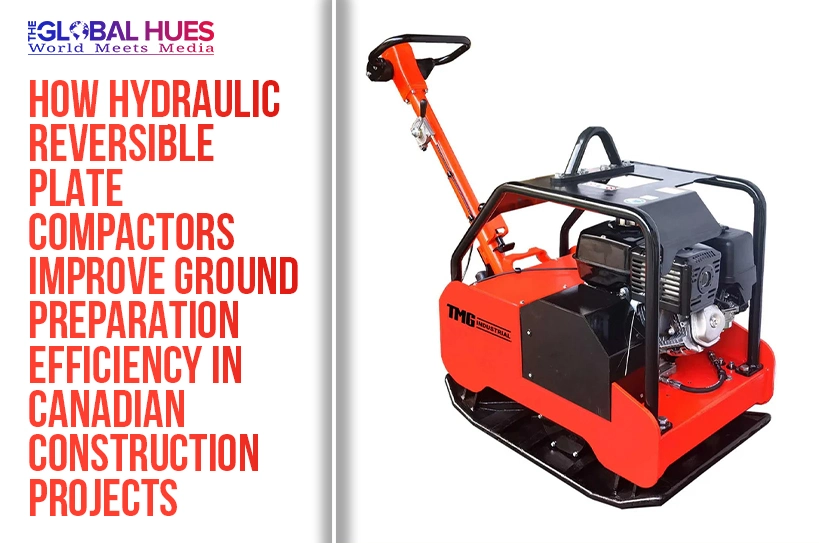
A hydraulic reversible plate compactor is a vital tool that enhances the quality and stability of the ground. Its proper and safe use is essential for contractors, equipment operators, and project managers to gain the maximum workability and performance of any construction site.
Understanding the Technology of Plate Compaction
A plate compactor is a machine that compacts or tightens soil particles by vibrating and applying pressure downwards. This process densifies the soil by reducing the large air pockets between the particles which in turn makes the surface more rigid and harder.
A hydraulic reversible plate compactor comes with the ability to reverse the direction of the machine which saves time when working in a confined area where the machine needs to move backwards.
- Vibration improves material density
- Hydraulic movement supports controlled operation
- Reversible travel improves manoeuvrability
- Compaction helps create stable construction surfaces
Typical applications include preparing substrates for driveways, sidewalks, roadwork, utility trenches, and landscaping. For example, a contractor working on a residential driveway in Canada might use a plate compactor to compact gravel prior to laying asphalt or concrete.
The Importance of Compaction for Efficiency and Construction Quality
Ground preparation is directly related to the final quality of any project. The improper compaction of subgrade soils and aggregates can lead to surface deformities and unevenness.
Effective compaction supports:
- More stable foundations
- Reduced risk of surface settlement
- Improved productivity on construction sites
- More consistent project results
Construction firms that have to deal with a number of seasonal jobs can benefit from the use of rollers in terms of time spent on works related to ground compaction and preparation.
Technical Foundations and Operating Considerations
Choosing the right compaction equipment is crucial, considering the ground conditions, material, and job requirements. Various surfaces react differently to vibrations and forces, so it is essential to understand these factors to achieve the desired results.
Important technical considerations include:
- Soil composition and moisture level
- Required compaction depth
- Available working space
- Operator control requirements
For instance, granular soils like gravel react best to vibratory rollers, while cohesive soils need a different approach. A knowledgeable contractor will typically suggest the most suitable equipment for the desired ground density.
Factors Affecting Performance and Reliability
The performance of the plate compactor is determined by the state of the equipment, techniques for its use, and the conditions in which it is used. The correct installation and use of the equipment are of primary importance.
Key factors include:
- Routine inspection of hydraulic and mechanical components
- Correct operating speed and movement patterns
- Suitable surface preparation before compaction
- Proper maintenance after use
The equipment may be subjected to harsh Canadian weather and require special maintenance. Proper care and cleaning are necessary to ensure the best performance of the plate compactor and prevent breakdowns.
Safety Practices for Plate Compactor Operation
Safe operation of plate compactors is vital as they produce intense forces of vibration. Operators should be properly trained and familiar with the machinery and its controls prior to operating.
Recommended safety practices include:
- Inspecting equipment before operation
- Using suitable personal protective equipment
- Maintaining stable footing during operation
- Avoiding operation on unsuitable slopes or unstable surfaces
In addition, regular servicing should be conducted and any irregular vibrations, odd noises, or abnormal movements should be reported before resuming use of the equipment.
Equipment Types and Application Differences
The most common types of compaction machinery include forward plate compactors, reversible plate compactors, tamping rammers, and roller compactors. Each type has been designed to serve a particular function and operate under different conditions.
The best choice for achieving maximum control over the compaction process in confined worksites surrounded by existing structures is represented by the reversible plate compactors.
Advantages and Limitations
The main benefits of hydraulic reversible plate compactors are providing the required compaction and flexibility to the user. They are appropriate for a wide range of small-scale and medium commercial works.
At the same time, it is necessary to understand that they are not universal machines, and for some types of soils and large-scale construction sites, other and more powerful types of rollers should be used.
Future Trends in Ground Preparation Equipment
As construction practices evolve, contractors increasingly focus on maximizing efficiency, safety, and precision during ground preparation. Compaction equipment in the future will be designed to be more sophisticated, advanced, and eco-friendly.
Hydraulic reversible plate compactors are a must-have for modern-day contractors due to their ability to meet the exacting demands of engineers and contractors. The working principles, features, and safety guidelines of these machines should be fully understood and utilized to obtain the best results during construction sites’ operations.
(DISCLAIMER: The information in this article does not necessarily reflect the views of The Global Hues. We make no representation or warranty of any kind, express or implied, regarding the accuracy, adequacy, validity, reliability, availability or completeness of any information in this article.)
Must Read:
- Your Custom Home – Careful Considerations
- Innovative Interior Design Trends To Refresh Your Home
- How to Choose Living Room Furniture That Stands Up to Active Lifestyles