
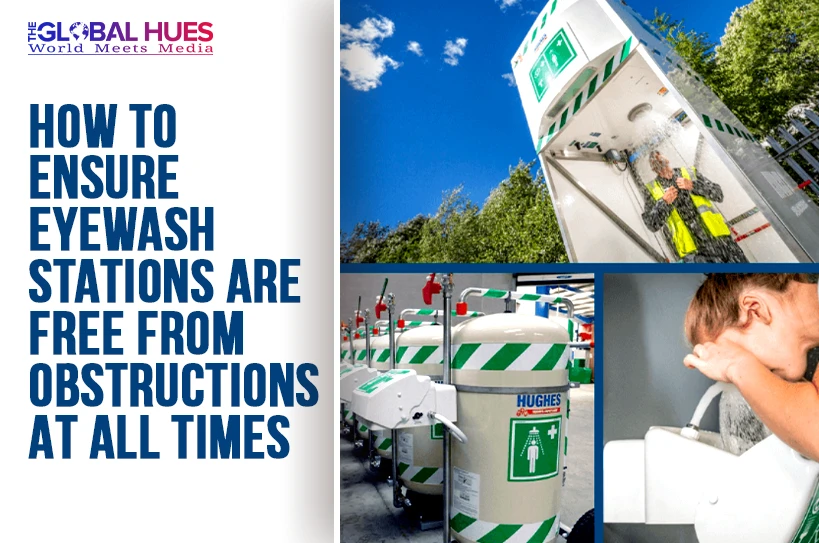
It is very important to have emergency equipment in workplaces where hazardous materials are available at any given time. Even a few seconds of time spent accessing an emergency system can make an injury even more serious, particularly when it is a chemical or air-polluted setting. An eyewash station should be kept clean and accessible to the workers to enable them to act in case of exposure.
Clear access is not only a compliance issue but also a feasible safety measure. The obstructions may manifest over time as someone develops a new storage and work routine, growing the work activities, and it is always important to maintain access paths. Keeping emergency equipment clear is also helpful in facilitating quicker response time and enhancing overall workplace safety performance.
Workplace Layout and Planning
Planning of workplace layout is also significant in avoiding hindrances surrounding emergency equipment. Workflow patterns, storage space and equipment flow should be taken into account when developing or renovating a facility alongside the location of safety systems. An eyewash station must be placed in a place that, by default, does not have congestion and heavy traffic areas.
Inadequate planning may result in equipment being encircled with temporary storage or regularly used materials. This, over time, poses the risk of access being blocked in case of an emergency. Adequate planning means that there is free space initially, which will lessen the requirement of rectification at a later stage and aid in maintaining uniform access.
Storage Control and Organization
Storage practices have a direct influence on the availability of emergency equipment. Objects that have been placed in corridors, corners, or close to the emergency systems are likely to form obstacles, quickly disrupting response time. Effective storage policies can be used to ensure that at all times, materials are not stored in areas that are close to safety.
Scheduled storage systems also minimise the chances of accidental blocking. Equipment and supplies that have their places of location are less likely to be placed in areas near emergency stations by workers. The methodical approach assists in keeping access routes open and aids in the proper operation of safety systems such as safety showers where persons are at risk of full body exposure.
Routine Inspections and Monitoring
Frequently, inspections are necessary to detect and avoid obstructions before they can pose a safety hazard. The walkthrough checks are useful in ensuring that there are no obstructions to access routes and that no materials have been left close to emergency equipment. Such inspections ought to be conducted at a rate that is high enough to notice changes in the conditions of the workplace.
The changes in operations that can impact accessibility should also be monitored. Emergency systems could accidentally be blocked as new equipment or storage requirements are installed, or as work processes change. Regular monitoring will help in detecting problems at an early stage and rectifying them before they affect the effectiveness of the response.
Employee Awareness and Responsibility
The awareness of the employees is most crucial in ensuring that emergency equipment is not obstructed. Employees must learn how to keep the safety systems clear and clean, and how the placement of any objects, even temporarily, may be dangerous. The expectation should be supported by training that emergency routes should never be closed.
Sharing responsibility should be done by all the members of staff to ensure a safe environment. By having employees actively involved in maintaining clear access points, the chances of being blocked are greatly minimized. This group strategy allows responding to the emergency more quickly and maintaining an eyewash station ready to use at any moment.
(DISCLAIMER: The information in this article does not necessarily reflect the views of The Global Hues. We make no representation or warranty of any kind, express or implied, regarding the accuracy, adequacy, validity, reliability, availability or completeness of any information in this article.)
Must Read:
- Your Custom Home – Careful Considerations
- Innovative Interior Design Trends To Refresh Your Home
- How to Choose Living Room Furniture That Stands Up to Active Lifestyles