
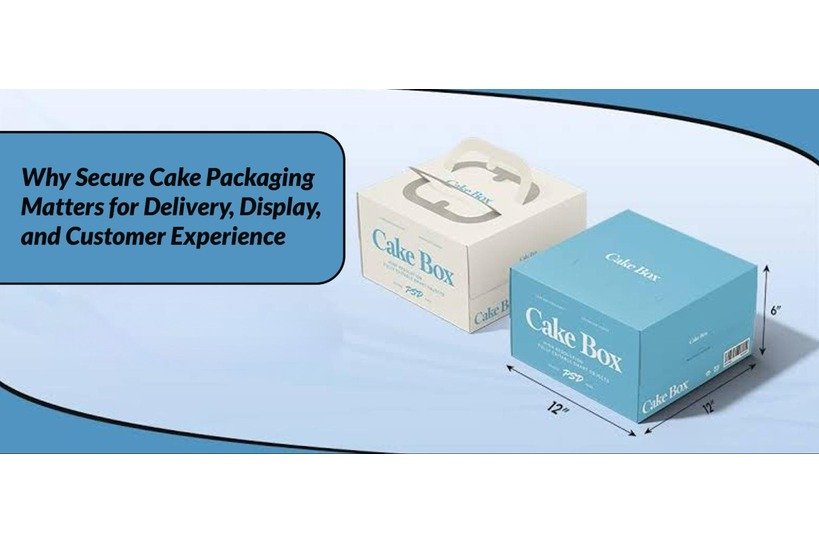
For bakeries, Why Secure Cake Packaging Matters for Delivery, Display, and Customer Experience goes well beyond appearance. Packaging is the final stage of presenting the organization in a bakery that is preparing the products for delivery to the customer. They should ensure that the cake is safe, handling-friendly, brand-friendly, and employee-friendly. For example, a beautiful carton that requires much time to assemble can slow the whole process of packing. On the other hand, a reliable box with an inappropriate size can fail to hold the cake’s decorations. The packaging should be designed with the product in mind to be able to meet all requirements.
For U.S. bakery businesses, packaging requirements should also be considered in relation to how an order reaches the customer. A cake delivered directly from the local bakery counter has different packaging requirements than one that is delivered via multiple corporate orders in a delivery van or a refrigerated display. This article discusses the interplay of structure, materials, branding, processes and quality control to meet customer expectations related to customer confidence, without overstating claims about freshness or food safety.
Begin With the Product and the Journey
The most effective packaging decisions begin with understanding the product rather than selecting colours or graphics. Document the cake’s completed dimensions, weight, packing temperature, decoration height, grease level, fragile components, and expected opening method. Testing should be done with the biggest and most fragile products since an ordinary specimen would not show clearance or stability problems. With the stacked, celebrating or very decorated cakes, a slight change in height or spacing can decide if the decoration is untouched or not or if it will touch with the lid or sides.
Next, trace the product through its life cycle and think about how long it needs to be packed by the company, how long it can stay in storage, whether it has to be refrigerated or frozen, how high it can be stacked and how long it takes to get to the consumer and what kind of handling it may require. Think about where the cake boards can slide, decorations can scratch the sides or where packages can tip.
These measurements provide designers and suppliers with practical specifications while helping bakery owners avoid spending money on features that do not address an actual need.
Choose Structure Before Decoration
The design of the cake’s packaging is based on their size, weight, handling conditions, and geometry. For light cards, their use is justified in the case of small counter sales. The use of corrugated cardboard is more appropriate for larger cakes and sizes that require additional rigidity. However, the selection of material is not the only factor affecting the quality of packaging. The choice of an appropriate construction is no less important. Thus, a two-layer construction will provide greater resilience and protection for the packaged product.
Flute style, board orientation, folds, locking mechanisms, windows, and unsupported sections can all affect how rigid the finished package becomes.
Ask suppliers for physical prototypes produced at the intended dimensions and using the proposed material. Examine the base, side clearance, lid height, opening method, and resistance to bending. If the cake sits on a board, tray, liner, cup, or insert, evaluate the complete combination rather than testing each component separately. The finished package should remain stable when carried from realistic positions and should allow the customer to open it without having to tilt or disturb the cake. These functional details often influence perceived quality more than decorative finishes.
Make the Primary Packaging Choice Work Hard
When considering Custom Cake Boxes with Inserts, first determine what the customisation is actually intended to accomplish. Effective customisation may involve a more suitable footprint, increased height, a dependable closure, an insert that keeps the cake from shifting, artwork positioned according to how the package will be viewed, or quantities that align with regular demand. Every feature should serve a practical purpose related to protection, efficiency, presentation, or brand recognition.
Before committing to a production order, request dielines and physical samples. Ask employees to put together the samples, place a real cake inside, and repeat the process several times under conditions close to the service period. Take pictures of the final package at the counter, in the delivery bag, and carry it to see if labels or tape do not hide critical brand information or if it is not clear how to open the package. A careful sample can help avoid expensive production problems and simplify the packaging process in a daily bakery.
Use Presentation to Set Accurate Expectations
Packaging design can shape the customer’s perception of the product before they have actually tried it. The text on packages, choice of colours, photography, illustrations, and finishes can communicate whether the bakery offers luxury products, keeps traditions, is youthful and trendy, minimalist, or celebrates holidays. The exterior has to reflect the presentation of the baked goods inside. Elegant packaging that is hard to open may ruin the experience and a humble cardboard box may not respond to the expectations of a customer who has just paid for an elaborately decorated cake.
Make the bakery name, product information, and critical customer data easy to spot. Think through what sides of the package the customer will be able to see when it is on display, being delivered, or stored among other similar packages. The text should be readable in standard shop lighting and in photos taken by customers. Seasonal artwork can be incorporated into the variations of a cohesive system that allows bakeries to update packaging without confusing their brand image.
Protect Freshness Without Overpromising
Packaging may protect against exposure to air, moisture, grease, light, dust, or unnecessary handling, but that does not mean that a given product will remain fit for consumption for a certain period after opening. Recipe, water activity, fillings, temperature control, sanitation, packing procedures, and time are also important factors. Thus, it is advisable to draw up storage recommendations and instructions for use depending on the particular products of the bakery and not on general packaging claims since all materials that come into contact with food must meet specific requirements.
Ventilation explains why certain choices of packaging are necessary for certain products. Warm cakes or treats can let off steam, which may cause condensation or change the consistency of some ingredients if they are sealed up too tight. In other situations, a more enclosed package may help limit drying or outside exposure. Conduct trials under realistic temperatures and time periods, then assess texture, appearance, aroma, and the condition of the package. The objective should be verified performance for the bakery’s particular process rather than sweeping statements such as “keeps fresh forever.”
Design for Fast, Consistent Packing
Every packaging decision has a labour impact. Measure the amount of time employees spend assembling, filling, closing, labelling, and staging each package. Complicated folds, difficult tabs, and closures that fail to stay shut can create significant delays when order volumes increase. Clear folding instructions, pre-scored components, logical carton bundles, and a consistent packing sequence can make the process faster and more reliable.
Packaging should also be stored appropriately. Keep flat cartons protected from moisture, odours, dust, and physical damage, and use older branded stock before newer inventory. Create a simple packing guide with photographs that demonstrates the correct box assembly, product position, insert placement, closure, label location, and stacking restrictions. Training should include different product types, particularly the tallest, heaviest, and most fragile items. A well-written packaging standard is valuable only when every employee can reproduce the same result.
Plan the Secondary Format as Part of a System
Most bakeries need multiple packaging formats rather than a single box for every product. black bakery boxes can fulfil a specific purpose within a broader packaging system rather than being treated as a completely separate purchase. Different formats may be needed for particular cake sizes, sales channels, seasons, product categories, or protection levels. Consistent use of logos, typography, colour guidelines, label dimensions, and opening cues can make several packaging styles appear connected.
Create a packaging matrix containing each SKU, suitable products, measurements, material, insert requirements, label type, storage location, minimum purchase quantity, and reorder point. Review the range regularly and remove formats that perform essentially the same function without offering a clear benefit. A smaller, well-organised packaging range is easier for employees to understand, easier to purchase, and simpler to store. It also lowers the possibility of staff selecting an unsuitable box during busy periods.
Prepare for Display, Delivery, and Handoff
Packaging should be evaluated in the environments where customers will actually encounter it. For delivery orders, celebrations, preorders, and display cases, place loaded packages inside the bakery’s real bags, totes, racks, or display areas. Observe whether the boxes slide, lean, bend, develop grease marks, or place pressure on the cake. If multiple packages are stacked, establish a tested maximum and make sure employees know which boxes should remain at the top. Where appropriate, tamper-evident seals can support delivery procedures, provided they are suitable for the package and do not interfere with opening or presentation.
The final handoff is part of the packaging experience too. Employees should be able to find the right order, make sure that it is oriented properly, and give the necessary storage or service instructions, if needed. At the same time, the customers should be able to carry and open it without difficulty. Handles, markings, positioning, or even a specially placed tab for opening can make a huge difference, seemingly insignificant details that will reduce the number of mistakes and the feeling of disorder.
Check U.S. Labeling and Food-Contact Needs
Packaging and labels need sufficient room for information applicable to the specific product and selling situation. Requirements may vary according to ingredients, allergen declarations, nutrition labelling requirements or exemptions, net quantity, business information, interstate commerce, and applicable state or local regulations. Bakeries should determine which requirements apply to their own operations instead of assuming that attractive front-panel artwork is all that is needed. Required information should remain readable and should not be hidden by decorative design elements.
Suppliers should also provide appropriate information regarding materials, coatings, inks, adhesives, and window components when these are intended for particular food-contact or temperature conditions. A material that is suited for one application may not be appropriate for another. Maintain records of material specifications, supplier information, artwork approvals, and other changes. If the appropriateness of a component or a requirement on a label is in question, bakeries should contact the appropriate U.S. authority or qualified compliance professional prior to going into production.
Control Cost Through Total Value
The purchase price of a box does not represent its complete cost. Bakery operators should also consider shipping, storage requirements, employee assembly time, damaged products, replacement costs, unused stock, seasonal waste, and minimum-order requirements. A cheaper package may ultimately be more expensive if it takes longer to assemble or performs poorly during normal handling. Similarly, premium finishes or features should be evaluated based on measurable benefits such as stronger presentation, improved merchandising, or fewer order errors.
When comparing suppliers, use one detailed specification for every quotation. Dimensions, material, printing, finish, packaging quantities, tolerances, proofs, freight, and lead times should be comparable before making a purchasing decision. When demand is uncertain, staged purchasing or standardised components may reduce inventory risk. Reorder points should be based on actual consumption and supplier lead times, with additional stock planned for predictable seasonal increases.
Build a Practical Quality-Control Plan
Select an approved “golden sample” that defines the expected appearance, construction, dimensions, fit, colour, and finish. When new stock arrives, inspect a predetermined sample from several cartons rather than relying on a single package. Examine dimensions, scoring, adhesive joints, print alignment, colour variation, odour, surface condition, and window attachment where relevant. Periodically test the packaging with actual bakery products because inspecting an empty carton cannot identify every performance problem.
Keep records of production lots and photographs of defects so repeated problems can be discussed clearly with suppliers. Track practical indicators such as assembly duration, packing mistakes, damaged products, complaints, packaging consumption, and excess inventory. Reassess the system after introducing new menu items, delivery services, or seasonal designs. Improvements may involve changing an insert, adjusting clearance, simplifying a closure, modifying artwork, or removing an unnecessary box size rather than replacing the entire packaging system.
Consider Disposal and Sustainability Carefully
Sustainability claims should be based on the actual construction of the package and the conditions in which the customer will dispose of the package. Reducing materials, decreasing size, removing components, and preventing product damage are all valid ways to improve a packaging strategy. However, local recycling systems will vary, and food residue, coatings, adhesives, laminations, windows, and multiple materials can impact whether or not the package can be recycled.
Bakeries should request specific material information from suppliers and understand the practical disposal options of their customers. If components must be removed before disposal, the method should be simple and communicated clearly. Avoid unsubstantiated environmental claims for the type of packaging and market conditions. A responsible approach considers product protection, operational efficiency, material usage, and honest communication together.
Conclusion
Successful cake packaging brings together product requirements, operational needs, presentation, delivery conditions, and customer expectations. The process should begin with accurate measurements and an understanding of potential risks, followed by testing with real products under realistic conditions. Packaging ranges should remain organised, primary and secondary formats should work as a coordinated system, and employees should have clear instructions for consistent use.
For bakeries, customer trust often comes from the small details working together. The cake should arrive in good condition, the package should feel appropriate for the product, important information should be easy to understand, and the handoff should be straightforward. Regular testing and performance reviews allow bakeries to refine these elements as their menus, sales channels, volumes, and customer expectations evolve. In this way, packaging becomes more than a container—it becomes a practical part of the bakery’s operations and a visible extension of its brand.
Related Article:
- How to Pick the Safest Cookware for Your Kitchen
- A Complete Guide to Buying Wholesale Kitchen Cabinets
- What Are the Best Methods for Weatherproofing an Outdoor Kitchen?