
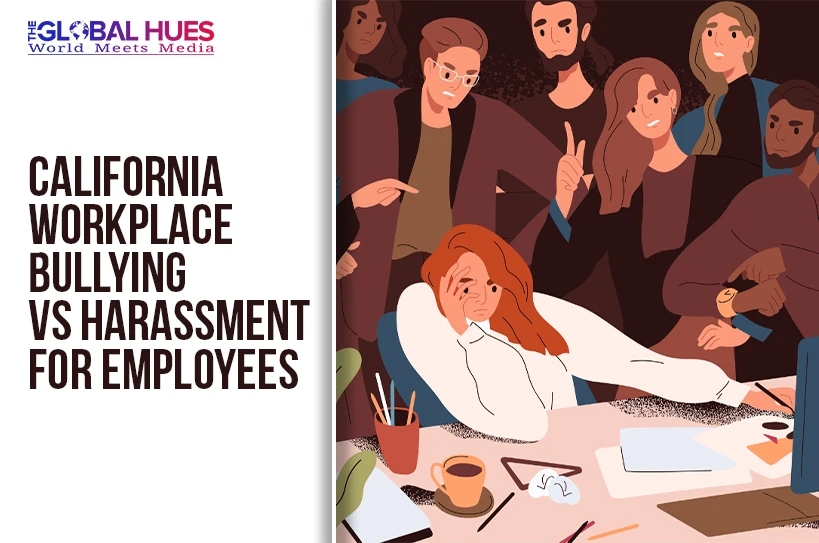
A hostile or difficult work environment can negatively affect an employee’s confidence and demeanor at work. However, not every single instance of rude behavior, unfair treatment or conflict with co-workers constitutes unlawful harassment or even bullying. Some instances may not even be addressed under your workplace’s policies and procedures and could be outside of the legal jurisdiction of state and federal employment laws.
Workplace harassment vs bullying in California are often used interchangeably but there are key differences. They are not illegal in all situations, because circumstances create different rights for employees, and many forms of bullying are not illegal as a matter of law. As such, in order to recognize whether or not your workplace behavior is against the law as employment harassment, one must examine not only the conduct itself but also the reasons behind it as well as the other circumstances.
What Is Workplace Bullying in California?
Workplace bullying means the same thing wherever it happens – repeated behavior by individuals at a workplace, whether by supervisors and managers or by coworkers and even people outside of work, intended to intimidate, humiliate, threaten or otherwise undermine a worker at her or his job.
Examples of such conduct include insulting or treating an employee with hostility, making threatening remarks, publicly humiliating another, interfering with someone’s work in order to undermine them, spreading false rumors about a co-worker, or aggressively displaying anger in order to intimidate an employee.
What Is Workplace Harassment in California?
Workplace harassment typically involves conduct directed at an employee as a result of the employer’s and employee’s protected characteristics such as race, religion, disability, sex, sexual orientation, gender identity, and age among others. Employees can seek the assistance of California employment law firms in determining whether their workplace conduct violates their employment rights.
Workplace harassment is against California law when the conduct is directed at and based upon a number of protected characteristics including race, religion, disability, sex and/or gender, sexual orientation, age, and others as outlined by the Fair Employment and Housing Act (FEHA) and set forth in employment resources from the California Civil Rights Department.
Examples of illegal harassment include repeated comments of an offensive nature directed at an employee because of their religious beliefs, racial insults, comments of a sexual nature, and disability-related insults.
Harassment does not have to be physical in nature. Harassment includes written and verbal communications of derogatory words, jokes, email, texts, faxes, and other written or printed communications or visual aid displays.
Bullying Is Not Always Illegal
It is a common misconception that all workplace bullying is against the law.
For example, unfair treatment, harsh criticism or demanding tasks of an employee may not be against the law even if they are abusive, if they are based on an unrelated ground.
Although employees may have no legal recourse for bullying by supervisors or coworkers, employees may have rights under company policies, or even under laws other than those that prohibit harassment and discrimination.
Bullying that is based on a protected characteristic such as disability, race, religion, sex, sexual orientation, gender identity or national origin may be considered as unlawful harassment under Government Code Section 12940. Employers are required to prevent such behavior.
How Is Workplace Bullying Different From Harassment?
Analyzing the conduct of others in the workplace is usually easiest by determining the cause behind their actions.
Most instances of workplace bullying involve abusive behavior, intimidation, humiliation or threats by coworkers or supervisors that do not necessarily target individuals due to their protected characteristics (race, sex, religion, etc.). These abusive behaviors are often repeated and may occur over a period of time.
Harassment of employees in the workplace generally involves conduct directed at an individual or group because of their race, sex, religious creed, age, physical or mental disability, ancestry, or because they are of national origin.
The same example may not rise to the level of unlawful harassment, however. For instance, a manager’s repeated criticisms of an employee’s work may be quite unpleasant and even abusive but will not constitute unlawful harassment unless based on disability or other statutorily defined categories (i.e., race, sex, etc.).
Whether or not the conduct was part of a single instance, isolated incident or argument, or part of a series of reviews, does not in itself determine whether or not the conduct was unlawful harassment.
Harassment by Coworkers and Others in California Workplaces
Harassment by coworkers or even by customers etc. can be unlawful harassment by employer. Thus, in many instances employees are wrong in assuming management is the only group that can engage in unlawful harassment.
Workplace bullying can be carried out by anyone including a customer, another nonemployee (for example, a contractor), or even a coworker(s). As mentioned previously, an employer may be held responsible for the bullying carried out by a coworker or nonemployee where the employer knew or should have known of the bullying and failed to take any corrective action.
Employers can be held responsible for harassing behavior by coworkers or even by non-employees, including customers, when the employer knows or has reason to know of the conduct and fails to take appropriate remedial action.
How Employees Can Document Bullying or Harassment
The documented evidence of harassment or bullying can be critical in helping to explain the circumstances of the behavior to your company’s Human Resources Department, your attorney or government agency that is investigating your harassment or bullying complaint.
Employees may wish to maintain a record of the following in connection with their abusive conduct of employment practices complaints:
- Dates and times: Document the specific date and time of each incident.
- People involved: List all of the individuals who were involved in the incident including the person engaging in the harassment and any witnesses to the conduct.
- What did he/she say/do: Document and try to be as precise as possible and do not add any additional details or exaggerate.
- Work impact: Was your work affected in some way such as being given less work to do, being moved to a less favorable work location or being denied promotion or pay rise.
- Written evidence: Save any relevant correspondence including emails, text messages, notes, and letters.
These records will help identify if the conduct was a single incident versus ongoing behavior and will assist in keeping a record of workplace harassment incidents including dates and times of incidents and the individuals involved.
What Should You Do If You Are Being Bullied or Harassed?
As mentioned previously, your company most likely outlines how workplace bullying or harassment can be reported in your handbook or even your company’s harassment policy. When reporting harassment, be sure to report it to the most appropriate individual, whether that be a supervisor, HR representative or even another individual that your company designates to handle complaints of harassment. It is also best practice to put the complaint in writing.
Even after an incident has been reported, be on guard for potential retaliation against you for having reported the bullying. You may also want to file a complaint with the Civil Rights Department if the bullying or harassment was based on discrimination or was otherwise prohibited by civil rights laws and constituted harassment or retaliation.
When Should You Speak With an Employment Lawyer?
While not every unpleasant workplace interaction needs to be addressed by an attorney, an employment lawyer can be of assistance where, for example, harassment is persistent, the harassment is based on a characteristic that is protected from discrimination, such as race, sex or disability, the harasser knows that he or she is violating the employer’s policies and continues to harass after a complaint has been made, or the conduct results in job loss or some other negative employment consequence.
An attorney can review your situation and inform you of the rights that you may have regarding your bullying/harassment situation and possible methods of pursuing relief including reporting to human resources, filing a complaint with a state or federal agency, or bringing a lawsuit.
Although all types of harassment can form the basis of a civil rights complaint by the Attorney General’s office, there are time limitations for filing such employment discrimination complaints. In general, such complaints must be filed within three (3) years of the act(s) complained of, but there may be different time limitations for other claims of harassment.
Understanding the Difference Can Protect Your Rights
Bullying and harassment are often associated but are in fact, two separate forms of conduct. The most common form of bullying is abusive or intimidation type behavior; harassment however is more specific and involves conduct of a discriminatory nature which relates to a protected characteristic such as race, gender or disability etc.
Since it can be difficult to discern whether one occurrence of such conduct is bullying or harassment, how frequently it is occurring, whether it was intended to harass or to bully, and how it is impacting you, etc.
Remember to document everything, read your company’s policies, report any incidents of wrongdoing and seek the advice of an attorney if you believe you are being subjected to unlawful conduct.
Related Article:
- How Victims of Medical Malpractice Can Fight Back
- Key Signs That Your Insurance Company Is Acting in Bad Faith
- What Are the Best Methods for Weatherproofing an Outdoor Kitchen?