
Projects in heavy industries like mining and civil construction often span vast areas, with critical infrastructure spread across remote locations. It’s likewise common for companies to deploy only a limited number of personnel to oversee day-to-day operations. Problems in these environments can develop unnoticed for hours before anyone is in a position to investigate. A drop in water supply or a fuel storage issue may seem minor at first, yet each seemingly small setback has the potential to disrupt work on a larger scale. Worse yet, these issues can also create safety concerns or trigger compliance issues if left unchecked. While businesses naturally focus on major plant and production equipment when assessing operational risks, the systems responsible for handling water, fuel, and other liquids are just as important to keeping a site running smoothly.
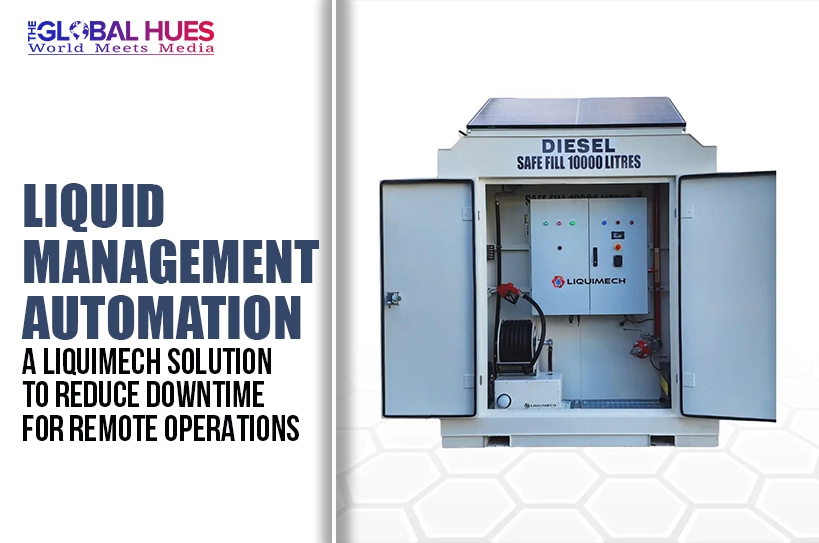
Operational demands and regulatory expectations in these fields can only be expected to grow as time goes by. It is thus imperative for organisations to reassess how they monitor and control their liquid management systems. Automation tends to be the go-to solution for companies seeking to improve visibility and mitigate risk while also maintaining consistent performance across remote sites. Companies like Liquimech, recognised for their experience in addressing liquid management challenges across mining, civil, construction, and agricultural applications, lead the charge in this space with their integrated and automated system Liquimech Connect.
Liquid Management as a Critical Operational Risk
Compromised liquid systems lead to immediate consequences, many of which have far-reaching impacts. Remote projects traditionally involve collaboration between small on-site teams and ones located away from the site itself; this means personnel are often inevitably slower to respond to disruptions. Water supply interruptions can stall dust suppression or processing activities. Meanwhile, failed transfer or fuel storage systems can bring essential equipment grinding to a halt. Significant productivity losses arise from even short spates of downtime when an industry depends heavenly on continuous operations, as the abovementioned do.
Poorly managed liquid systems also raise safety and environmental risks on top of operational delays. Hazards like overflowing tanks or undetected leaks may endanger personnel and surrounding ecosystems. Project sites in isolated locations are even more at risk, as their limited staffing and restricted access to specialised support can delay intervention.
It has historically been common for businesses to treat liquid management processes as secondary systems despite their importance. Many companies today still rely on monitoring or basic control mechanisms—an ultimately antiquated approach that leaves much to be desired in terms of visibility and responsiveness. If operators are not equipped to detect issues early, they cannot act before disruptions occur.
Limitations of Traditional Monitoring in Remote Environments
Many remote project sites today still rely on periodic manual inspections or standalone systems that provide limited visibility into liquid levels, flow conditions, equipment performance, and other key metrics. These manual monitoring methods, however, naturally fall short when distance and the compounding uncertainties inherent to remote locations come into play. While these approaches may suffice under stable conditions, they often fail to capture early signs of system stress or failure.
Remote sites need continuous monitoring if organisations are aiming to catch issues like gradual leaks or pressure fluctuations before they escalate into larger disruptions. In addition, depending on on-site personnel to collect and report data means that there will inevitably be a delay between when the issue is detected and when teams can respond—particularly in locations with minimal staffing or restricted access.
The absence of centralised oversight further complicates decision-making. Data that has been fragmented across different systems or recorded manually makes it hard for operators to understand site conditions quickly and in their entirety. As a result, responses tend to be reactive rather than preventative. This limits an organisation’s capacity to manage risks effectively in remote environments.
The Shift Toward Automated Liquid Management Systems
Modern businesses are seeking to mitigate the operational pressures described above by gradually implementing automated liquid management systems. These technologies are designed to provide continuous visibility and control over liquid management processes. Innovations in sensor technology, telemetry, and connected infrastructure facilitate real-time monitoring of critical parameters such as tank levels, flow rates, pressure, and water quality. Operators working with these systems are better positioned to detect irregularities as they emerge and deal with them before they substantially disrupt operations.
Automation also extends beyond monitoring into direct system control. The systems make it possible to adjust pumps, valves, and related equipment remotely instead of depending on immediate on-site intervention. This is particularly valuable in remote environments, as it allows operators to respond quickly to changing conditions without waiting for personnel to reach the affected area.
Platforms like Liquimech Connect illustrate how to integrate these capabilities into a single system. Such tools combine field-based hardware with a centralised digital interface, so that operators can monitor and control multiple assets across a site from a single access point. The data collected through these systems can also be analysed over time for insights into usage patterns and equipment performance.
Impact on Downtime, Safety, and Compliance
Systems that give teams greater visibility into their project sites and exercise more control even from a distance can majorly reduce unplanned downtime in remote operations. Organisations that monitor their systems constantly have the advantage of identifying anomalies earlier and taking prompt corrective action before the issues escalate into failures.
Automation also supports more consistent maintenance practices. Operators can analyse system data, to identify trends that indicate wear or inefficiency. With this insight, they can schedule maintenance based on actual conditions instead of using fixed intervals. It is ultimately a more efficient approach that can help extend the operational life of equipment while reducing the likelihood of unexpected breakdowns.
From a safety and compliance perspective, automated liquid management systems provide a more reliable framework for risk management. Continuous monitoring reduces the chance of undetected leaks or overflows, while real-time alerts enable faster responses to potentially hazardous situations. Digital records of system performance and incidents also support more accurate reporting and audit processes, which are particularly important in heavily regulated industries.
Conclusion: Rethinking Liquid Management for the Future of Remote Operations
Heavy industries today will only continue to launch larger and more complex remote operations over time. To keep up with the demands of such projects, companies in these industries need the support of safe, reliable systems that operate consistently at a high standard. Liquid management in this context can no longer be treated as a background function. Modern organisations must recognise it as a critical element of operational resilience, and prioritise it accordingly. The shift toward automation reflects a broader move across different sectors to exercise more control in environments where delays carry significant consequences.
(DISCLAIMER: The information in this article does not necessarily reflect the views of The Global Hues. We make no representation or warranty of any kind, express or implied, regarding the accuracy, adequacy, validity, reliability, availability or completeness of any information in this article.)
Must Read:
- Your Custom Home – Careful Considerations
- Innovative Interior Design Trends To Refresh Your Home
- How to Choose Living Room Furniture That Stands Up to Active Lifestyles