
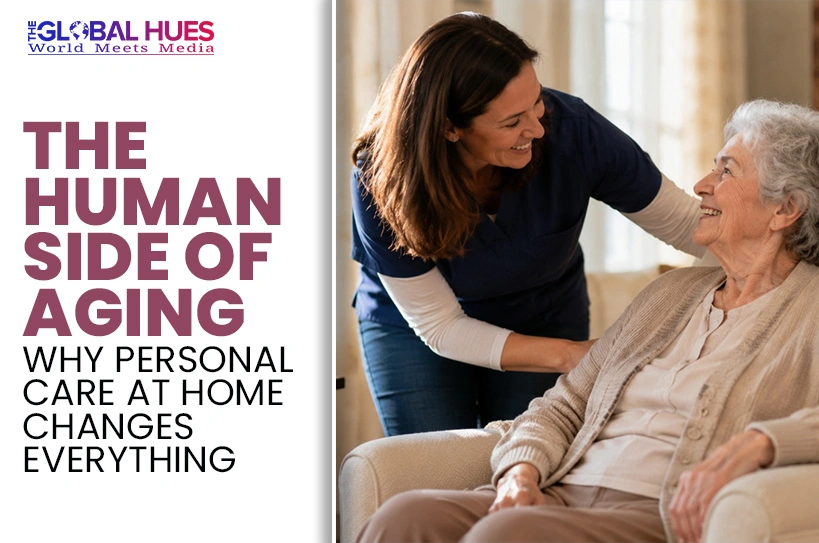
There’s a category of daily activity most people never think about until it becomes difficult: getting dressed in the morning, stepping safely in and out of the shower, managing personal hygiene with hands that no longer cooperate. When these tasks start to slip — quietly at first, then with increasing consequence — the effect on a person’s confidence, mood, and physical health is profound. Professional personal care services exist precisely to support these moments — not as a clinical intervention, but as a human one, delivered with the consistency and dignity every older adult deserves.
What makes personal care different from other forms of home-based support is its intimacy. This is hands-on assistance with the most private aspects of daily life. That intimacy, handled badly, can be demeaning. Handled well — by a trained, compassionate caregiver who has built genuine trust with the person they’re supporting — it becomes something that restores rather than diminishes. Families who have watched a loved one regain their confidence after months of struggling alone understand the difference viscerally.
What Personal Care Services Include
Personal care is one of the most clearly defined categories in home-based support, covering the activities of daily living (ADLs) that measure a person’s functional independence. These include:
- Bathing and showering assistance — safe transfers in and out of the tub or shower, washing, and drying with full attention to skin condition and any areas of concern
- Grooming — hair care, oral hygiene, shaving, nail care, and the small details of personal presentation that matter enormously to self-image
- Dressing — selecting appropriate clothing, managing buttons, zippers, and footwear, and accommodating any mobility or pain limitations
- Toileting and continence care — one of the most sensitive areas of personal care, requiring discretion, patience, and a professional approach that minimizes discomfort and embarrassment
- Mobility assistance and transfers — safe movement between bed, chair, wheelchair, and standing positions, with proper technique that protects both the senior and the caregiver
- Skin and pressure injury monitoring — observing for early signs of skin breakdown, particularly in seniors who spend significant time in bed or seated
- Positioning and repositioning — for seniors with limited mobility, regular repositioning prevents pressure injuries and supports circulation
These services aren’t supplementary. For seniors with moderate to significant functional limitations, they represent the difference between living at home and requiring a facility placement.
Dignity Is Not a Soft Concept
The word “dignity” appears frequently in discussions of elder care, often in ways that render it abstract. In the context of personal care, it is entirely concrete. It means that a caregiver knocks before entering a room. It means that a senior is draped appropriately during bathing and never left feeling exposed unnecessarily. It means that assistance is offered as partnership rather than management — “Let’s get your shirt on” rather than simply doing it without narration or acknowledgment.
These are not trivial details. Research in gerontological psychology consistently shows that older adults who receive care that respects their autonomy and communicates respect — even in highly dependent situations — maintain significantly better psychological wellbeing than those whose care interactions feel transactional or impersonal. The way care is delivered is inseparable from its outcome.
This is one of the core reasons that caregiver selection and training matter so much in personal care specifically. Technical competence is necessary but not sufficient. The caregiver who can safely transfer a 200-pound man from bed to wheelchair and simultaneously make that man feel respected, seen, and in control of his own morning — that combination is rarer than it should be, and it defines the upper tier of personal care delivery.
The Health Monitoring Value of Consistent Personal Care
There is a secondary benefit to professional personal care that families frequently overlook until after they’ve experienced it: the observation function. A caregiver who assists with bathing three times per week sees the client’s body. They notice the bruise that appeared since the last visit. They observe the early skin redness over a bony prominence that, left unaddressed, will become a pressure ulcer within days. They see that the client is moving their right arm differently and mention it to the family, who schedules a follow-up with the physician, where a rotator cuff issue is identified before it becomes a major injury.
This is not theoretical. Skilled personal caregivers who have a consistent, trust-based relationship with a client and who know what “normal” looks like for that individual regularly catch early indicators of health changes that would otherwise go unnoticed until they escalate. For seniors living alone or with limited family contact, this monitoring function is one of the most clinically significant things a personal care provider delivers — even though it appears nowhere on a formal service description.
The Emotional Weight of Needing Help
It would be a mistake to discuss personal care without addressing what many seniors feel about needing it. For a generation that largely values self-reliance, asking for help with bathing and dressing represents a significant psychological hurdle. Many older adults delay accepting personal care assistance long past the point where it would genuinely help them — not because they don’t need it, but because accepting it feels like a confession of failure.
Families navigating this resistance often find that reframing helps. Personal care isn’t an admission of incapacity — it’s a practical tool for sustaining the life a person wants to live. An 82-year-old who accepts bathing assistance three times a week can continue living in her own home, maintaining her garden, attending her book club, and cooking her own dinner. The alternative — struggling with daily hygiene alone, risking a serious fall in the shower, gradually withdrawing from activities as energy is consumed by exhausting basic self-care — is the real loss of independence.
When the conversation is framed around what personal care enables rather than what it signals, many seniors who initially resisted come to regard their caregiver as one of the most important relationships in their daily life.
Choosing a Provider for Personal Care – The Stakes Are Higher Here
Because personal care is intimate by definition, the standards for provider selection should be correspondingly rigorous. Several factors carry particular weight:
Demonstrated training in personal care techniques. This includes safe transfer methods, skin assessment, continence care protocols, and dementia-specific communication approaches. Ask specifically about training curricula — not just whether caregivers are “trained,” but what that training covers and how it is maintained over time.
Caregiver stability and consistent assignment. In personal care more than any other service category, relationship continuity matters. A new face providing intimate assistance is a meaningful disruption for any senior, and a potentially distressing one for those with cognitive impairment. Agencies that rotate staff frequently are a poor match for personal care needs.
A thorough intake and care planning process. Personal care plans should document preferences in detail — how the client prefers to be addressed, what time of day they prefer to bathe, which aspects of grooming they can still manage independently and want to continue managing. A good care plan preserves autonomy; a generic one erodes it.
Supervisory oversight and quality monitoring. Personal care delivered behind closed doors requires an agency infrastructure that catches problems. This means supervisory visits, client and family feedback mechanisms, and clear protocols for addressing concerns. Accountability structures are what separate consistent quality from unpredictable quality.
Final Thoughts
Personal care is where the human dimension of home-based support is most visible. It is the service category where skill and compassion must operate together, where the quality of the caregiver-client relationship has the most direct impact on outcomes, and where families feel the most reassured — or the most anxious — depending on whether they’ve found the right provider.
For seniors who need this level of support, the right personal care arrangement is not a compromise. It is what makes the rest of life possible — the meals, the conversations, the small pleasures of a day lived on one’s own terms. Getting it right is worth every hour of the search.
(DISCLAIMER: The information in this article does not necessarily reflect the views of The Global Hues. We make no representation or warranty of any kind, express or implied, regarding the accuracy, adequacy, validity, reliability, availability or completeness of any information in this article.)
Must Read:
- Your Custom Home – Careful Considerations
- Innovative Interior Design Trends To Refresh Your Home
- How to Choose Living Room Furniture That Stands Up to Active Lifestyles