
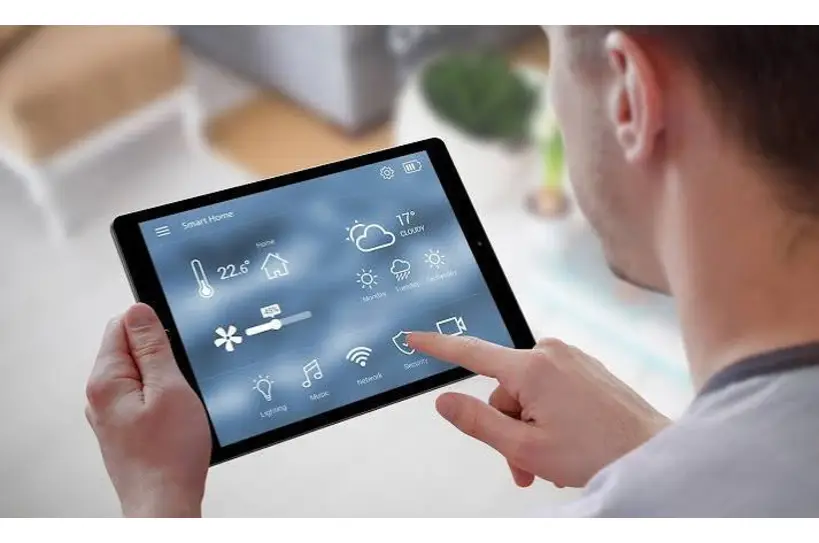
The modern commercial and residential buildings demand unprecedented levels of automation, energy efficiency, and system interoperability. For control systems engineers, meeting these demands requires a transition away from fragmented legacy protocols toward standardized control architectures.
This is precisely why the Konnex (KNX) standard has emerged as a global benchmark for smart building automation. Implementing this infrastructure requires a deep technical understanding of its structural topography, communication media, and device commissioning practices.
This blog explains the fundamentals of KNX architecture, its communication framework, and the key implementation practices.
Understanding the Decentralized Architecture
Unlike traditional automation frameworks that rely on a centralized Programmable Logic Controller (PLC), a KNX network operates on a decentralized topology. Every connected electrical instrument possesses its own onboard microprocessor. This design ensures that the failure of a single device does not cause the entire automation system to collapse.
Engineers must plan the physical layout before they deploy any hardware. The network architecture is structured hierarchically, divided into:
- Lines: The fundamental building blocks, supporting up to 64 devices.
- Areas: Composed of up to 15 lines connected via line couplers.
- Backbones: The highest structural tier linking multiple areas together.
Total segment lengths must be strictly managed. The maximum cable distance within a single line cannot exceed 1,000 meters, and the distance between a power supply and any individual device must remain under 350 meters to avoid unacceptable voltage drops.
Selecting the Appropriate Physical Media
A critical phase of network design involves choosing the right communication medium. While the standard supports several transmission methods, engineers most frequently employ the Twisted Pair (TP) medium due to its superior noise immunity and cost-effectiveness.
The dedicated green bus cable carries a nominal 30V DC signal while simultaneously modulating data packets across the same pair of wires.
In scenarios where physical wiring proves impractical or cost-prohibitive, technical teams can incorporate Radio Frequency (RF) or Ethernet-based IP media. Utilizing an IP network backbone allows for high-speed data transmission over vast commercial campuses.
When integrating diverse media types, engineers must implement specialized line couplers to ensure seamless data translation across different physical layers.
Device Integration and Commissioning Protocols
To successfully deploy a KNX infrastructure, technical teams must follow rigorous configuration steps using the Engineering Tool Software (ETS). This manufacturer-independent tool serves as the singular platform to design, configure, and commission all certified equipment.
Engineers must systematically execute the following phase-based workflow:
- Physical Addressing: Assign a unique numerical identifier (e.g., Area.Line.Device) to every individual piece of equipment to establish its distinct location on the physical network.
- Object Linking: Map the input communication objects of sensors to the corresponding output communication objects of actuators.
- Group Addressing: Define functional groups (using a 2-level, 3-level, or free-style hierarchy) to dictate exactly how devices interact, such as linking a specific lighting sensor to multiple dimming modules.
Unlike centralized systems, group addresses do not represent physical hardware locations. Instead, they act as functional multicast channels that allow multiple devices to listen and react to the same network telegram simultaneously.
Ensuring Long-term Network Strength
A successful installation goes beyond initial commissioning and requires careful verification and protective measures. Since KNX bus lines often run alongside mains power infrastructure, engineers must implement proper shielding and separation to minimize electromagnetic interference and maintain reliable system communication.
Dedicated cybersecurity measures are equally important to protect KNX telegrams from unauthorized access or tampering. Partnering with a trusted electrical solutions provider also helps ensure access to quality components, technical expertise, and long-term support.
Ultimately, a well-designed KNX system enables engineering professionals to create scalable, efficient, and future-ready building automation solutions.
(DISCLAIMER: The information in this article does not necessarily reflect the views of The Global Hues. We make no representation or warranty of any kind, express or implied, regarding the accuracy, adequacy, validity, reliability, availability or completeness of any information in this article.)
Must Read:
- Your Custom Home – Careful Considerations
- Innovative Interior Design Trends To Refresh Your Home
- How to Choose Living Room Furniture That Stands Up to Active Lifestyles